x




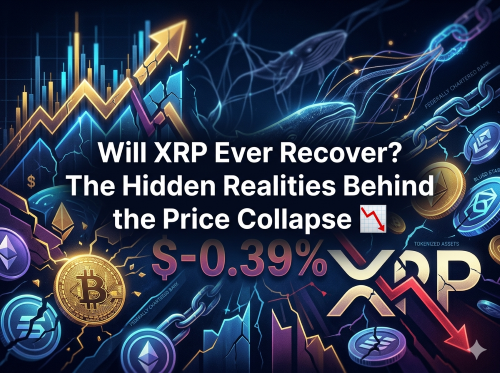
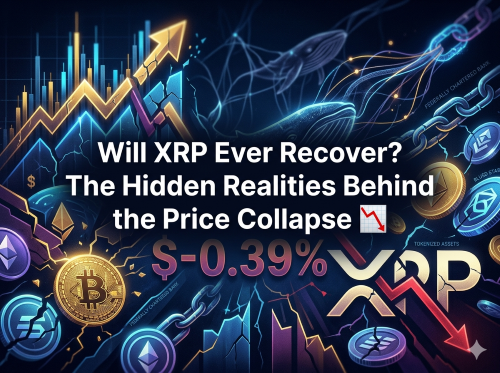
The cryptocurrency market in 2026 has been nothing short of a risk-off meat grinder, and few assets have felt the burn quite like XRP. Once a dominant top-three crypto asset, XRP has found itself languishing in the doldrums, down nearly 40% since the start of the year and sitting roughly 70% below its historic all-time high of $3.65. With the token breaking decisively beneath its crucial 200-day moving average and flirting with technically oversold territory, the prevailing sentiment across retail forums is parked firmly in extreme fear.
Yet, beneath this bleak price action lies one of the most fascinating divergences in digital asset history. While retail investors capitulate, blockchain data reveals that institutional mega-whales are accumulating XRP at a record-breaking pace. To understand why the smart money is doubling down on a chart this ugly, we have to look past the ticker symbol and examine what Ripple, the enterprise behind the ledger, has quietly been engineering in the background.
It is easy to blame XRP’s struggles entirely on asset-specific flaws, but the reality is that the token's decline has largely been driven by a brutal macroeconomic environment. Sticky inflation fears, Middle East geopolitical tensions, and major financial institutions like Goldman Sachs scrapping their rate cut forecasts have triggered a massive retreat from risk assets. Bitcoin itself plunged below $60,000 for the first time since late 2024, dragged down by a multi-billion-pound outflow streak from spot ETFs.
However, instead of fleeing for the exits, major holders are treating this downturn as a generational buying opportunity. The number of wallets holding 10,000 or more XRP has recently surged to an all-time high of over 332,000. Even more compellingly, the "millionaire tier" wallets added over 40 new addresses since January, absorbing 1.2 billion tokens in the first quarter alone. Today, mega-whale addresses control nearly 68.5% of the circulating supply—the highest concentration seen since May 2018. Over 90% of recent exchange outflows are moving directly into private custody, proving that large investors are locking away their tokens for the long haul.
The primary catalyst driving this massive whale accumulation is a series of monumental structural upgrades achieved by Ripple. Chief among them is a radical regulatory turnaround: the Office of the Comptroller of the Currency (OCC) granted Ripple approval for a National Trust Bank charter, which officially took effect earlier this year. While this is not a traditional commercial bank, it provides a specialised federal license for fiduciary and custody services, giving a massive stamp of legitimacy to a firm that was recently embroiled in a bitter legal battle with the SEC.
Simultaneously, Ripple’s stablecoin, RLUSD, has grown into a top-ten global stablecoin with a market cap nearing $1.7 billion. Far from being a fringe asset, RLUSD was recently integrated into Mastercard’s 24/7 on-chain settlement network alongside industry giants like USDC.
Furthermore, the theoretical use case of the XRP Ledger (XRPL) is finally materialising in institutional corridors. In a recent pilot, Ripple, JPMorgan’s Kinexus, Mastercard, and Ondo Finance successfully executed a cross-border redemption of a tokenised US Treasury fund on the ledger, achieving settlement in under five seconds.
Crucially, the technology itself is evolving to distance itself from corporate centralisation. With the launch of the XRPL version 3.2.0 upgrade, the core server software has officially been renamed from "Rippled" to "XRPLD." This symbolic rebranding formally demonstrates that the blockchain is a decentralized, community-run infrastructure independent of Ripple the company. The update also reduces server memory usage by up to 40%, significantly lowering the barrier to entry for independent validator node operators.
New developments are also paving the way for the future of automated finance. The ledger is integrating the XLS-66 lending protocol for fixed-term on-chain loans, alongside X42—an open standard designed to allow autonomous AI agents to pay for web services using XRP and RLUSD without human intervention.
Despite these impressive fundamental milestones, the bearish counter-argument cannot be ignored. The most immediate headwind is supply pressure. Ripple continues to release roughly one billion XRP from escrow every month. Although they typically re-lock up to 800 million of that total, between 200 million and 300 million fresh tokens enter circulation monthly, creating hundreds of millions of dollars in consistent sell-side pressure.
An even more unsettling concern for token holders is the potential cannibalisation of XRP by Ripple's own stablecoin. Approximately 80% of RLUSD currently circulates on the Ethereum network rather than the XRP Ledger. Moreover, Ripple’s high-profile 2026 enterprise partnerships—including the Mastercard agent pay frameworks and treasury pilots—increasingly rely on RLUSD for final settlement rather than XRP. If Ripple’s corporate expansion thrives primarily on its stablecoin, enterprise success may not directly translate into value for XRP holders.
Furthermore, institutional conviction remains mixed. While some banking giants are taking initial stakes, banking powerhouse Goldman Sachs entirely liquidated its multi-million-pound XRP ETF position in the first quarter of the year, while choosing to maintain its significant exposure to Bitcoin.
Everything ultimately hinges on a binary legislative event sitting in the United States Senate: the Clarity Act. This piece of legislation aims to permanently codify XRP's status as a digital commodity under federal statute, removing the threat of future administrative flip-flops.
The bill has already comfortably cleared the House and passed the Senate Banking Committee. If it successfully passes a full Senate vote before the summer recess, analysts at Standard Chartered have projected a conditional price target of up to $8 per XRP, contingent on institutional ETF inflows reaching a milestone of $10 billion.
XRP currently exists as two entirely different assets depending on where you look. On the price charts, it appears broken, structurally bearish, and weighed down by macro panic. On the fundamental side, it is pinned to a federally chartered trust bank, multi-billion-pound asset tokenisation pilots, and unprecedented whale accumulation.
The bear case—consisting of Goldman's exit, macro fear, and escrow supply—is largely priced into the current valuation. The explosive bull case, however, remains completely unpriced because it depends entirely on a high-stakes political vote. For the XRP Army and watching investors, the coming months will decide whether this sub-dollar pricing is the ultimate accumulation zone or a beautifully engineered value trap.
Coin Bureau - Will XRP EVER Recover?
"XRP’s price is collapsing, but the whales are buying more than ever and Ripple just became a federally chartered trust bank. There’s also a single piece of legislation in the US Senate that could flip XRP’s outlook almost overnight.
Here’s the real story behind the brutal drawdown, the surge in on-chain accumulation, and Ripple’s latest moves, plus the one catalyst that could decide XRP’s future."
~ TIMESTAMPS ~
0:00 XRP Down 40%: Is It Finally Over?
1:57 Why XRP Crashed Despite Strong Fundamentals
3:37 Whales Are Buying XRP at Record Levels
5:04 Ripple’s Trust Bank & RLUSD Growth Explained
7:09 XRP Ledger Upgrades, AI Payments & Tokenisation
9:14 The CLARITY Act Could Change Everything
11:13 The Biggest Risks Facing XRP Right Now
13:08 Bull Case vs Bear Case: Will XRP Recover?
Source 👉 https://www.youtube.com/watch?v=-vpba-l9okM
Disclaimer: This article is provided for informational purposes only, mistakes may be made, and it's not offered or intended to be used as legal, tax, investment, financial, or any other advice.