x





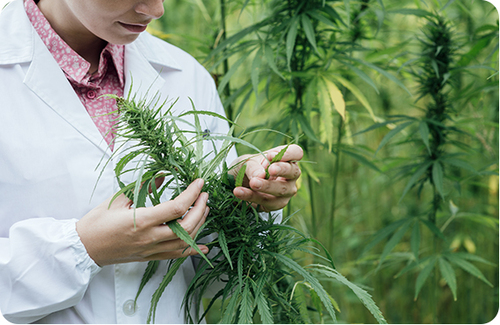
Cannabidiol is a phytocannabinoid discovered in 1940. It is one of some 113 identified cannabinoids in cannabis plants and accounts for up to 40% of the plant's extract. In 2018, clinical research on cannabidiol included preliminary studies of anxiety, cognition, movement disorders, and pain. Wikipedia
Hemp has been one of the most significant crops for mankind up until this last century. It is astonishing to see how the widespread use of hemp has been deteriorated to such an extent that people barely recognise it as anything but a plant that “gets you high”.
Hemp was probably the earliest plant cultivated for textile fiber. Archaeologists found a remnant of hemp cloth in ancient Mesopotamia (currently Iran and Iraq) which dates back to 8,000 BC. Hemp is also believed to be the oldest example of human industry. In the Lu Shi, a Chinese work of the Sung dynasty (500 AD), we find reference to the Emperor Shen Nung (28th century BC) who taught his people to cultivate hemp for cloth. It is believed that hemp made it to Europe in approximately 1,200 BC. From there, it spread throughout the ancient world.
China appears to have the longest continuous history of Hemp cultivation (over 6000 years). France has cultivated Hemp for at least 700 years to the present day, Spain and Chile similarly. Russia was a major grower/ supplier for hundreds of years.
The Chinese were the first to recognize the usefulness of hemp in paper making. In approximately 150 BC, they produced the world’s first paper, completely from hemp. The oldest documents written on paper are Buddhist texts from the 2nd and 3rd centuries AD, composed of a mixture of bark and old rags, principally hemp. Hemp has been used as medicine throughout the world for centuries. Folk remedies and ancient medicines refer to the curative values of the leaves, seeds and roots. The seed and flowers were recommended for difficult childbirth, convulsions, arthritic joints, rheumatism, dysentery and insomnia.
During the middle ages, hemp became an important crop of enormous economic and social value supplying much of the world’s need for food and fiber. Sailing ships became dependent on Canvas (from the word cannabis), hemp rope and oakum due to it being 3 times stronger than Cotton and resistant to salt water. In the UK, in 1535 Henry VIII passed an act compelling all landowners to sow 1/4 of an acre, or be fined. During this period hemp was a major crop and up to the 1920’s 80% of clothing was made from Hemp textiles.
Hemp probably existed in North America long before the Europeans arrived. Jacques Cartier wrote in the 16th century that the land was “frill of hempe which groweth of itselfe, which is as good as possibly may be scene, and as strong.” It is known is that by the time the Puritans landed on Plymouth rock, hemp had reached the continent. It was grown in nearly every state at one time or another, including California, Kentucky New York, Oregon, Utah, Texas, New England, Virginia, Massachusetts, Louisiana, and Missouri.
Hemp was grown throughout the western and central provinces of Canada well before confederation. It is known that hemp was grown under the French regime, and was the first crop to be subsidized by government. In 1801, the Lieutenant Governor of Upper Canada distributed hemp seeds to farmers. Edward Allen Talbot, Esq., while living in the Canadas during the 1820s wrote “Five Years’ Residence in the Canadas”. Talbot wrote that if Canada produced enough hemp to supply Britain, this would end their dependence on a foreign power and greatly benefit Canadian settlers. In 1822, the provincial parliament of Upper Canada allocated £300 for the purchase of machinery to process hemp and £50 a year over three years for repairs. The 1923 budget offered incentives to domestic producers. Mr. Fielding, finance minister said that there was a market in Canada and with some government encouragement a mill could be established in Manitoba to draw from crops in the vicinity. There were six hemp mills in Canada at the time, and the government financed a seventh, the Manitoba Cordage Company.
Although hemp played a major role in the early development of North America, it was eventually overshadowed by cotton. Hemp harvesting was extremely labor-intensive. When the invention of the mechanical cotton gin at the end of eighteenth century made it easier to process cotton, hemp could no longer compete. Traditionally, Hemp was processed by hand which was very labour intensive and costly, not lending itself towards modern commercial production. In 1917 American George W. Schlichten patented a new machine for separating the fiber from the internal woody core (‘Hurds’) reducing labour costs by a factor of 100 and increasing fiber yield significantly. Mr Schlichten and his machines disappeared, not surprisingly!
The main crisis for Hemp arose in America during the 1930’s due to propaganda created from companies with vested interest from the new petroleum based synthetic textile companies and the large and powerful newspaper / lumber barons who saw hemp as the biggest threat to their businesses. The 1930s coalesce, unsurprisingly, with the DuPont patenting their new “plastic fiber”. By the 1930s, new machinery, which separated the fiber from the rest of the plant, was available and affordable. These innovations simplified the harvesting and production, making it more cost-effective. Manufacturers were also interested in byproducts such as the seed oil for paint and lacquer, and hurds for paper. According to the February 1938 issue of Popular Mechanics (written early 1937), hemp was then on the verge of becoming “the billion-dollar crop.” However, in September 1937, the United States government, under the influence of the lobbying of synthetic textile companies (like DuPont) and several other powerful groups who saw hemp as a big threat to their businesses, proposed prohibitive tax laws, and levied an occupational excise tax upon hemp dealers. Later that year hemp production was banned altogether. The Canadian government, following the American lead, prohibited production under the Opium and Narcotics Act on August 1, 1938.
World War II provided a new chance. The 1942 Japanese invasion of the Philippines cut the U.S. off from their major source of imported hemp. To meet demand for war production, the U.S. and Canadian governments lifted restrictions. Until the end of the war, farmers with special permits grew hemp to supply the war effort. To encourage farmers to grow hemp during this period, the United States Department of Agriculture released the film “Hemp for Victory”. It stated, “In 1942, patriotic farmers at the government’s request planted 36,000 acres of seed hemp, an increase of several thousand per cent. The goal for 1943 is 50,000 acres of seed hemp.”
However, the ban on growing hemp remained after the Second World War. Hemp, which has historically had over 25,000 diverse uses ranging from paints, printing inks, varnishes, paper, Government documents, bank notes, food, textiles (the original ‘Levi’s’ jeans were made from Hemp cloth), canvas (artists canvases were used by the great masters) and building materials still remains banned in this country whose Declaration of Independence was written on hemp paper. With modern technical developments, uses have increased to composite boards, motor vehicle brake and clutch pads, plastics, fuels, bio-diesel and Eco-solid fuel. In fact anything that can be made from a hydrocarbon (fossil fuel) can be made from a carbohydrate, but the strong lobbies still manage to keep the growth of this useful crop banned and the public disillusioned.

During the early stages of cannabis research, scientists had limited knowledge of cannabinoid structure and an only partial understanding of the biological composition contained within the plant.
Advancements in research and technology revealed the presence of compounds within the cannabis plant.
The first discovery of an individual cannabinoid was made, when British chemist Robert S. Cahn reported the partial structure of Cannabinol (CBN), which he later identified as fully formed in 1940.
Two years later, American chemist, Roger Adams, made history when he successfully isolated the first cannabinoid, Cannabidiol (CBD). His research is also responsible for the discovery of Tetrahydrocannabinol (THC).
Because of this, early researchers could not accurately determine which compound was causing which effect.
Dr. Raphael Mechoulam made the first breakthrough towards understanding the effects of individual cannabinoids in 1963 when he successfully identified the stereochemistry of CBD.
A year later, Mecholam’s made another breakthrough and discovered the stereochemistry of THC, which revealed the cannabinoids direct relationship to the euphoric effects associated with marijuana use, and disassociated CBD as a mind-altering compound.
As research advanced, a landmark victory occurred, when New Mexico passed the 1978 Controlled Substances Therapeutic Research Act, a bill which legally recognized the medicinal value of cannabis.
The momentum continued during the 1980s
Interest in the therapeutic applications of cannabinoids revealed the discovery of additional cannabinoids, further understanding of cannabinoid structure, and the amazing breakthrough of our body’s Endocannabinoid System (ECS) — a network of receptors that interact with receptors found in cannabinoids.
In 1996, California passed Proposition 215, making it the first state to legalize medical marijuana
Within a few years, 7 other states followed suit, including:
With the legalization of medical marijuana, patients in those states now had legal access to cannabis, and researchers could expand their studies into cannabinoid medical uses.
This prompted research into the potential of CBD for the treatment of a variety of ailments such as chronic pain, epilepsy, and numerous neurodegenerative diseases.
While the stigma towards cannabis had begun to shift, it still fell under a very gray area of the law, and because of CBD’s close relationship to the controversial plant, it was judged under those same laws.
While the distinction between CBD and the other cannabinoids had become more known throughout the scientific community at that time, it was foreign knowledge amongst those who could actually impact these laws — the general public.
One of the major factors that contributed to America’s opposition at the time was the prevalence of stigmas like “marijuana is a gateway drug” and others of the sort. This led Americans to believe that cannabis is dangerous, addictive, and harmful.
Those that once opposed cannabis, now turn to CBD for relief, and its therapeutic properties are helping to change the lives of thousands of people around the country.
While the movement has made massive strides forward, we are still just in the early stages. It continues to thrive at exponential rates is literally achieving the impossible.
Here are just a few of the landmark events that have occurred:

While the perception towards CBD has progressed dramatically over the years, CBD still is not fully normalized across the country. There are still many who stand in opposition to CBD and other cannabis-derived compounds and many more who aren’t aware of their benefits.
In order for CBD to reach its full potential and change the lives of as many people as possible, there’s still more work that needs to be done. While there may be some challenges ahead, the strength of the CBD community has shown that nothing is going to stand in its way. Watch this video to see how the use of CBD is exploding.
In conclusion, I hope that this article has helped to inform you about the rich history of this amazing cannabinoid and, more importantly, I hope tht it has inspired you to learn more and to become more involved with this amazing movement.
It seems obvious at this point to conclude that CBD is here to stay and will continually to be accepted by the world.