x



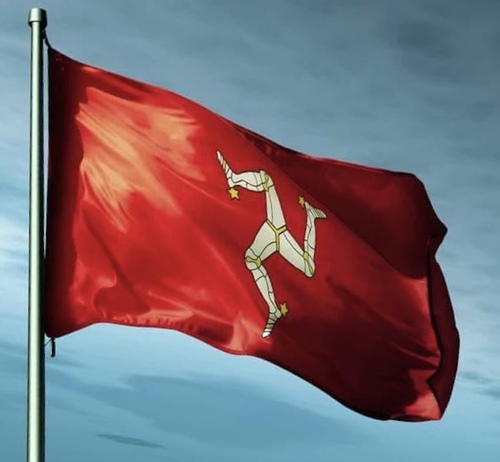

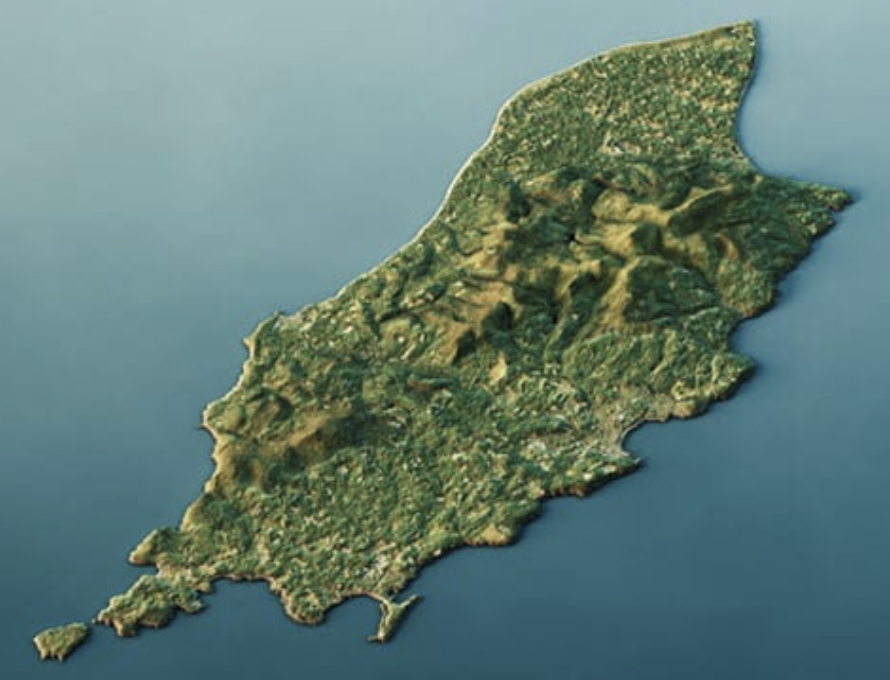
Ellan Vannin or the Isle of Man is Positioned in the middle of the Irish Sea. The island is situated almost equidistant between England, Scotland, Ireland and Wales. It is 33 miles long and 13 miles wide and approx 110 Miles around the Coast. The Isle of Man has only one Mountain, named Snaefell, (Snow Hill) which is barely a Mountain standing at just 621 metres (2,037 ft) tall. From the Summit on a Nice Day you can see the Seven Kingdoms...... Mann, Heaven, Neptune, Ireland, England, Scotland, and Wales.
From North Barrule to South Barrule, Hills take up much of the centre of the Island with lots of Valleys and Beautiful Glenn's to walk in. The Dhoon and Glenn Maye are two famous locations with Waterfalls. The Northern plain is barely 6 feet above Sea Level and has Long shingle beaches which are great for Fishing. In the South there are many locations such as Marine Drive and the Chasms by Spanish Head where you can watch Fulmars and Gulls gliding along the 300 ft Cliffs, if you are lucky you will also see Wild Peregrine Falcons and Choughs. Raad-ny-Foillan is a Coastal Footpath that takes you all around the coastline. Agriculture is still one of the major Businesses with almost two-thirds of the island being farmed in one way or another.
The current population In 2020 on the Isle of Man Is close to 89,000 people with Douglas (the Capital) being the largest Settlement with close to 28,000 people. The Four major settlements are Ramsey in the North, Douglas in the East, Castletown in the South (the Old Capital) and Peel (Sunset City) in the West.
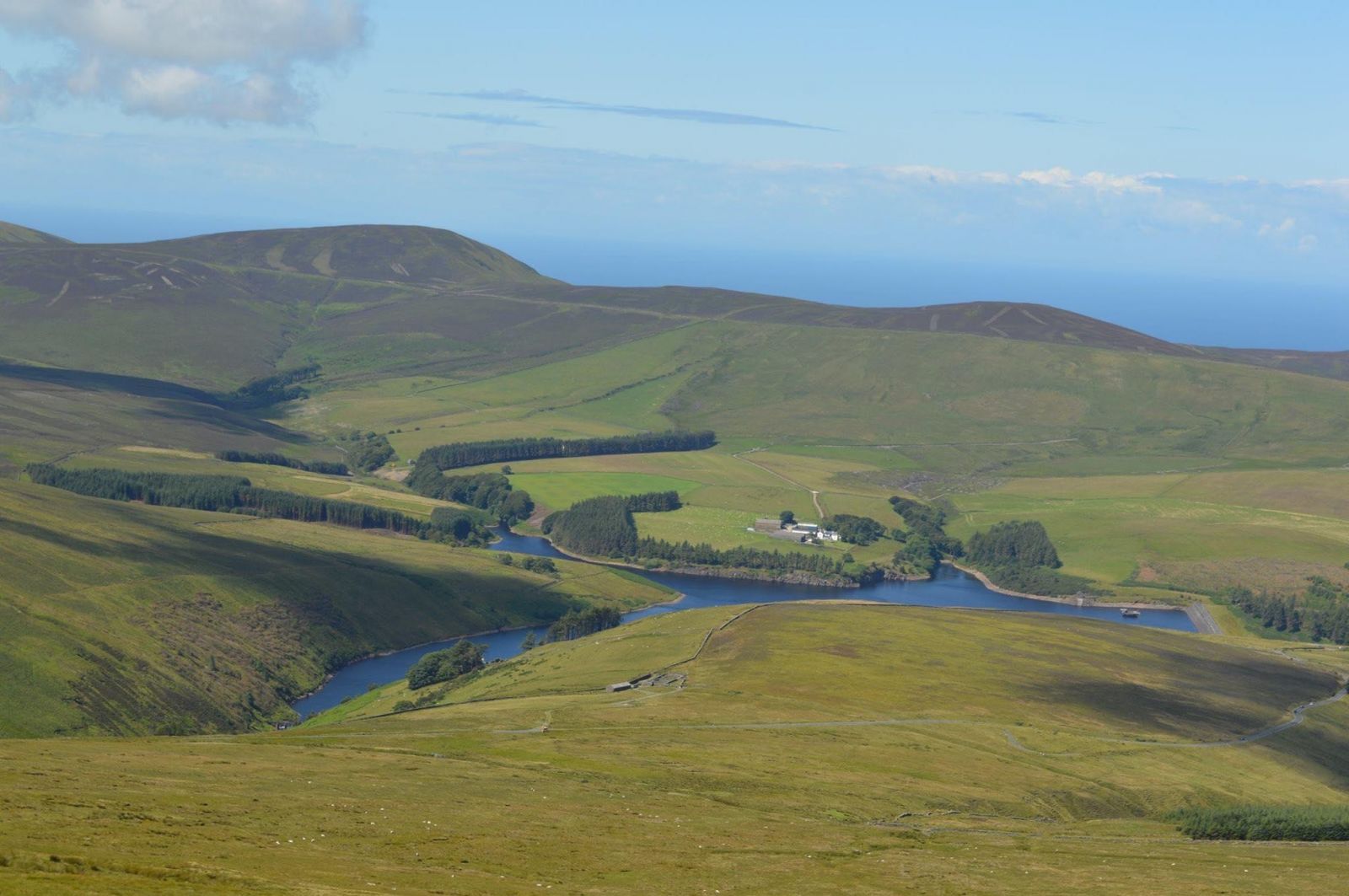
Despite its location, the Isle of Man has never been a part of the United Kingdom. The Isle of Man is one of the three islands within the British Isles that are known as Crown Dependencies. The Bailiwick of Guernsey and Bailiwick of Jersey are the other two. This means that they are self-governing possessions of the British Crown with their own Parliament, Stamps, Customs and Currency.
The title Head of State in the Isle of Man is the Lord of Mann, a role held by HM Queen Elizabeth II (My Former Boss) & the Crown’s personal representative is the Lieutenant Governor, who is appointed by the Lord of Mann for a five-year term.
Tynwald, the Isle of Man parliament, consists of two branches, the House of Keys, which has 24 elected members, and the Legislative Council, which is mostly chosen by the House of Keys. Meanwhile, the UK government is responsible for defense (although the Isle of Man now has a TA Unit) and international relations of the island.
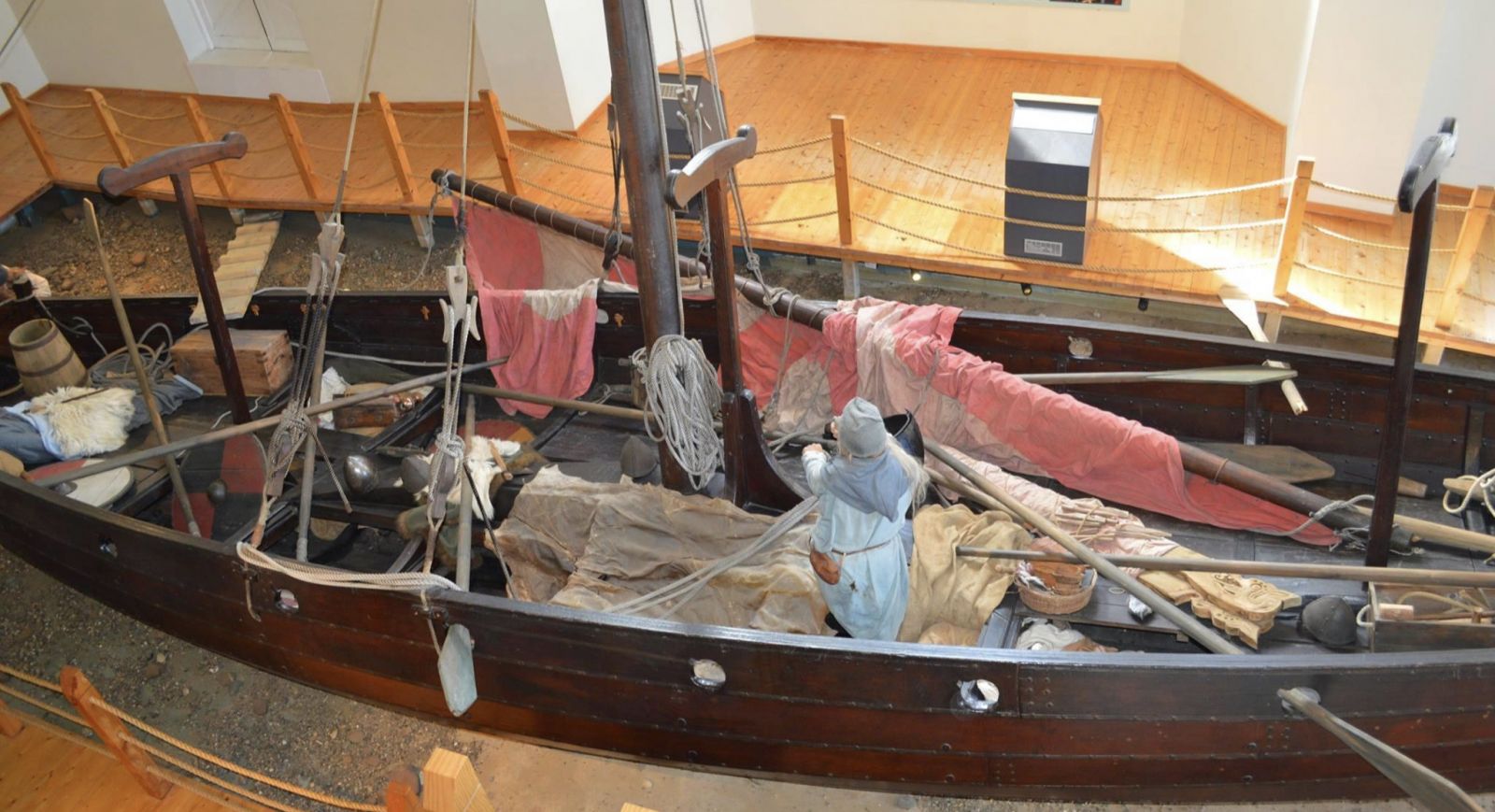
Tynwald is the oldest continuous parliament in the world, always disputed with Iceland, but in 1979 Tynwald Celebrated 1000 Years of Government. Odins Raven a Replica Viking Ship was built in Norway and sailed to the Isle of Man where it can now be found in the Viking Museum in Peel.
Manx Taxation
The taxation system in the Isle of Man is completely different from that of its larger neighbours. There is no capital gains tax, stamp duty, or inheritance tax. For personal income tax, the standard rate is only 10 percent and the higher rate is 20 percent.
The Isle of Man even has its own currency—the Isle of Man pound (IMP). However, it has the same value as the British Pound sterling (GBP) which is accepted on the Island, however Isle of Man Pounds are not accepted in the UK or Ireland.
Low taxes and various tax reliefs have encouraged many wealthy individuals and families to settle on the island. But for companies, the most appealing part of the taxation system is the standard zero rate of corporate tax. However, a higher rate of 10 percent applies to bank activity and retail businesses with annual taxable profits of £500,000 or more.
Due to the 0 percent corporate tax rate introduced in 2006, the Isle of Man is now known as an excellent centre for Company Administration and Services.
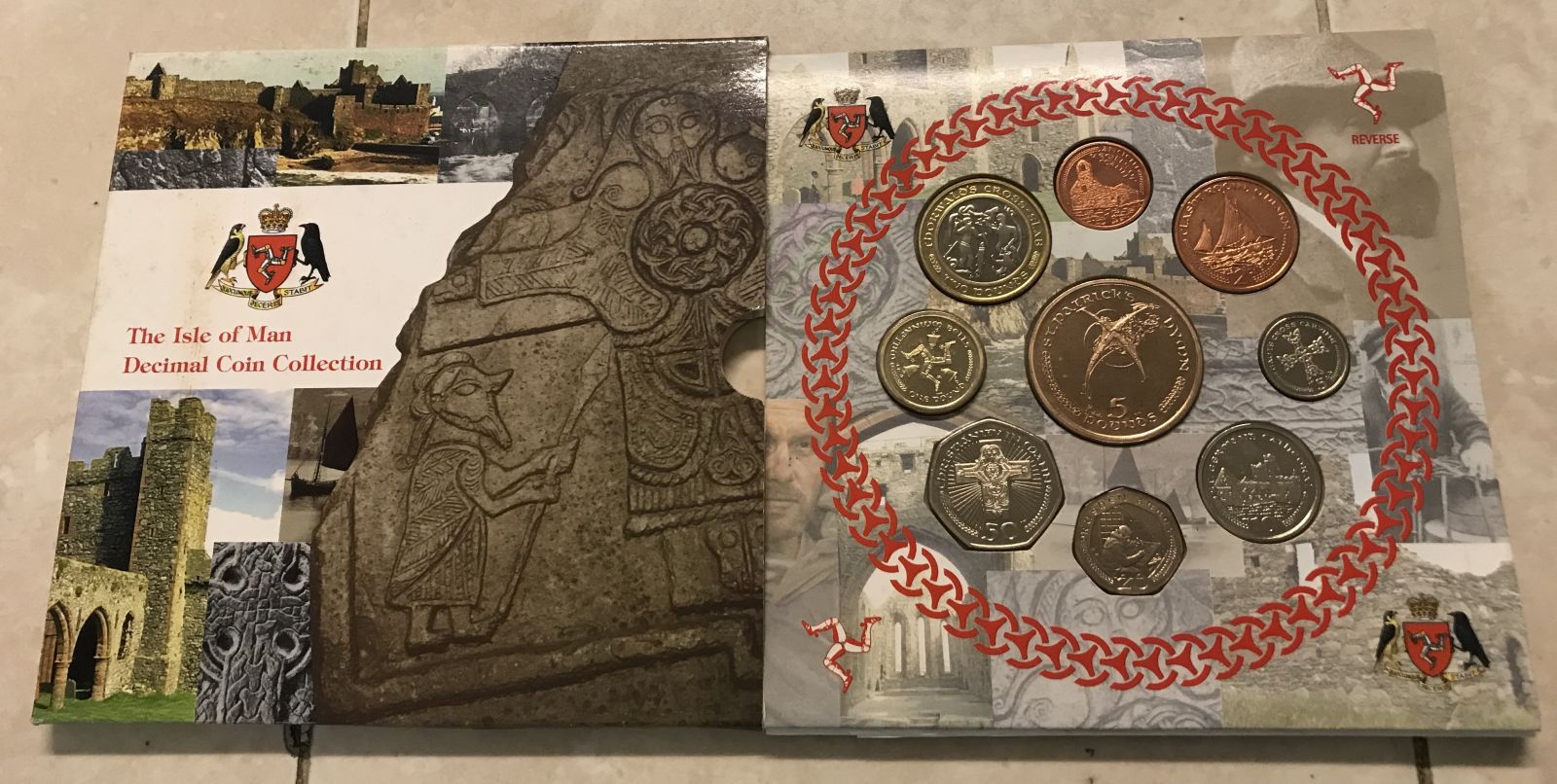
Coin Collectors are also drawn to the Manx Coins which change Annually and also have Crowns, Angels, Nobels and Sovereins in Precious Metals.
Manx Gaelic - The National Language
Manx Gaelic is the Ancient language of the Isle of Man and is a mix of Celtic and Ancient Norwegian. It is closely related to the Gaelic Spoken in Wales, Ireland, Scotland, Cornwall and Iberia, all considered Celtic Nations. Manx Gaelic probably has the biggest Viking Influence as they settled and founded the Tynwald in 979 AD.
Although the language was brought to the Isle of Man by settlers around the fifth century AD, it really emerged as a distinct language in the 13th–14th centuries after the collapse of the Norse Kingdom of Mann and the Isles.
The Kingdom of Mann and the Isles were islands and pockets of land taken by the Vikings in Norway, Ireland, England, Scotland and Orkney, with the Centre of Power being the Isle of Man.
Until 1765, almost the entire island’s population spoke Manx. That changed with the Isle of Man Purchase Act 1765 (aka the Act of Revestment) by which the Duke of Atholl sold the island to the British Crown.
Immigration from North West England also sped up the decline of Manx during the 18th and 19th centuries. Starting in the 1830s, large numbers of English-speaking tourists further contributed to the shrinking number of Manx speakers.
Due to the language’s decline, UNESCO officially declared the Manx language extinct in 2009, a while after the last native Manx speaker Ned Maddrell died in 1974.
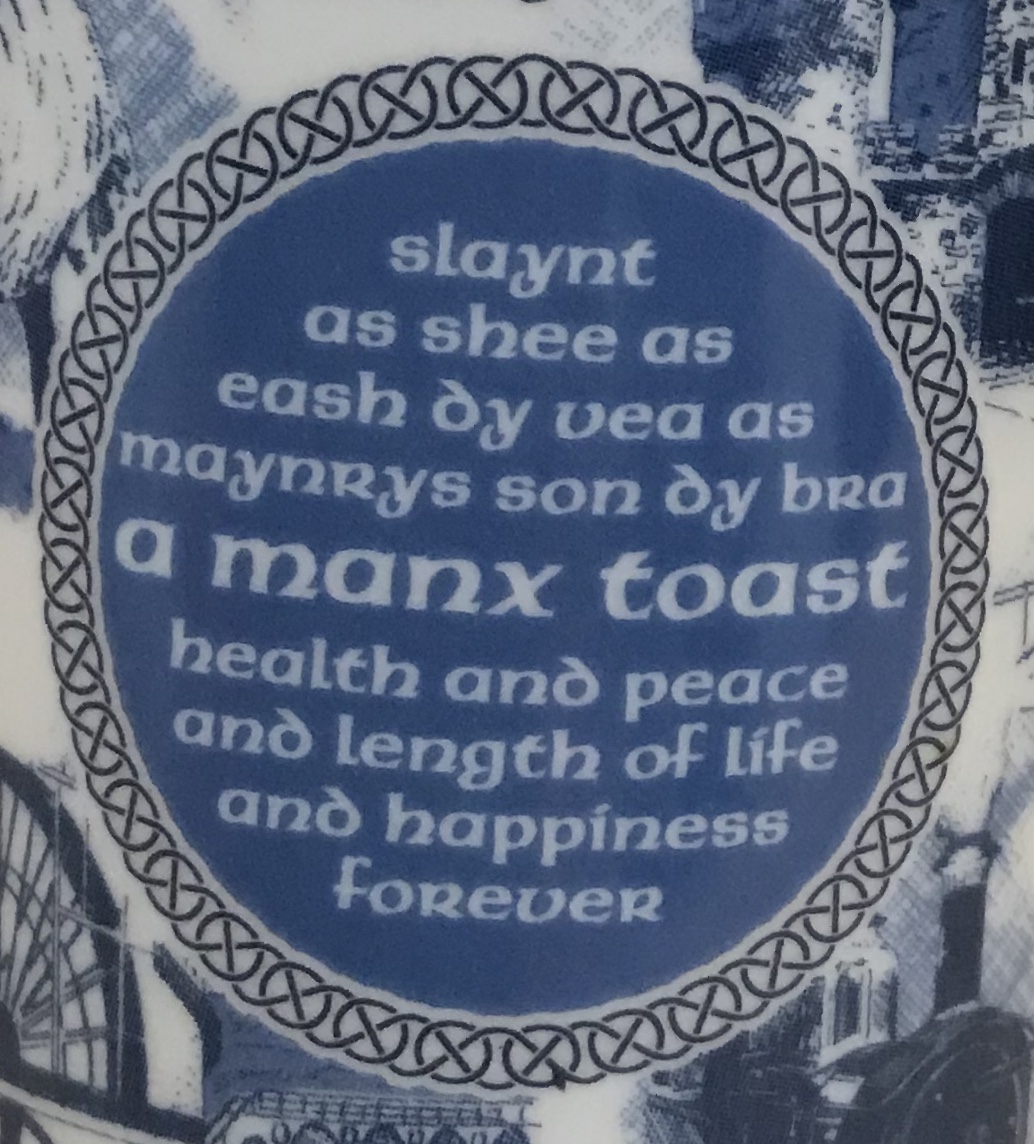
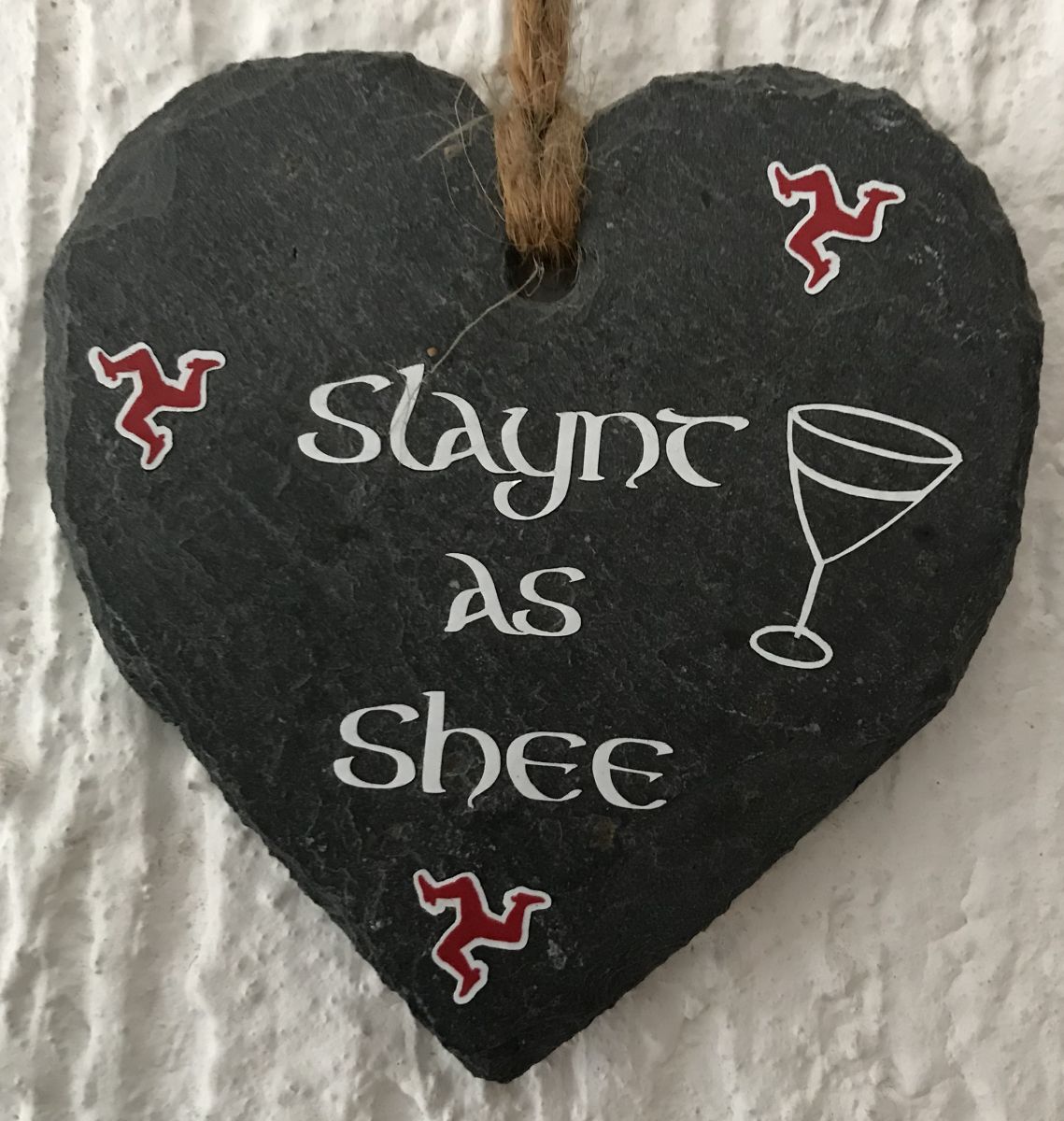
Manx Gaelic has had quite the Revival over the past 20 years with it being taught again in Schools and over the Internet. A key part of the language’s revival has been Bunscoill Ghaelgagh, a primary school that teaches almost entirely in the Manx language. In response to UNESCO listing the language as effectively dead, several children from Bunscoill Ghaelgagh wrote letters asking the organization: “If our language is extinct, then what language are we writing in?”
The classification has since been changed to “critically endangered.” While it does not illustrate actual fluency, more than 1,800 people claim to speak, read, and write Manx Gaelic today..... and long may it continue to Grow.
Manx Animals - The Manx Cat
The Manx Cat breed is well-known for its lack of a Tail. Manx Kittens from the same litter can be born with full-length tails, stubby tails, or no tails at all. Manx cats quite often have extra toes instead of a tail and make Fantasric Pets, regularly bringing home the odd Rabbit or Bird for their Owners.
As the Isle of Man did not have an indigenous feline species from which the Manx could develop, it is assumed that cats either stowed away or were introduced by settlers and explorers.
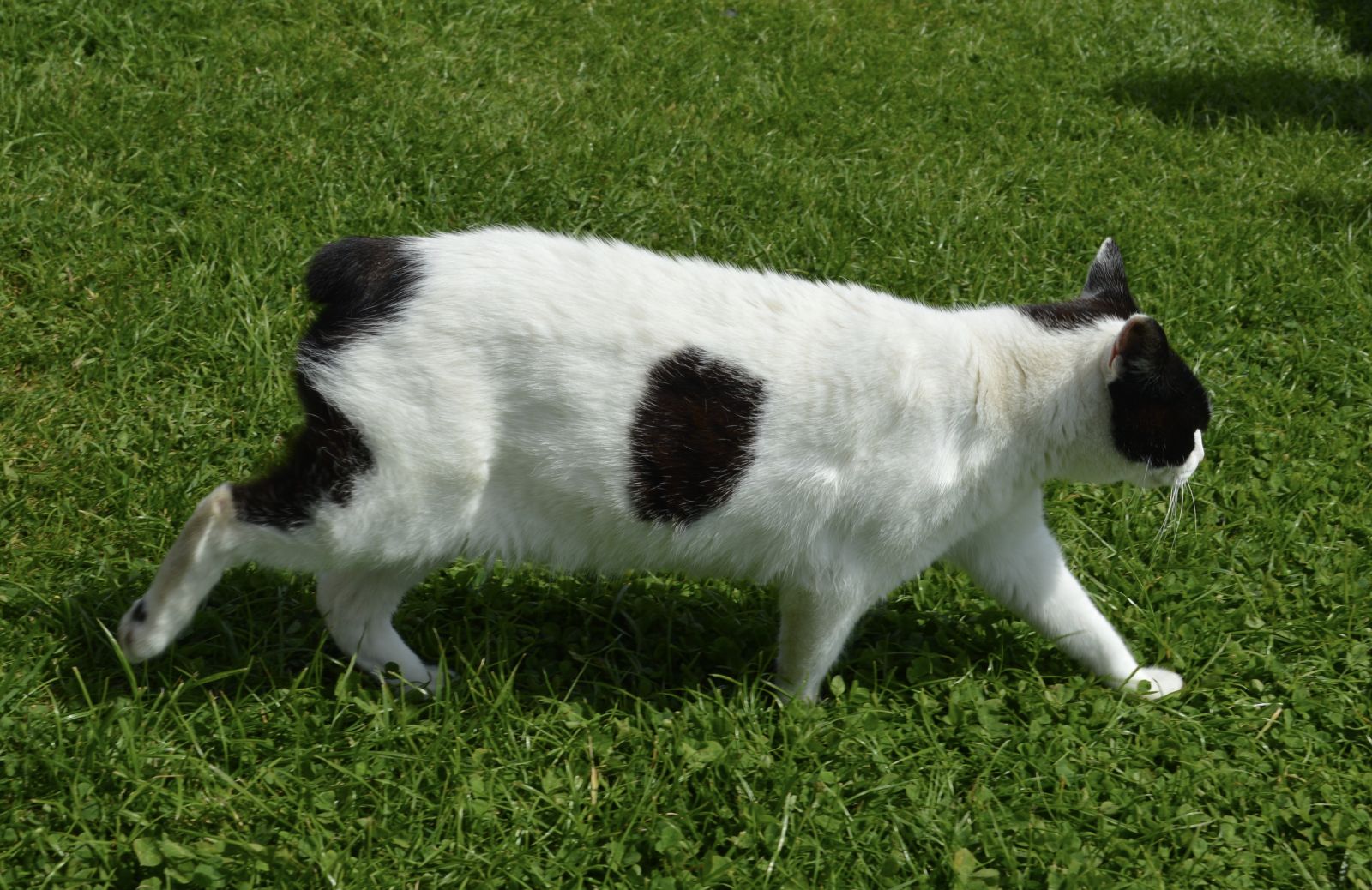
It is uncertain how or when the first cats arrived on the island. One story says that cats were aboard a ship of the Spanish Armada that wrecked on the Isle of Man in 1588. Another tale claims that traders transported the cats from Japan, and yet another story says that cats arrived with the Viking settlers who colonized the island in the 9th Century.
Regardless of how the Manx Cats got there, they presumably arrived with their tails intact. Thanks to modern-day geneticists, we now know that the Manx’s “taillessness” was likely caused by a spontaneous mutation within the Isle’s domestic cat population.
Manx cats and other short-tailed domestic cats are quite different genetically. The Manx’s tail is governed by an incomplete dominant gene, while most short-tailed breeds have tails governed by recessive genes. Due to the Isle’s closed environment and small gene pool, the dominant gene was easily passed down through generations.
A local story says that two Manx cats were the last passengers on board Noah's Ark and Noah slammed the door on their tails, severing them.
The Manx Loaghtan Sheep
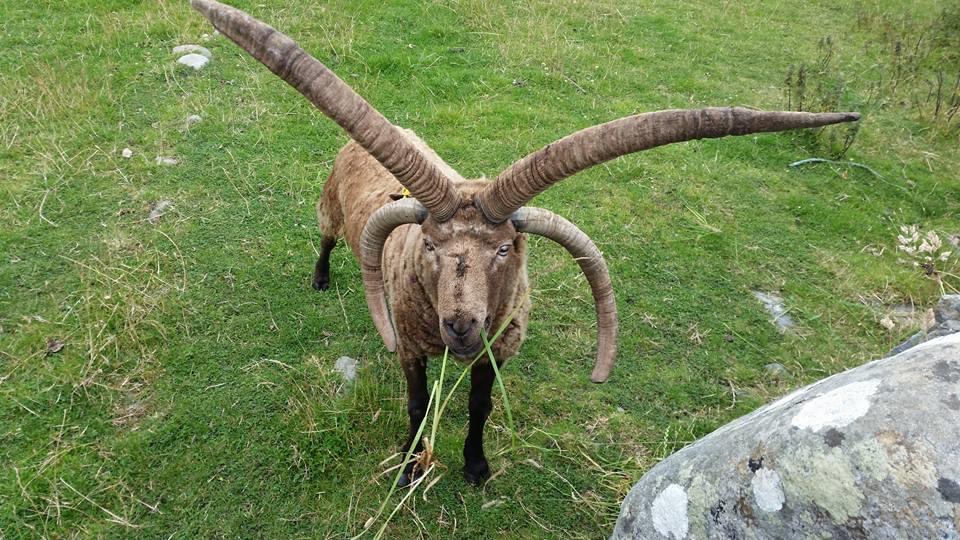
The Manx Loaghtan is a rare breed of Sheep, native to the Isle of Man. It is sometimes spelled as Loaghtyn or Loghtan. The sheep have dark brown wool and usually four Horns, especially the Rams.
The Manx Loaghtan is one of the breeds, descendant from the primitive sheep once found throughout Scotland and the Islands. The word Loaghtan comes from the Manx Gaelic - lugh dhoan, which means mouse-brown and describes the colour of the sheep. This breed is primarily raised for its meat, which some consider a delicacy. The meat has recently received EU recognition and protection under the Protected Designation of Origin scheme, which requires products to originate in a specific region.
The Rare Breeds Survival Trust has characterised the Loaghtan as "at risk". By the 1950s there were only 43 surviving specimens. Manx National Heritage developed two healthy flocks. These have given rise to commercial flocks on the Isle of Man, United Kingdom and Jersey. Even so, today there are still fewer than 2,000 registered breeding ewes.
Manx Superstitions and Folklore
As any land with a long and checkered history, the Isle of Man is rife with legend and superstition. Stories of ghosts, goblins, giants, and other creatures like the talking mongoose which supposedly inhabit the island hold more than a grain of truth to the Manx people.
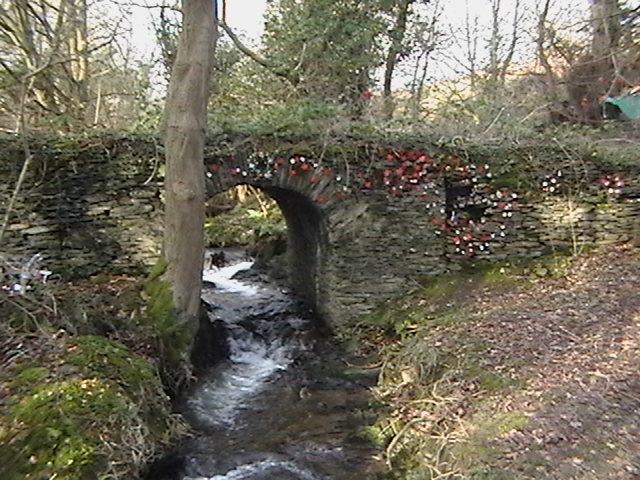
For example, consider the Little People of Fairy Bridge. You cannot be certain that your visit will be safe and pleasant if you do not even say as much as laa mie (“good day”) to the fairies while crossing the bridge which lies just past Santon Station on the main Douglas-Castletown road.
The Second Fairy Bridge is hidden away between Kewaigue and Port Soderick, along the Public Footpath passing through Middle Farm.
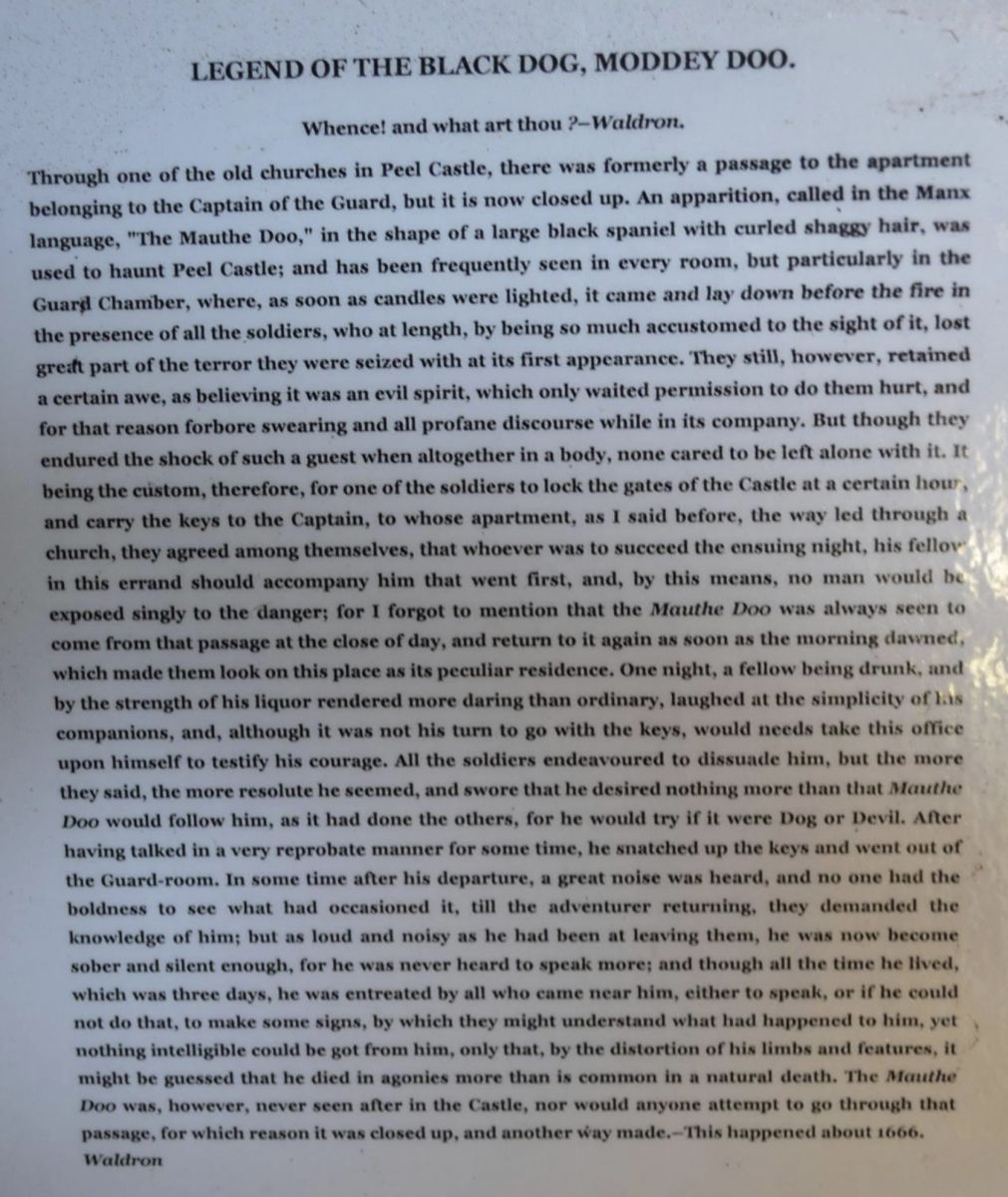
There are also stories of the ghostly black dog of Peel Castle and Gef the talking mongoose who haunts the lonely mountain farmhouse. On April 30, many islanders fix a wooden cross made from the Rodan Tree and bound with Loaghtans wool to the inside of their front door to ward off malicious Fairies. Blowing horns on Peel Hill on the same night is believed to banish evil spirits.
However, the most common superstition on the Isle has to do with the three-letter “r” word for vermin. The fear of the word “rat” originated alongside other sea taboos.
Believed to attract bad luck or bad weather, certain words were never mentioned aboard ships. Instead, rats are commonly referred to by other terms. “Longtail,” “ringie,” “joey,” or the native Gaelic word roddan are considered acceptable.
Many people on the Isle of Man spend their entire lives without ever uttering the “r” word. Even people who move to the Isle often dodge the term, either from a genuine fear of bad luck or to avoid shock and outrage from the locals.
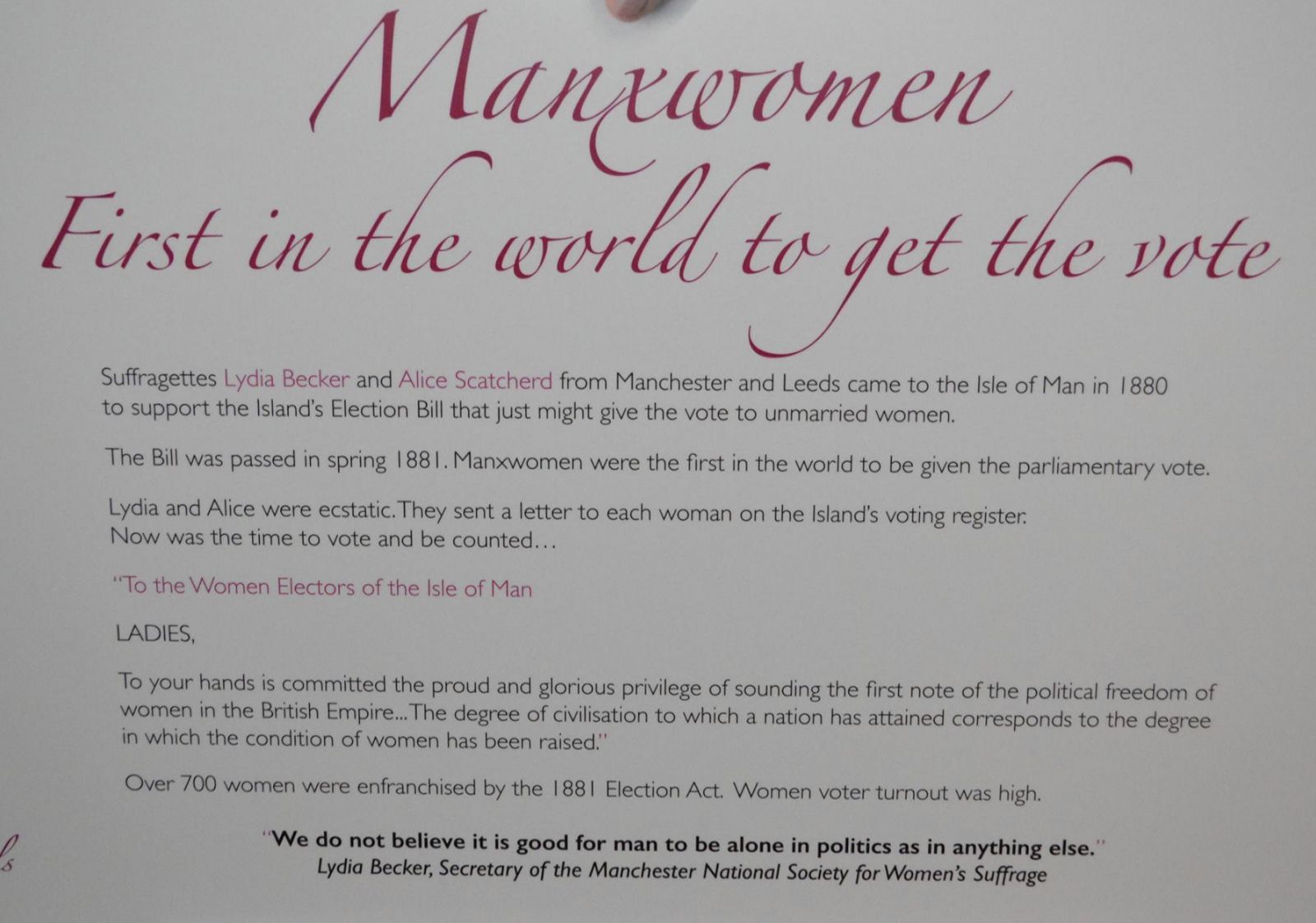
The Isle of Man in 1881 becomes the First Country to allow Woman to Vote.
Women’s sufferage (aka women’s right to vote or female suffrage) is the right for women to vote in elections. The first signs of the suffrage movement can be traced to the French Revolution in the 18th century, but it was not particularly successful until the late 19th and early 20th centuries.
Surprisingly, the small Isle of Man led the way for millions of women worldwide. Tynwald, the Isle of Man parliament, became the first national parliament to allow women to vote in 1881.
Some rules remained. All males, spinsters, and women over age 21 had to be fairly wealthy (own or occupy their own property to the value of £4 or more) to cast their votes. Despite these conditions, it was a major step toward gender equality which was followed by New Zealand in 1893 and Finland in 1906.
Lydia Becker, leader of the suffragette movement in Manchester, was largely responsible for this controversial change. She visited the island and addressed five public meetings in 1880, awakening a desire for change among her female audiences. Tynwald was also one of the first parliaments to allow 16-year-olds to vote in 2006.
The aurora borealis, better known as the northern lights, occurs when incoming solar radiation hits the Earth’s upper atmosphere and excites atoms to a new energy state, emitting energy in the form of light. This phenomenon is best seen from northern latitudes including Norway, Alaska, Iceland, and northern parts of Scotland.
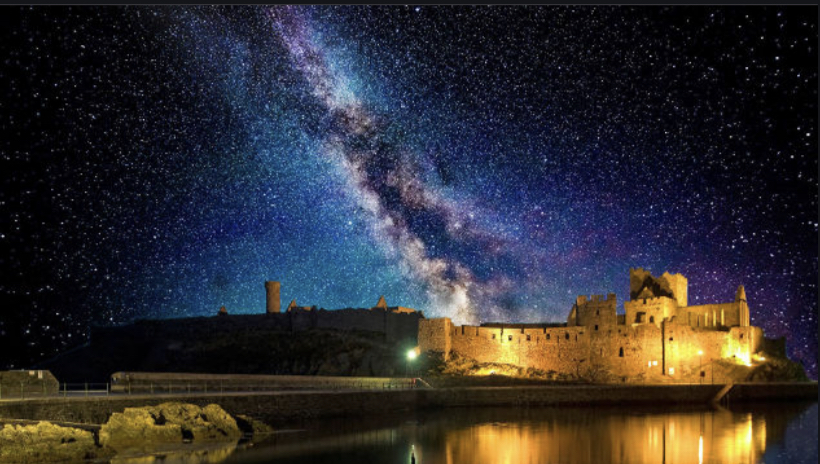
But thanks to relatively low air and light pollution, the Isle of Man is a great place to observe the Northern Lights and Stargaze in general. Some photographers and tourists even travel to the island solely to enjoy the night sky.
There are 26 Official dark sky sites dotted around the island, and many astronomical sights can be seen with the naked eye. This includes the Orion Nebula over 1,500 light-years away, the Milky Way galaxy, and the Andromeda galaxy whose light has been on its way to us for about 2.5 million years.
Wallabies are native to Australia and its island state of Tasmania. Although they are used to warmer climates, a wild wallaby population has been flourishing on the Isle of Man ever since a pair escaped from the Sulby Wildlife park in the 1970s. The animals graze on grasslands and forage willows and young shrubs.
Scientists and researchers believe that their success in the wild is mainly because of a lack of predators and competition. There are now believed to be over 100 wild wallabies living on the Isle of Man. While they have normally confined themselves to the areas around Sulby Claddaghs in the North of the island, a few have also been spotted in the south.
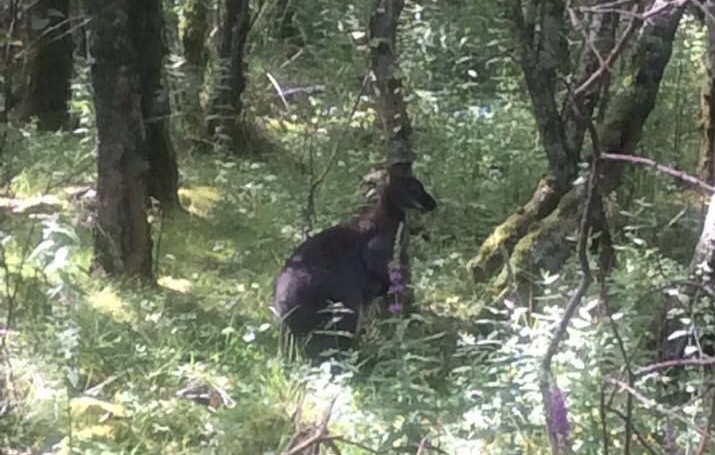
It is very likely that there have been more escapes from the Wildlife Park in Sulby over the years than have been reported, it is likely the gene pool is much larger than just the genes from the often-quoted pair of escapees, and there have been no obvious signs of the effects of inbreeding.
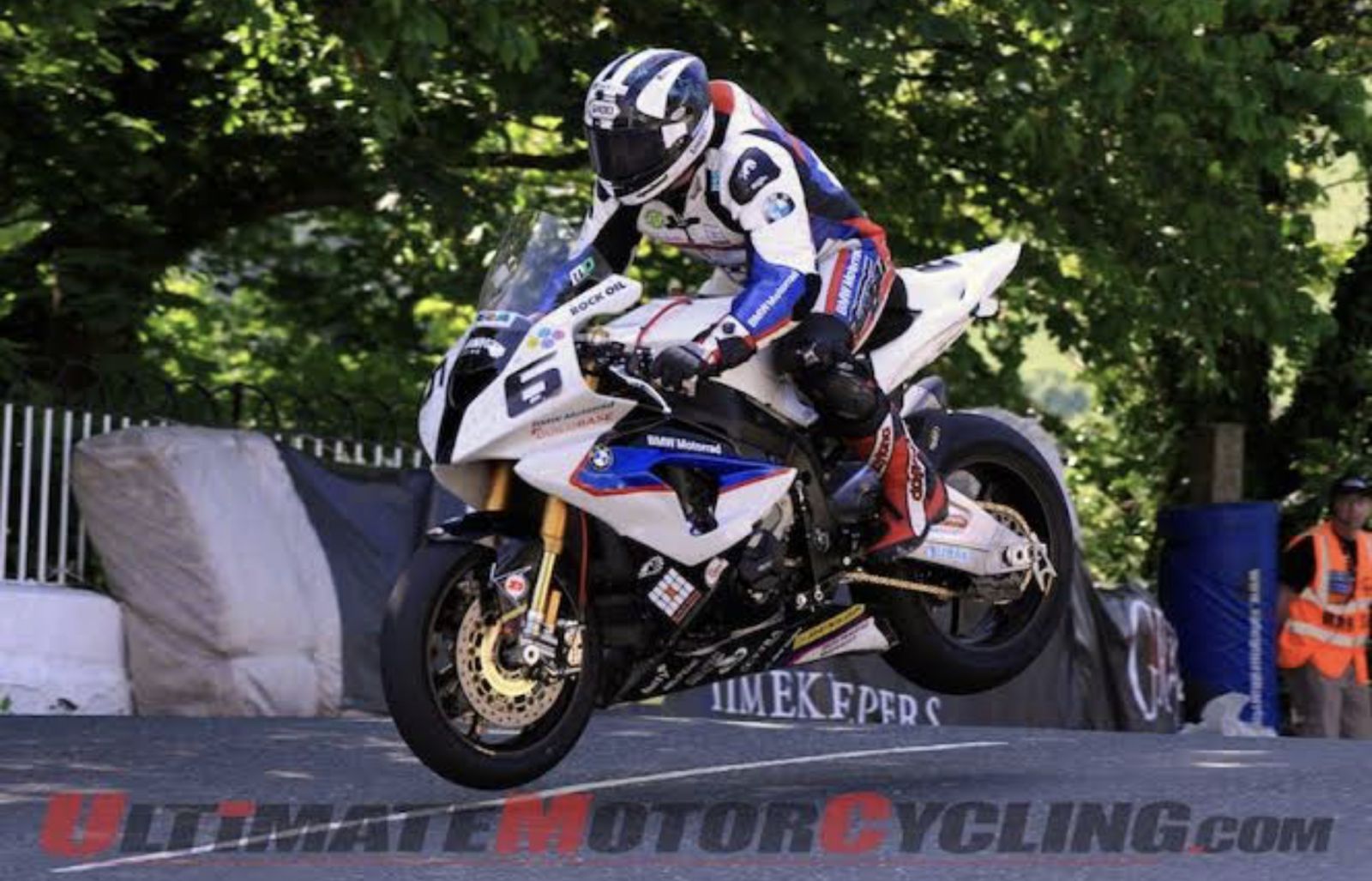
Isle of Man TT Races Competitors compete every May / June for two weeks on closed public roads at speeds exceeding 322 kilometers per hour (200 mph), which takes Courage and Self motivation, making it the most dangerous motorcycle Event in the world. This often-lethal event is held on the world’s oldest active motorcycle racing course.
Between 1907 and 2019 the 60.72-kilometer-long (37.73 mi) Snaefell Mountain Course has claimed 151 fatalities during official practices or races and 260 total fatalities (this number includes the riders killed during the Manx Grand Prix, and Clubman TT race series of the late 1940s/1950s).
Unlike closed course tracks, the roads used in the event were not built for the purpose of racing. Comprised of various surface types, the roads are rough and uneven. Stone walls, lampposts, curbs, trees, and buildings line the entire TT course. The track is also full of hills, turns, and corners, all of which give it the Adrenalin Rush that so many Riders are looking for.
The preparation necessary to take part in the TT is staggering. Not only does it take years to memorize the course, but competitors have to participate in several other races just to be eligible for the TT. One of the two weeks consists of qualifying and practice, while the second week is made up of actual racing.
The residents have learned to appreciate and rely on the event to support and sustain their small, primarily tourist-based economy. Over 40,000 race fans are welcomed to the island each year, and many stores, restaurants, and hotels open exclusively for the TT.
The Manx Rally or Rally Isle of Man is a car rally competition held in the Isle of Man. It was first held in 1963, and later became a well-known event in the British Open Rally Championship and the European Rally Championship. In 2002, it became part of the Irish Tarmac Rally Championship in addition to the British Rally Championship. Local Legend Mark Higgins who is also the fastest person around the Isle of Man TT Course in a Car at 128.73mph (Subaru WRX STi), has the most recorded Victories with 5 over the Events History.

July 5th is Tynwald Day on the Isle of Man.
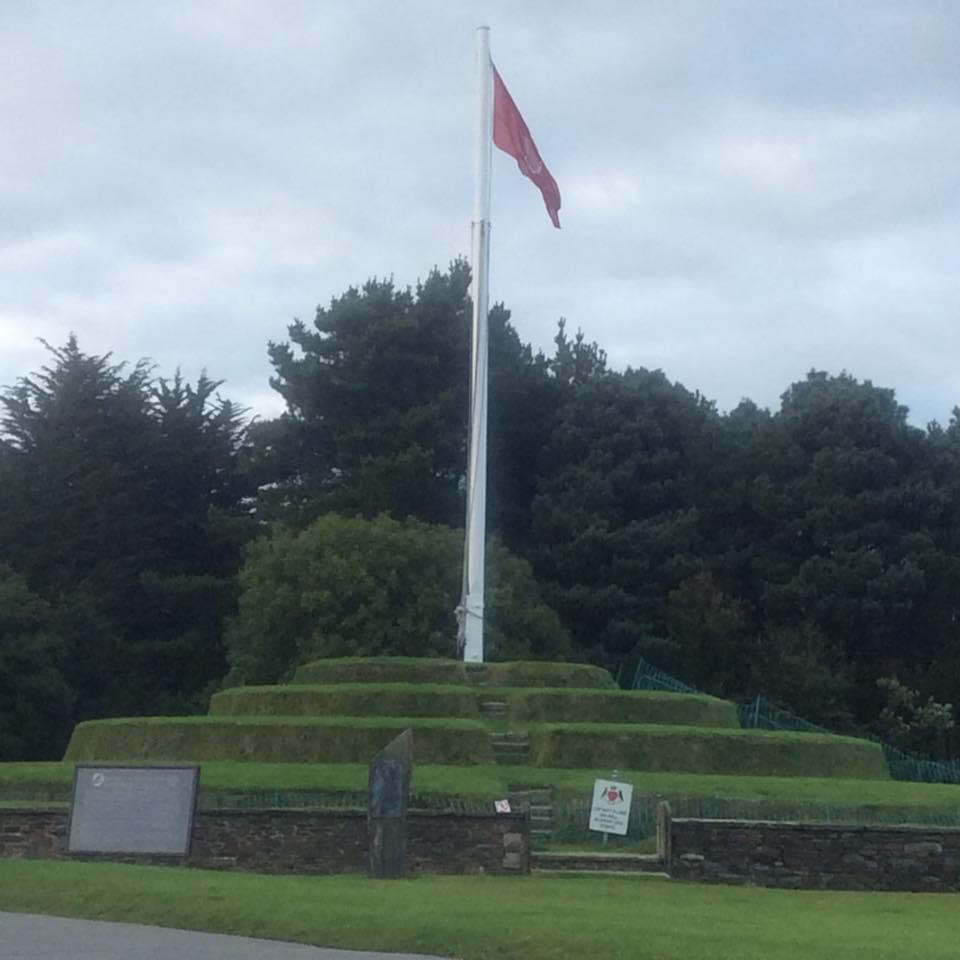
Tynwald is the parliament of the Isle of Man and has an unlimited, but not necessarily exclusive, legislative competence. Tynwald is of Norse origin founded in 979AD and in 1979 Celebrated 1,000 years of Existence. It is thus the oldest parliament in the world with an unbroken existence, closely followed by Iceland who claim theirs is older.
It has two Branches, the Legislative Council and the House of Keys, which sit separately to consider legislation, but also sit together in Douglas, and annually at St John's on Tynwald Day for announcing New Laws in Manx Gaelic and English and for accepting Petitions.
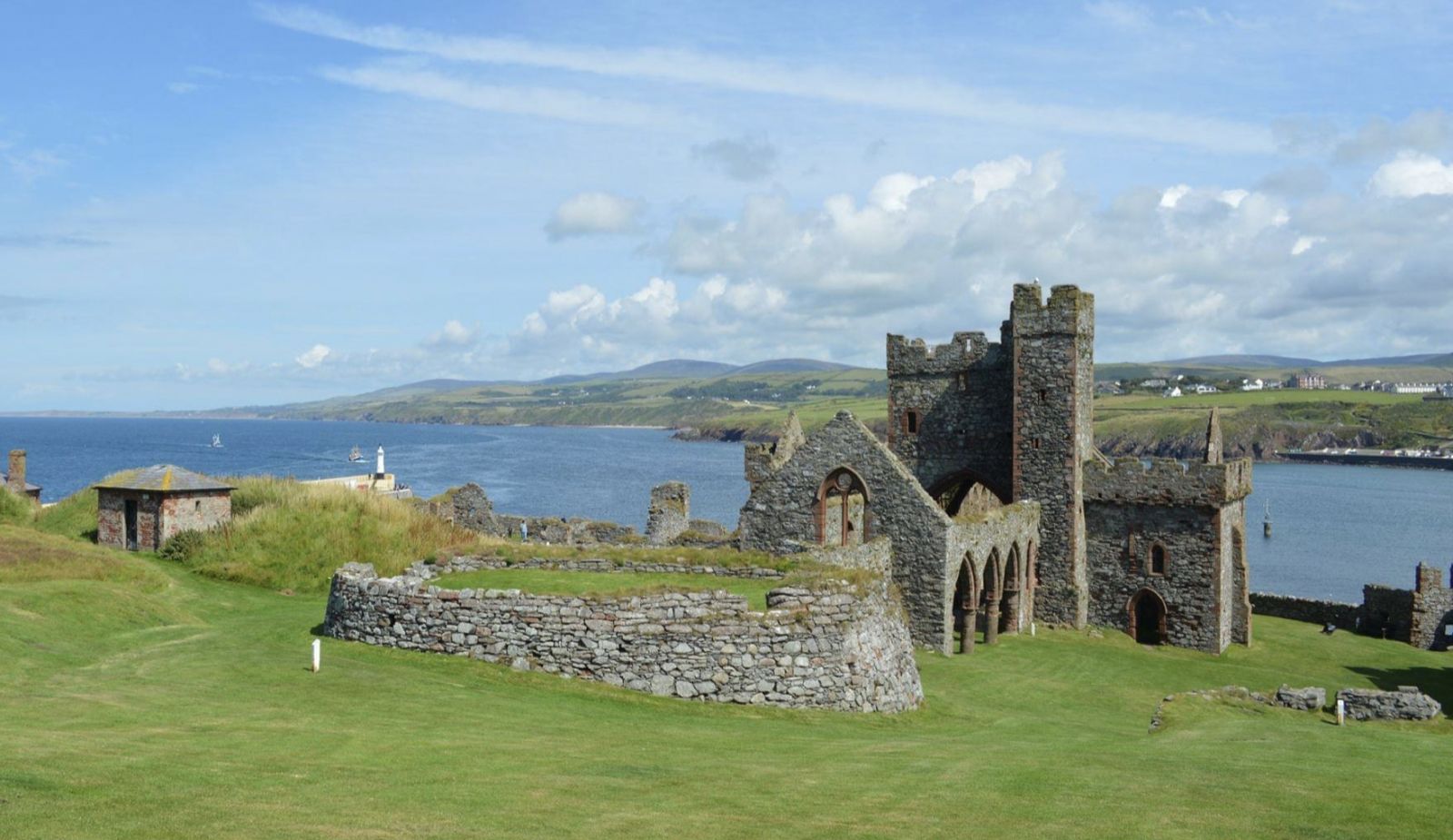
Peel Castle – Cashtal Phurt Ny h-inshey - was originally a place of worship before becoming the fort of Magnus Barelegs, 11th century Viking King of Mann
While there were older stone Celtic monastic buildings on the island, the first Viking fortifications were built of wood. The prominent round tower was originally part of the Celtic monastery, but had battlements added at a later date. In the early 14th century, the majority of the walls and towers were built primarily from local red sandstone, which is found abundantly in the area. After the rule of the Vikings, the castle continued to be used by the Church due to the cathedral built there – the see of the diocese of Sodor and Man – but was eventually abandoned in the 18th century.
The castle remained fortified, and new defensive positions were added as late as 1860. The buildings within the castle are now mostly ruined, but the outer walls remain intact. Excavations in 1982-87 revealed an extensive graveyard as well as the remains of Magnus Barefoot's original wooden fort. The most spectacular finds were the 10th century grave of "The Pagan Lady" which included a fine example of a Viking necklace and a cache of silver coins dating from about 1030. The Castle's most famous "resident" is the so-called Moddey Dhoo or "Black Dog" ghost.
Peel Castle features today on the reverse side of the £10 notes issued by the Isle of Man Government.[1]
Castle Rushen and Castletown
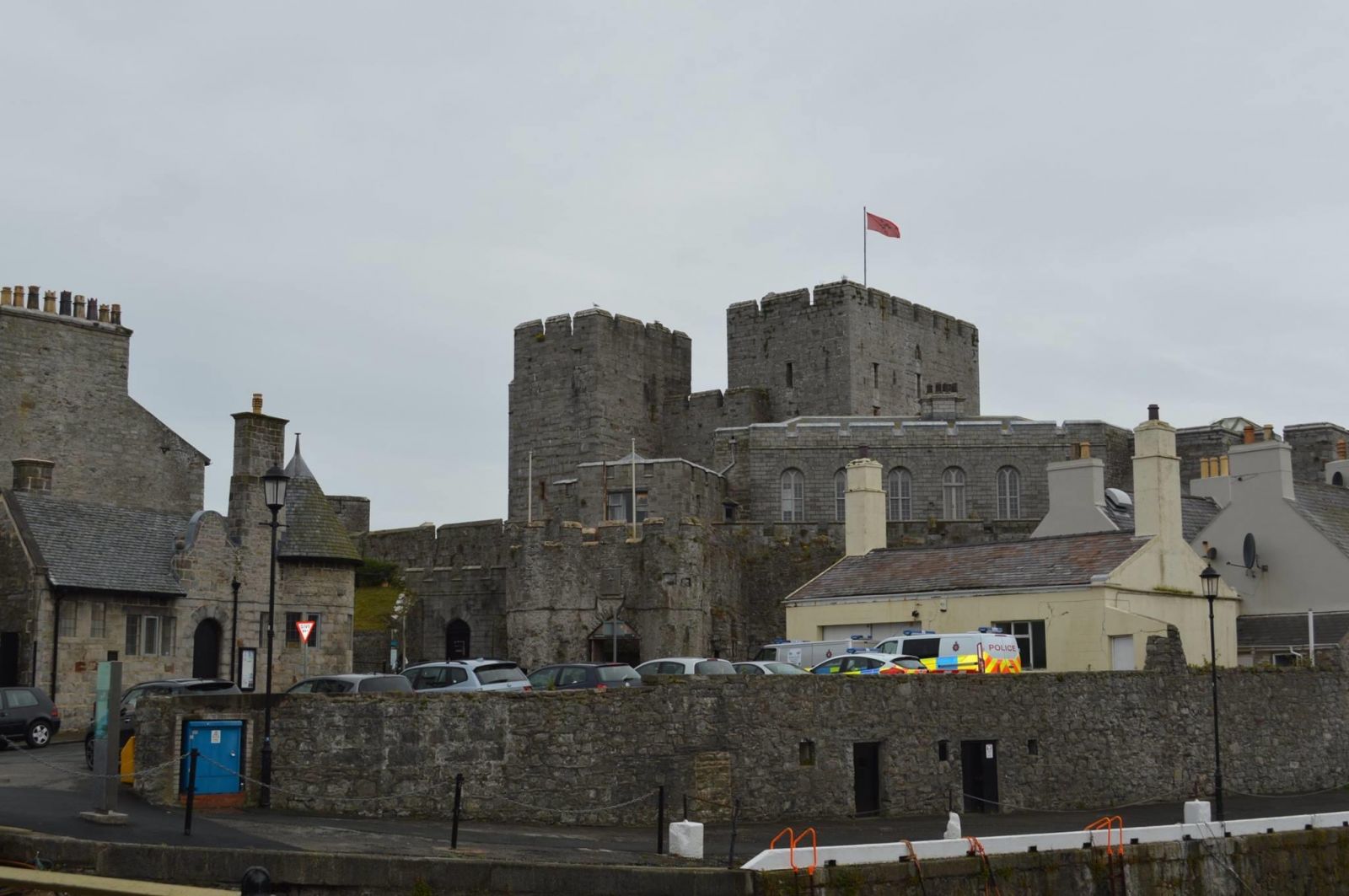
Castle Rushen or Cashtal Rosien in Manx Gaelic, is a Medieval Castle located in Castletown the historic capital, in the south of the Isle of Man. From the Battlements you look down over the Market Square to the south-east and the harbour to the north-east. Castle Rushen is probably the best example of a medieval castle in the British Isles, and is still in use as a museum and educational centre, although it is Seasonal and you need to check Manx Heritage.
Construction of Castle Rushen is thought to have taken place during the late-12th-century and early-13th-century. It was built for the rulers of the Isle of Man, who were known as the Kings of Mann and the Isles. King Magnus Óláfsson, the last of these Rulers is recorded in the Chronicles of Mann to have died at the castle in 1265.
The original version of Castle Rushen was a central square stone keep, which was fortified in order to guard the Entrance to the Silverburn River and Castletown Harbour. The Rulers of Mann continually developed the site between the 13th and 16th Century, and built it from Limestone that was in abundance in the local area. The Castle dominated the surrounding area and is still one of the Tallest if not the tallest building in the Area.
Castle Rushen along with the Isle of Man was transferred to Scotland in 1265 at the Treaty of Perth after King Magnus Olafsson died, and this ended the Scottish - Norwegian War. The Island and the Castle were to change hands between Scotland and England several times over the coming years.
In 1313 Scottish King Robert the Bruce took the Castle, but Eventually it fell to the English King Edward 1 Longshanks.
From 1405 the Isle of Man was controlled by Sir John Stanley who was given the Title King of Man by King Henry IV of England. In 1521 The title King of Mann was replaced by the title Lord of Mann which is held today Queen Elizabeth II
The Castle has served through its History as a Fort and Royal Residence, to a Mint, a Library, for Law Books, an insane asylum, an Administration Centre, a Prison and a place for the Government to meet.
In 1988, control of the castle was handed over to Manx National Heritage for restoration, being opened in July 1991 by the Earl of Derby as the first major Manx heritage site.
The Laxey Wheel or Lady Isabella
The Laxey Wheel which is also known as the Lady Isabella after the Govenors Wife, is built into the hillside above the village of Laxey on the Isle of Man. It is the largest working waterwheel in the world, and was built to pump water from the Lead mines. It was designed by Robert Casement, the wheel has a 72-foot-6-inch (22.1 m) diameter, is 6 feet (1.8 m) wide and revolves at approximately three revolutions per minute.
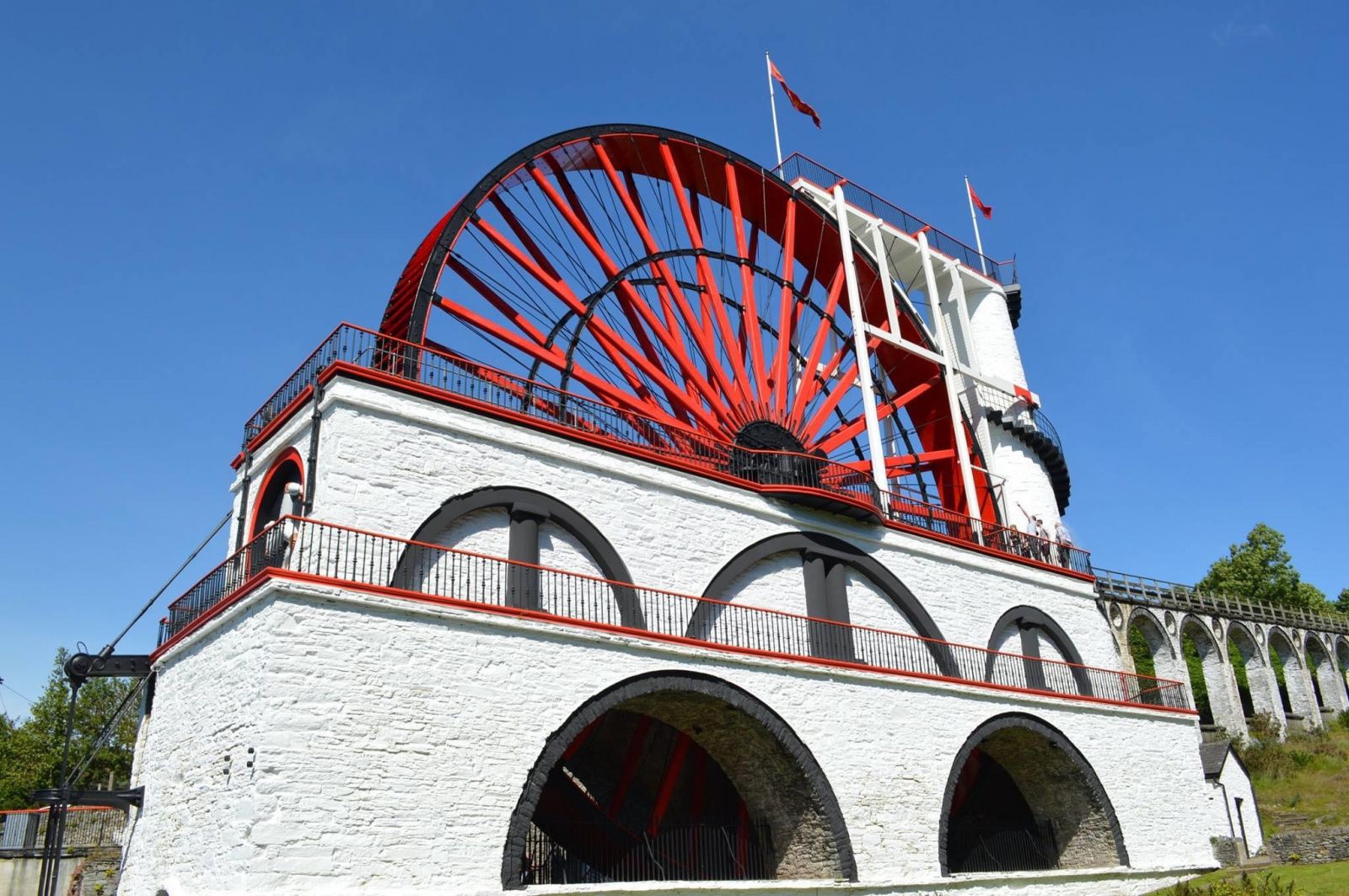
The Laxey Wheel is maintained by Manx National Heritage as part of the Great Laxey Wheel & Mines Trail, Laxey Wheel features on the reverse side of the Isle of Man Government £20 notes.