x




If you’re planning to own and operate a business, you might start thinking about things like renting commercial real estate, commuting to an office, or managing employees.
But with the rise of home businesses, more and more people are discovering ways to use remote work to pursue entrepreneurship, with their business headquartered at home.
In today’s connected world, where technology affords us more flexibility in how and where we work, home-based businesses come in a variety of forms.
Some require you to convert a spare room into a mini-warehouse for products, while others can be run completely online. But generally, you can start these types of businesses using your existing space and means.
A home-based business is a venture—whether full time or run as a side hustle—that you can start and operate using your own home as your base of operations. A few home-based businesses, especially those that sell online and don’t buy and hold lots of inventory, can even be run on the go, without the need to be bound to your home.
Naturally, there are pros and cons to consider when deciding whether a home-based business is right for you.
While there are plenty of ways to go about starting a home-based business, the following are some of the most approachable paths to creating a home business for yourself:

Many businesses center on the simple concept of importing products in bulk and selling them individually for a profit.
Maybe you recently traveled abroad and came across unique products that aren’t readily available in your market, but that you sense an appetite for. Or maybe you’ve zeroed in on a niche market
Either way, if these products are relatively easy to store and ship, you may have some solid home-based business ideas on your hands.
You can even initially use your home as a showroom to sell locally, giving you the option to expand with additional storage space and employees as you validate your idea and sales start to ramp up. This is how Artemis Design Co. got its start.
“I was living in the south end of Boston, and I had my living room just full of these products. I would have people come over if they wanted to look at something or try something on, and that’s how I made my first sale.” Milicent Armstrong, Artemis Design Co.
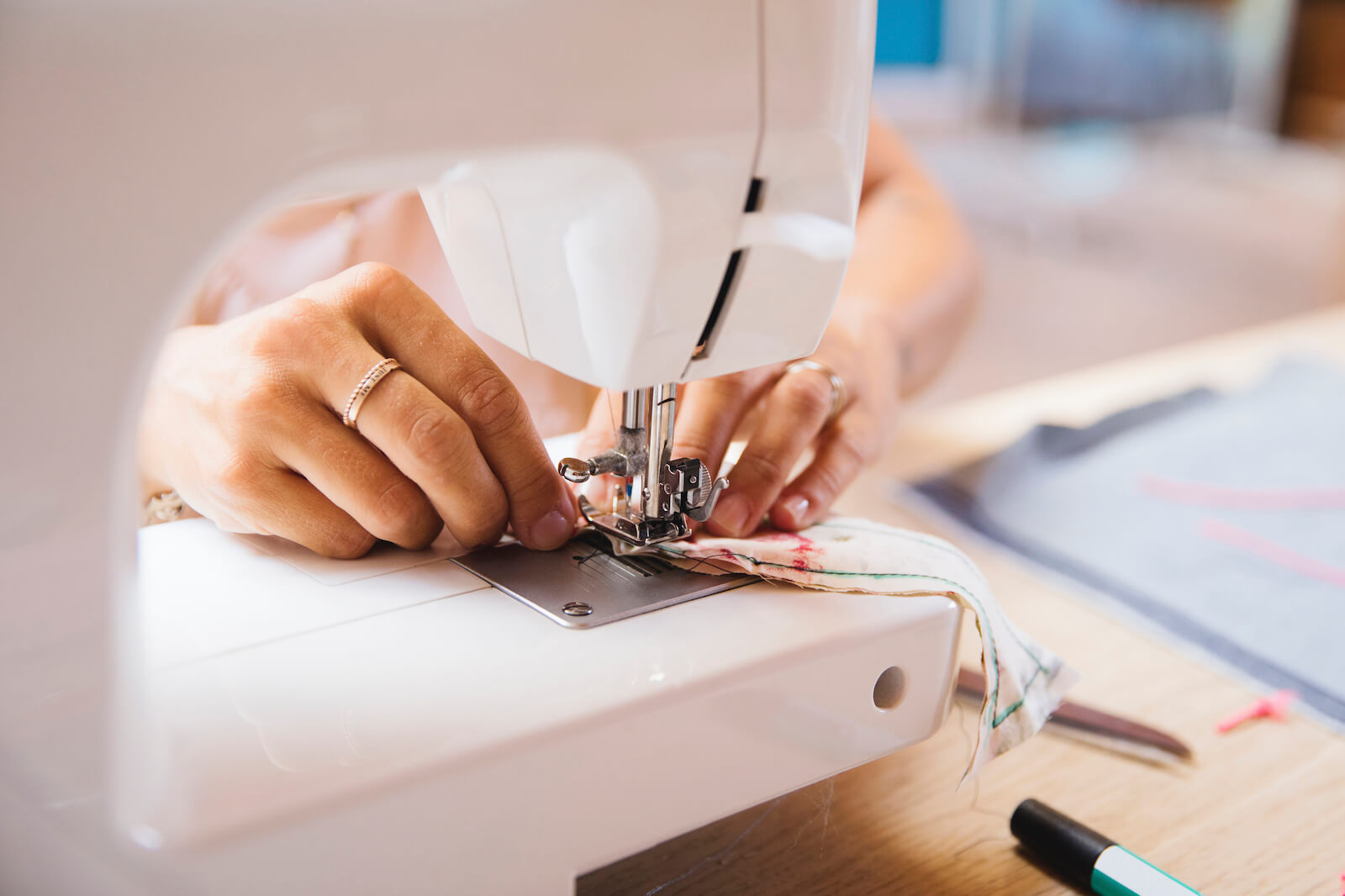
If you’re a maker yourself (or know someone who is), consider turning that hobby into a business. Even if you have to create your products elsewhere—in a studio, commercial kitchen, or workshop—you may be able to store and sell them in your own home.
When you have the ability to control nearly every aspect of the products you sell, you can make them more cost- effective, improve their quality, or cater them to a certain audience by targeting demand in the market.
Josh Pigford already had a thriving home business in a business analytics startup, but wanted to find a way to flex his creative muscles. He started printing succulent planters at home with his 3D printer—and a business was born. Cedar & Sail now carries planters, coasters, and other small desk tchotchkes.

Whether you choose to start on a marketplace like Etsy or build your own branded storefront, selling your creations is a great way to share your passion with others and make money too. Just be wary of regulations concerning products that customers ingest or put on their skin.
Check out these resources for launching a home-based business selling handmade products:
Best of all, producing your own products doesn’t have to be overwhelming. When you’re ready to scale, you can establish a process and onboard new employees to help with production.

So far, we’ve covered business ideas that require you to hold inventory in your home. But there are a variety of online businesses ideas to pursue that don’t involve worrying about inventory and shipping.
These businesses employ a dropshipping model, where a third party produces, stores, and ships your products on your behalf, leaving marketing and customer service as your chief responsibilities.
Children’s brand Finer & Dandy is an example of a home-based business that uses a dropshipper. Founder Courtney White started the company in search of a way to make money from home without spending too much time providing services to customers. That’s when she discovered dropshipping. Now, she wakes up at 4 a.m. every morning to run her dropshipping business before going to her day job.

Your dropshipping supplier can be local or overseas, but you need to ensure you find a supplier you can trust to deliver a consistently great customer experience after the sale. Always do your due diligence or you might put your business’ reputation at risk.
There are even Shopify apps, such as Oberlo
At its core, dropshipping involves becoming a distributor of a third party's products, taking on the costs (both financial and time-based) of marketing to be rewarded with the margins when you make a sale. In many cases, this can make your products a commodity with limited opportunity to brand your customer experience. Luckily, there are a few different ways you can still compete, even when there’s no shortage of your products in the market you’re selling in:

Using a similar dropshipping model, a print-on-demand business doesn’t require you to hold any inventory or ship anything yourself. Print-on-demand even offers you more flexibility to customize white label products with your own creative designs.
Rebecca Lee Funk launched The Outrage, a women’s rights activist apparel brand that sells print-on-demand t-shirt designs from her home. The business donates a portion of profits to Planned Parenthood in Donald Trump’s name. Her launch campaign went viral, and The Outrage turned into a thriving ecommerce business.

There are many other print-on-demand products you can sell: books, hats, backpacks, blankets, pillows, mugs, shoes, hoodies, phone cases, watches, and more, depending on the supplier you choose to work with.
Many print-on-demand businesses focus on serving a specific niche or, better yet, a shared identity. What are people passionate about and proud to share? What about yourself? From pet owners to vegans to gamers, there are plenty of passionate communities you can create products for.
If you have design skills, you can create your own designs. But if not, you can always hire the talent you need
For a full runthrough of how print on demand works and how you can get started, be sure to take our video course inside Shopify Academy.
Services are even simpler than products to start selling at home, but the challenge is allocating your limited time. “Time is money” is never truer than when you’re running a service-based business.
Creative professionals, like designers or marketers, might freelance or consult with other companies, juggling multiple clients, often remotely from their own home office with occasional travel. Others might operate based on appointments and bookings to offer their services to individuals directly.
Service-based home business ideas include:
Service-based businesses often require a lot of networking and word-of-mouth referrals to find suitable clients, but satisfied clients will likely retain your services over time.
For this reason, you don’t necessarily need a large number of customers to do well, as you would with a product-based business. Depending on the service you’re offering, a handful of high-quality clients can be enough to support yourself full time while working from home.