x




According to historical data, Monsieur Es-Sayed Aly Gibarah informed the local museum about the discovery of the site in 1900. The man allegedly discovered the underground graves while collecting stones from the area, informs Vintage News.
According to archaeologists, the catacombs of Kom el Shoqafa are the largest funerary site in the Greco-Roman period. Discovered in Alexandria, the tunnels built underground represent a combination of different types of ancient arts and cultures. Alexandria was founded in 331 BC, its name coming from the famous warrior Alexander the Great . In this place the cultures of the Egyptians and the Greeks were reunited.
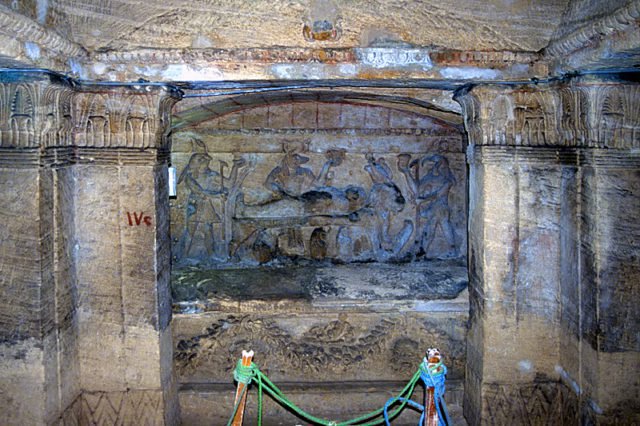
Photo credit: Roland Unger CC BY-SA 3.0
In 31 BC, the Romans took power, influencing the culture of Alexandria. Currently, there are not many sites that contain a mixture of Roman, Egyptian and Greek cultures from the past, but this is why the catacombs of Kom El Shoqafa are one of the most important sites in Alexandria's past.
The name Kom el Shoqafa is derived from the ancient Greek language and means "Mountain of Shards" because in the area there were often piles of shards of objects from which wine was consumed in the past.
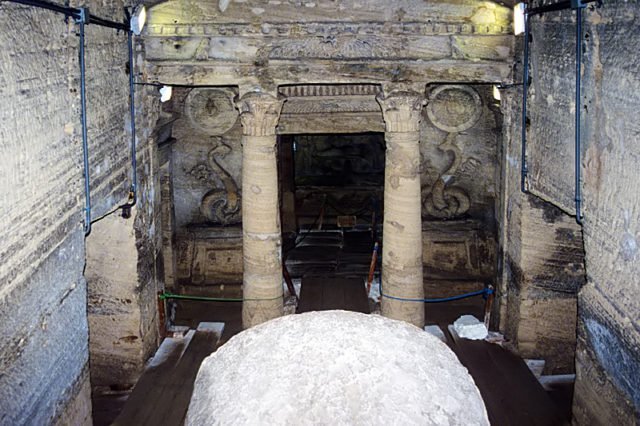
Photo credit: Roland Unger CC BY-SA 3.0
According to initial research, the tomb was originally made for a single family, but was extended over time to a large burial site, the reason being still unknown. Experts claim that there was a funerary chapel above the catacombs. The middle level of the catacombs is reminiscent of the structure of Greek temples. Behind what appears to be a "narthex" are two statues - that of a man and a woman, experts suggest could be the main owners of the tomb. Another prominent structure is that of two serpents that could illustrate the Greek god Agathodaimon or "god of the spirit." Elements of Egyptian and Roman culture are integrated in the structure of the snakes, and above the heads of the snakes there is a painting of Medusa .
The site, although built before the medieval period, is considered one of the Seven Wonders of the Middle Ages.