



x
Black Bar Banner 1
x

NEW: About Me Look — turn on a full-width dark About Me from your profile Configuration (Profile Page Upgrade). The Academy, profile feeds and Media Feed now read like the News Feed. See Subscriptions »

New: AI Blog Autopilot — free for the next 30 days. Switch it on by November 15th »

NEW: Smart Mail is live — free for every member. Send broadcasts, build lists and run autoresponders. Open Smart Mail »

New training: The Campaign Map. Watch it now »

A+ A−
Ads by Markethive - View All
The Blog Feed
The Blog Feed
» Blog Feed
Write a New Blog Post
Search Blog Status
Most Viewed
Most Recent
Most Shared
Alphabetical
Markethive Blog (default)
My Blog Posts
Friends' Blogs
Blog Categories
All
Advertising
Blockchain & Cryptocurrency
Business Development
Diet & Weight Loss
Environmental
Health and Wellness
History and Culture
Home and Garden
Marketing
Mentoring & Training
Money & Finance
Other
Political
Prayer & Religion
Programming & Technical
Real Estate
Search Engine Optimization
Social Media
Spirituality
Sports & Recreation
Transport
Travel & Events
Website Design
Blogging Tools & Assets
My Blog Info
Members Subscribed to You
Blogs You Are Subscribed To
Website Widget
Wordpress Plugin
Subscribe for Greater Services
Subscribe to one of many subscriptions, each one includes the previous ones.. Unlock powerful tools, advance features, to build a powerful reach.

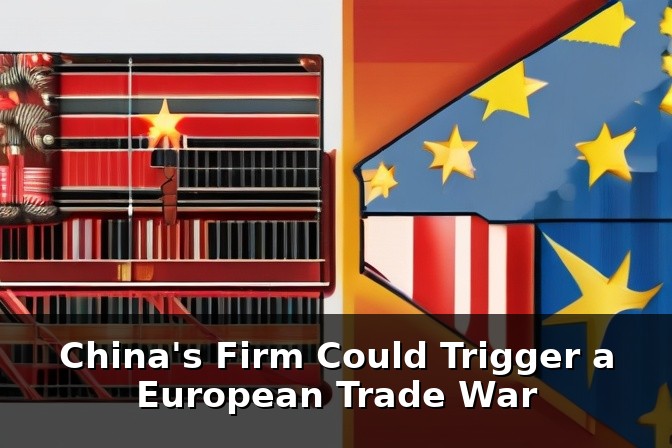
China's Firm Could Trigger a European Trade War

Posted by CEO Thomas Prendergast on July 08, 2026 - 6:15am


China's Firm Could Trigger a European Trade War

The Chinese Company That Could Start a Trade War With Europe

In the high-stakes arena of border security, a single player can tilt the balance of global trade. Nuctech, a Chinese company born from state-backed research and development, has grown into a global supplier of border-control technology. Its ascent has not only reshaped competitive dynamics in security tech but also positioned it as a potential flashpoint in the broader China–Europe economic frictions.

What Nuctech does and why it matters

Nuctech specializes in systems that scan and inspect people, vehicles, and freight at borders, ports, and critical facilities. Its portfolio includes high-tech X-ray scanners, metal-detection and explosive-detection equipment, container inspection solutions, and accompanying software for custody, monitoring, and risk assessment. The company’s reach spans continents, serving airports, land crossings, and government agencies that rely on rapid, accurate screening to keep borders secure. In an era of heightened security concerns and rising demand for automated, accurate screening, Nuctech sits at the intersection of technology, policy, and national sovereignty.

From state-backed startup to global player

The company’s origins are tied to China’s innovation model, where research institutions and state actors help translate science into industrial strength. With government backing, Nuctech has access to funding, contracts, and procurement pipelines that can accelerate product development and scale. This “state-enabled” path often translates into competitive advantages in price, customization, and after-sales support for large, government-led projects. Yet it also invites scrutiny from markets wary of subsidies and non-market practices, especially when export controls and dual-use tech sit at the core of the business.

Why it has become a flashpoint

The tensions around Nuctech stem from two intertwined concerns:

  • Subsidies and market access. Western governments and trading partners worry that state funding distorts competition, enabling lower prices, faster deployment, and favorable terms for state-backed players in sensitive sectors like border security.
  • Security and dual-use questions. Border scanners and related tech sit on a knife-edge between civilian use and security applications. When a single company can influence the security posture of multiple nations, governments demand strict controls on procurement, licensing, and supplier diversification.

These concerns have translated into regulatory and policy responses in Europe and beyond, from procurement rules to investigations into subsidies and competitive practices. The narrative isn’t simply about who sells the most; it’s about whether the playing field remains fair when influential players operate with unique state-backed advantages.

Implications for Europe and global trade

  • Security vs. openness. Europe must balance robust border security with the need to maintain open, competitive markets. Procurement decisions that favor or exclude certain suppliers can reshape technology ecosystems and influence long-term capabilities.
  • Non-market tools at play. The European Union and its peers increasingly rely on a mix of rules—funding transparency, foreign subsidies instruments, and security screenings—to ensure reciprocal access and fair competition.
  • Supply-chain resilience. Dependency on a single source for critical security infrastructure prompts calls for diversification, local manufacturing where feasible, and multi-vendor strategies to reduce risk.
  • Geopolitical signaling. The stance Europe takes on Nuctech affects broader strategic calculations, including sanctions regimes, export controls, and tech partnerships with other global players.

What this means for marketers and entrepreneurs

For the entrepreneurial and business communities on Markethive, Nuctech’s trajectory offers practical lessons:

  • Evaluate risk in supply chains. Critical infrastructure buyers should map supplier dependencies, including potential state-driven risks, and diversify to mitigate disruptions.
  • Monitor policy shifts. Subtle changes in import/export rules, subsidy disclosures, or security reviews can have outsized effects on procurement costs and timelines.
  • Focus on compliance and transparency. Clear governance around subsidies, pricing, and local content helps future-proof dealings with global buyers who prioritize risk management.
  • Leverage multi-vendor strategies. Offering a diverse ecosystem of vetted partners can reduce exposure to geopolitical bottlenecks and build trust with buyers seeking resilient solutions.

Conclusion

Nuctech’s rise—from a state-influenced startup to a global border-security supplier—highlights how security imperatives, economic policy, and geopolitics intersect in today’s trade landscape. As Europe and other regions reassess market access, subsidies, and supplier diversity, the company will remain a touchpoint for debates about fairness, security, and the future of global commerce. For entrepreneurs and buyers alike, the takeaway is clear: resilience, transparency, and strategic risk planning are essential in navigating a world where technology and national interests are tightly intertwined.


Simon Keighley A fascinating look at how a single technology company can become a catalyst for wider conversations around trade, security, supply chains, and the evolving dynamics of global competition.
July 9, 2026 at 4:59am











