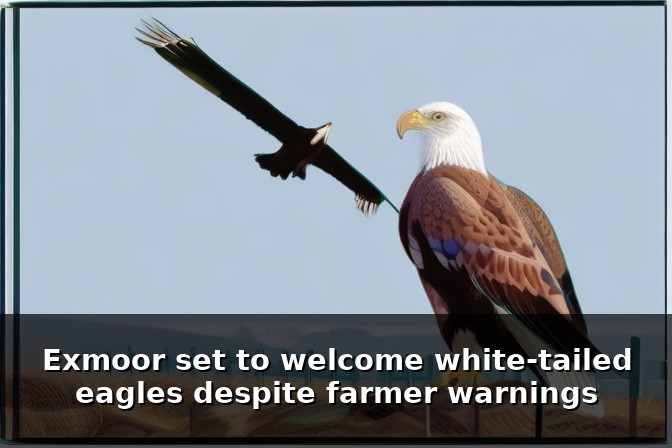
Exmoor’s Bold Move: White-tailed Eagles on the Horizon Despite Farmer Warnings
Exmoor is poised to welcome one of the UK’s most formidable birds of prey—the white-tailed eagle. Proponents frame the move as a milestone for biodiversity, habitat health, and regional pride. Critics, notably local farmers, warn that introducing the largest raptor in Britain could threaten lambing seasons and small-scale livestock. As the plan advances, the conversation is shifting from “if” to “how” we balance conservation with farming realities.
Why bring back the white-tailed eagle to Exmoor?
- Biodiversity restoration. Reintroducing a top predator helps re-establish natural ecological checks and balances. By regulating herbivore populations and shaping prey dynamics, eagles can contribute to healthier, more resilient ecosystems across Exmoor’s coastal and moorland landscapes.
- Ecological services. Beyond predation, these birds scavenge and circulate nutrients, potentially reducing disease pressure and supporting a more balanced food web.
- Cultural and educational value. The presence of such a flagship species can deepen public engagement with wildlife, tourism experiences, and school-based science programs, reinforcing Exmoor’s identity as a premier nature destination.
What concerns are farmers voicing?
- Livestock safety and economic impact. Lamb losses and poultry predation are recurring concerns in areas with large predator populations. Farmers worry about the potential for repeated incidents, especially during lambing seasons when vulnerable newborns are present.
- Practical management challenges. Responding to predator activity requires adjustments in fencing, grazing patterns, and supervision, which can increase costs and labor. Some producers worry these demands may not align with traditional farming schedules.
- Uncertainty about risk levels. As a species with a broad diet, white-tailed eagles might target a range of prey, but actual predation rates on livestock can vary with landscape, weather, and available food sources. This uncertainty makes planning difficult for farmers weighing risk vs. reward.
How can risk be managed without sacrificing conservation goals?
- Evidence-driven monitoring. Implement a robust monitoring program to track nesting success, prey selection, and any livestock incidents. Data-driven insights help fine-tune management actions and communicate results to stakeholders.
- Preventive husbandry practices. Measures such as secure lambing pens, night-time penning, guardian animals, and reinforced fencing can substantially reduce predation risk while letting eagles hunt in suitable areas.
- Strategic grazing and land-use planning. Collaboratively map grazing across sensitive seasons and habitats to minimize overlap between vulnerable livestock and eagle activity, especially near known nesting sites or strong feeding grounds.
- Financial safeguards and support. Consider compensation or indemnity for verified losses, plus subsidies for preventive infrastructure upgrades. A structured support package helps farmers participate willingly in the program.
- Community engagement and transparency. Regular forums, updates, and on-the-ground demonstrations build trust, align expectations, and empower farmers to contribute to adaptive management.
Lessons from other reintroduction efforts
Across Europe and the UK, predator reintroductions have shown that ecological benefits often accompany nuanced social dynamics. When accompanied by proactive collaboration, predator restoration can coexist with farming livelihoods, boost local economies through wildlife tourism, and revitalize regional identities. The key is ongoing communication, clear expectations, and a shared commitment to monitoring and adjustment.
What happens next?
Success hinges on partnership between conservation bodies, farmers, local communities, and researchers. The plan for Exmoor emphasizes staged releases, careful site selection, and a long-term monitoring framework. By prioritizing adaptive management, stakeholders can respond to emerging data—mitigating risks while pursuing the broader benefits of a restored apex predator.
Bottom line
Reintroducing the white-tailed eagle to Exmoor is about more than wildlife. It’s a test of collaborative stewardship: how a landscape can honor its farming heritage while embracing biodiversity gains that come with a top predator. With thoughtful mitigation, transparent dialogue, and shared investment in monitoring, Exmoor can become a model for balancing rural livelihoods with ambitious conservation outcomes.