



x
Black Bar Banner 1
x

NEW: About Me Look — turn on a full-width dark About Me from your profile Configuration (Profile Page Upgrade). The Academy, profile feeds and Media Feed now read like the News Feed. See Subscriptions »

New: AI Blog Autopilot — free for the next 30 days. Switch it on by November 15th »

NEW: Smart Mail is live — free for every member. Send broadcasts, build lists and run autoresponders. Open Smart Mail »

New training: The Campaign Map. Watch it now »

A+ A−
Ads by Markethive - View All
The Blog Feed
The Blog Feed
» Blog Feed
Write a New Blog Post
Search Blog Status
Most Viewed
Most Recent
Most Shared
Alphabetical
Markethive Blog (default)
My Blog Posts
Friends' Blogs
Blog Categories
All
Advertising
Blockchain & Cryptocurrency
Business Development
Diet & Weight Loss
Environmental
Health and Wellness
History and Culture
Home and Garden
Marketing
Mentoring & Training
Money & Finance
Other
Political
Prayer & Religion
Programming & Technical
Real Estate
Search Engine Optimization
Social Media
Spirituality
Sports & Recreation
Transport
Travel & Events
Website Design
Blogging Tools & Assets
My Blog Info
Members Subscribed to You
Blogs You Are Subscribed To
Website Widget
Wordpress Plugin
Subscribe for Greater Services
Subscribe to one of many subscriptions, each one includes the previous ones.. Unlock powerful tools, advance features, to build a powerful reach.

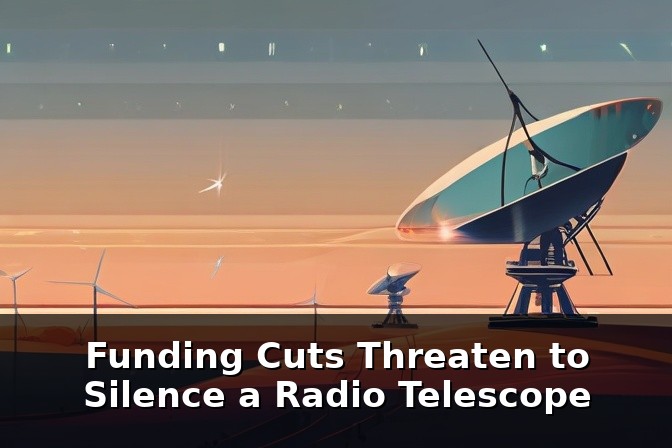
Funding Cuts Threaten to Silence a Radio Telescope

Posted by CEO Thomas Prendergast on July 13, 2026 - 6:15pm


Funding Cuts Threaten to Silence a Radio Telescope

UK Radio Telescope at Risk: Why Funding Cuts Could Silence a Key Observatory

Across the United Kingdom, a constellation of seven radio telescopes forms the backbone of the e-MERLIN network. This is not a single instrument but a linked system that delivers high-resolution views of the cosmos. As budgeting decisions loom, scientists warn that certain funding cuts could threaten the operations of one crucial site within this globally significant ensemble, with consequences for white-hot research and the training ground for the next generation of astronomers.

What is e-MERLIN and why it matters

e-MERLIN (the extended Multi-Element Radio Linked Interferometer Network) links several UK antennas to act as a single, highly capable telescope. By combining signals from individual dishes, it achieves fine angular resolution and sensitive imaging across radio wavelengths. The network spans multiple locations, with the ability to watch star-forming regions, jets from supermassive black holes, and the large-scale structure of galaxies with unprecedented clarity for a ground-based instrument. The UK’s involvement in e-MERLIN positions British astronomy at the forefront of radio science, complementing international facilities and enabling collaborations that push the boundaries of what we can observe in the universe.

The potential cuts and what they could mean

  • Reduced observing time: Fewer funded nights limit data collection, slowing discoveries and delaying project milestones.
  • Maintenance backlogs: Without steady support, aging equipment and software may fall behind, increasing downtime and risking sudden outages.
  • Staffing constraints: Fewer scientists and engineers on site can hinder operations, data processing, and the development of new observing modes.
  • Missed upgrades: Delays in receiver upgrades or system enhancements reduce sensitivity and the ability to pursue ambitious observing programs.
  • Impact on early-career researchers: Short-term funding gaps can disrupt PhD projects and postdoc positions, undermining the pipeline of talent in UK astronomy.

Why this matters for science and society

Radio astronomy is a key driver of technological innovation, training, and international collaboration. Networks like e-MERLIN enable high-precision imaging that helps answer fundamental questions about how galaxies evolve, how stars form, and how matter behaves in extreme environments. The data and methods developed in these programs often ripple into other fields, from medical imaging to telecommunications. Preserving access to a world-class observatory network helps the UK maintain leadership in science, attracts international partnerships, and inspires students and the public with tangible stories of discovery.

What could be done to safeguard the network

  • Stable, multi-year funding: Commit to ongoing operations with predictable budgets to avoid periodic shutdowns and safeguard long-term projects.
  • Prioritized investments: Focus on essential maintenance, critical upgrades, and software modernization to maximize scientific return per year.
  • Collaboration with academia and industry: Leverage partnerships to share costs, foster innovation, and expand the network’s capabilities through joint programs.
  • Operational efficiency: Explore streamlined scheduling, remote monitoring, and automated data pipelines to reduce overheads without compromising science quality.
  • Public and policy engagement: Highlight success stories and the broader impact of radio astronomy to garner broader support for science funding.

Looking ahead: navigating the decision landscape

Decisions about funding will shape what the UK can achieve in radio astronomy over the next decade. The potential shuttering of even a single site within e-MERLIN could cascade into fewer discoveries, slower progress on key scientific questions, and diminished training opportunities for researchers and engineers. By framing the issue around scientific opportunity, national resilience in technology, and the cultural value of curiosity-driven research, stakeholders can advocate for a sustainable path that protects this irreplaceable scientific infrastructure.

Conclusion

The seven-telescope e-MERLIN network stands as a testament to collaborative science and long-term planning. As financial deliberations unfold, safeguarding the operational life of these instruments is not just about preserving data—it’s about preserving a platform for discovery, innovation, and the next generation of explorers who will look to the skies with clearer eyes than ever before.


Simon Keighley A powerful reminder that preserving scientific research today enables the breakthroughs, technologies, and discoveries that shape tomorrow’s world.
July 14, 2026 at 4:59am











