
x
Black Bar Banner 1
x

NEW: About Me Look — turn on a full-width dark About Me from your profile Configuration (Profile Page Upgrade). The Academy, profile feeds and Media Feed now read like the News Feed. See Subscriptions »

New: AI Blog Autopilot — free for the next 30 days. Switch it on by November 15th »

NEW: Smart Mail is live — free for every member. Send broadcasts, build lists and run autoresponders. Open Smart Mail »

Training: Lesson 14 in Getting Started with MarketHive. Watch it now »

A+ A−
Ads by Markethive - View All
The Blog Feed
The Blog Feed
» Blog Feed
Write a New Blog Post
Search Blog Status
Most Viewed
Most Recent
Most Shared
Alphabetical
Markethive Blog (default)
My Blog Posts
Friends' Blogs
Blog Categories
All
Advertising
Blockchain & Cryptocurrency
Business Development
Diet & Weight Loss
Environmental
Health and Wellness
History and Culture
Home and Garden
Marketing
Mentoring & Training
Money & Finance
Other
Political
Prayer & Religion
Programming & Technical
Real Estate
Search Engine Optimization
Social Media
Spirituality
Sports & Recreation
Transport
Travel & Events
Website Design
Blogging Tools & Assets
My Blog Info
Members Subscribed to You
Blogs You Are Subscribed To
Website Widget
Wordpress Plugin
Subscribe for Greater Services
Subscribe to one of many subscriptions, each one includes the previous ones.. Unlock powerful tools, advance features, to build a powerful reach.

Added Sugar Is Not So Sweet

Posted by Bobby Brown on September 03, 2020 - 11:25am Edited 9/3 at 11:28am


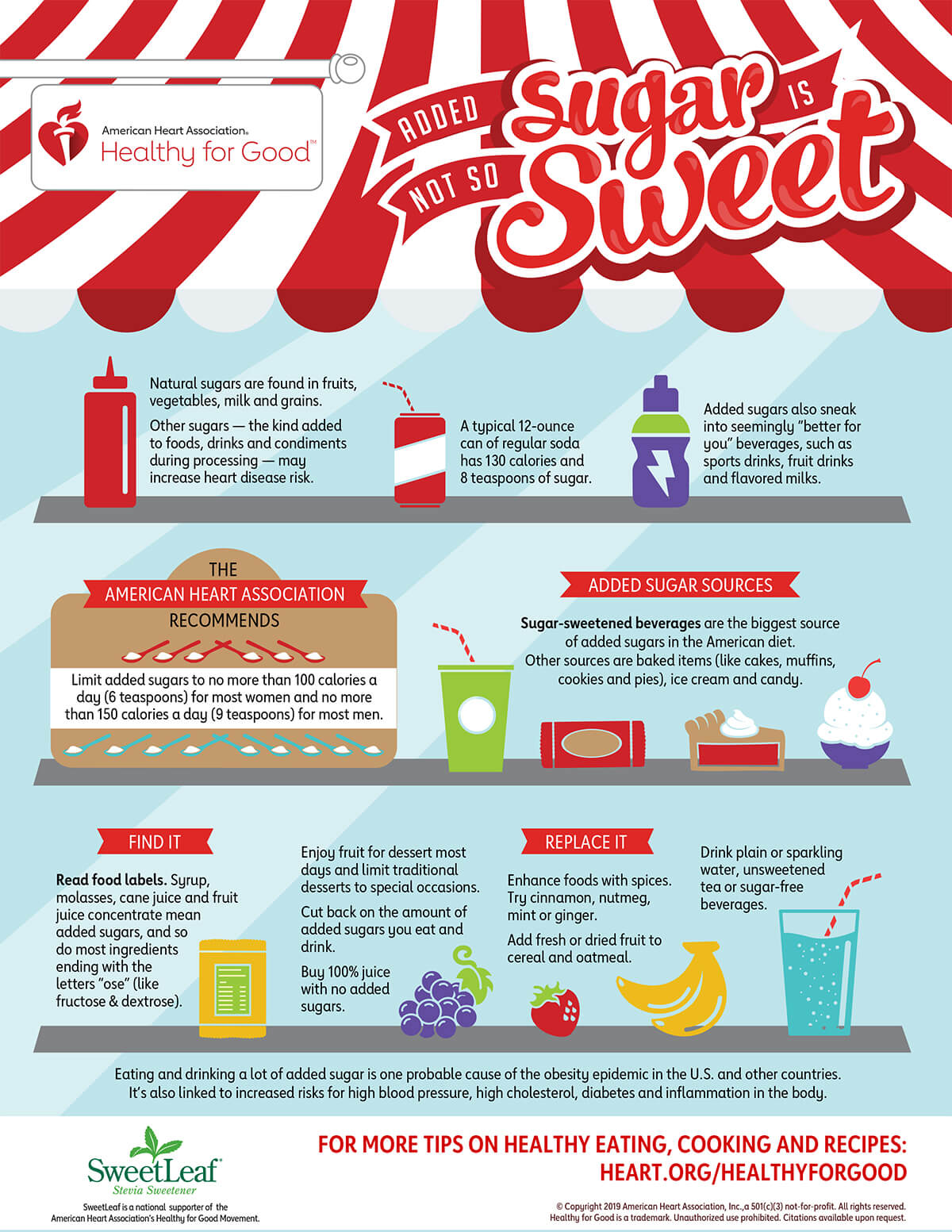
added sugar is not so sweet infographic image


Added Sugar Is Not So Sweet

Natural sugars are found in fruits, vegetables, milk and grains. Other sugars — the kind added to foods, drinks and condiments during processing — may increase heart disease risk. 

A typical 12-ounce can of regular soda has 130 calories and 8 teaspoons of sugar. Added sugars also sneak into seemingly “better for you” beverages, such as sports drinks, fruit drinks and flavored milks.


The American Heart Association Recommends: Limit added sugars to no more than 100 calories a day (6 teaspoons) for most women and no more than 150 calories a day (9 teaspoons) for most men.

Added Sugar Sources: Sugar-sweetened beverages are the biggest source of added sugars in the American diet. Other sources are baked items (like cakes, muffins, cookies and pies), ice cream and candy.

Find It: Read food labels. Syrup, molasses, cane juice and fruit juice concentrate mean added sugar, and so do most ingredients ending with the letters “ose” (like fructose and dextrose).

Replace It:

  • Enjoy fruit for dessert most days and limit traditional desserts to special occasions.
  • Cut back on the amount of added sugars you eat and drink.
  • Buy 100% juice with no added sugars.
  • Enhance foods with spices. Try cinnamon, nutmeg, mint or ginger.
  • Add fresh or dried fruit to cereal and oatmeal.
  • Drink plain or sparkling water, unsweetened tea or sugar-free beverages.

Eating and drinking a lot of added sugar is one probable cause of the obesity epidemic in the U.S. and other countries. It’s also linked to increased risks for high blood pressure, high cholesterol, diabetes and inflammation in the body.


Andries Van Tonder I don't like sugar at all
September 4, 2020 at 6:50am
Kevin Jacobson I am fanatical about reading the labels when I buy food.
September 3, 2020 at 9:59pm
Mihai Cristian Thanks for sharing
September 3, 2020 at 1:03pm
James Eckburg That is so true thanks for this great information Have agreaet day.
September 3, 2020 at 12:20pm