x





Anti-aging recipes from the ‘Blue Zones’ for a longer, healthier life. The life expectancy of an American born today averages 78.2 years. In this year alone,
Anti-aging recipes from the ‘Blue Zones’ for a longer, healthier life. The life expectancy of an American born today averages 78.2 years. In this year alone, over 70,000 Americans have reached their 100th birthday. What are they doing that the average American isn’t? To answer the question, National Geographic set out to find the world’s longest-lived people and study them. We knew most of the answers lied within their lifestyle and environment. They then worked with a team of demographers to find pockets of people around the world with the highest life expectancy, or with the highest proportions of people who reach age 100.
What they found were called the “Blue Zone” a term given to geographic regions that are the home to some of the world’s oldest people. It was first used by the author Dan Buettner, who was studying areas of the world in which people live exceptionally long lives. They are called Blue Zones because when Buettner and his colleagues were searching for these areas, they drew blue circles around them on a map.
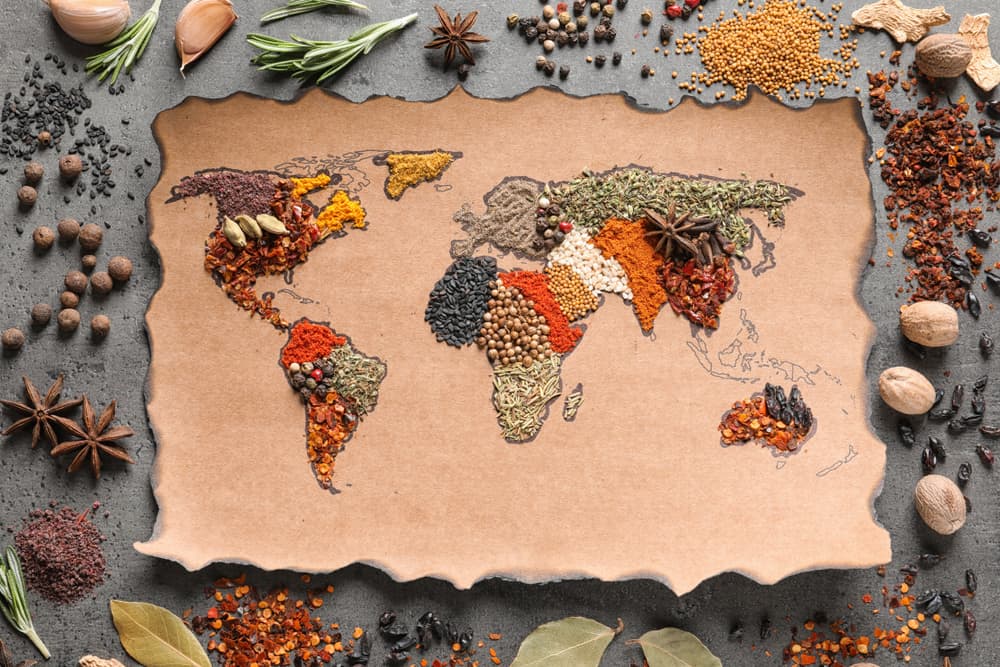
Each Blue Zone is different, yet the same in many ways.
The areas of the world that National Geographic called the ‘Blue Zones’ are described as:

Discovering the Blue Zones. Shutterstock.
What began as a National Geographic expedition, led by Dan Buettner, to uncover the secrets of longevity, evolved into the discovery of the 5 places around the world where people consistently live over 100 years old, dubbed the Blue Zones. Dan and his team of demographers, scientists, and anthropologists were able to distill the evidence-based common denominators of these Blue Zones into 9 commonalities that they call the Power 9.
They have since taken these principles into communities across the United States working with policymakers, local businesses, schools, and individuals to shape the environments of the Blue Zones Project Communities. What has been found is that putting the responsibility of curating a healthy environment on an individual does not work, but through policy and environmental changes the Blue Zones Project Communities have been able to increase life expectancy, reduce obesity and make the healthy choice the easy choice for millions of Americans.

Each Blue Zone is different, yet the same in many ways. Shutterstock.
A wholesome diet isn’t the only factor thought to lead to longevity for those living in Blue Zones. Such individuals also have top levels of physical activity, low-stress levels, robust social connections, and a strong sense of purpose. Still, sticking to a vibrant, nutrient-rich eating plan appears to play a key role in the exceptional health of Blue Zone dwellers. Here’s a look at seven foods to include in your own Blue Zone-inspired diet.
But what they put in their mouths, how much and when is worth a close look. That’s why in 2000, a National Geographic explorer struck out on a quest to find the lifestyle secrets to longevity, has written a follow up to his original study. The new book is called The Blue Zones Solution, and it is aimed at Americans and is mostly about eating.

A plant-based diet. Shutterstock.

Specific lifestyle habits that are called the ‘Power 9’. Shutterstock.
To make it to age 100, it seems that a person must have to win the genetic lottery. However, many individuals have the capacity to make it well into the early 90s and largely without chronic disease. The Blue Zones uncovered 9 evidence-based common denominators among the world’s centenarians that are believed to slow this aging process. Ultimately, the team of demographers and researchers found that all blue zone areas share nine specific lifestyle habits that are called the ‘Power 9’. Now, let’s take a closer look at the lifestyle and healthy eating habits of these centenarians.
1. They move naturally – They get daily exercise, but instead of going to the gym, they grow gardens and do not have mechanical conveniences for house and yard work.
2. They have a purpose – The Okinawans call it Ikigai and the Nicoyans call it plan de vida; for both, it translates to “why I wake up in the morning.” Knowing your sense of purpose is worth up to 7 years of extra life expectancy.
3. They know how to downshift – They have routines to shed stress. Okinawans take a few moments each day to remember their ancestors; Adventists pray; Ikarians take a nap; and Sardinians do happy hour.
4. They have an 80% Rule – Eating only until they are 80% full. The 20% gap between not being hungry and feeling full could be the difference between losing weight or gaining it. People in the Blue Zones eat their smallest meal in the late afternoon or early evening, and then they do not eat any more the rest of the day.

They know how to de-stress. Shutterstock.
5. They have a Plant-based diet – Beans, including fava, black, soy, and lentils, are the cornerstone of most centenarian diets. Meat is eaten on average only 5 times per month. Serving sizes are 3 to 4 oz, about the size of a deck of cards.
6. They have a happy hour – People in all Blue Zones (except Adventists) drink alcohol moderately and regularly. They have 1 to 2 glasses per day, preferably Sardinian Cannonau wine.
7. They are part of a community – All but 5 of the 263 centenarians interviewed belonged to some faith-based community. Denomination does not seem to matter. Research shows that attending faith-based services 4 times per month will add 4 to 14 years of life expectancy.
8. They put their loved ones first –This means keeping aging parents and grandparents nearby or in the home (it lowers disease and mortality rates of children in the home too.). They commit to a life partner (which can add up to 3 years of life expectancy) and invest in their children with time and love.
9. They have Long-lasting friendships- Okinawans created moais—groups of 5 friends that committed to each other for life. Research shows that smoking, obesity, happiness, and even loneliness are contagious. So the social networks of long-lived people have favorably shaped their health behaviors. Now let’s have a look at some anti-aging recipes from the ‘Blue Zones’.

Ikaria, Greece. Shutterstock.
People on this tiny Aegean island live 8 years longer than Americans do. They experience 20% less cancer, half the rate of heart disease, and almost no dementia. Ikarians eat a variation of the Mediterranean diet, with lots of fruits and vegetables, whole grains, beans, potatoes, and olive oil. Ikarians also downshift with a midafternoon break. People who nap regularly have up to 35% lower chances of dying from heart disease. It may be because napping lowers stress hormones or rests the heart.
One Ikarian in particular, Stamatis Moraitis, moved to America when he was 22 years old to pursue the American dream. He was a painter and immediately started having success, bought a house, married, and had 3 kids. At the age of 66 years, he developed terminal lung cancer. Instead of dying in America, he decided to move back to Ikaria and moved in with his parents. He started breathing the air, drinking the wine, and eating a Mediterranean diet. After a few months, he planted a garden, not planning on ever getting to harvest the vegetables; 37 years later he has a vineyard producing 200 L of wine a year. What was his secret? He says “I just forgot to die.”

Ikarian beach. Shutterstock.
Ikaria is way out there, a plane ride, or a long ferry ride away from Athens. It’s one of the Aegean islands, not too far from Turkey and right next to Samos island. In my opinion, it is definitely worth a trip. That’s because it is one of the most unique Greek islands. It is another way of life here. People don’t lock doors. People talk slower. Also, Ikarian time isn’t about keeping time. Forget about setting a numerical time for an appointment – think afternoon, evening, or sometime around that time. Local wine is poured without counting glasses. Food is naturally healthy, so people eat very well. Yes, that leads to one of the next best things to do on Ikaria… In recent years, this quiet island gained more fame thanks to fascinating studies focusing on the long amazing lives of its locals and the healthiness of the local diet.
People in Ikaria enjoy drinking herbal teas with family and friends, and scientists have found that they pack an antioxidant punch. Wild rosemary, sage and oregano teas also act as a diuretic, which can keep blood pressure in check by ridding the body of excess sodium and water. Take a cue from Ikarians and take a midafternoon break. People who nap regularly have up to 35 percent lower chances of dying from heart disease. It may be because napping lowers stress hormones or rests the heart.

Dining on the water. Shutterstock.
Ikarians have traditionally been fierce Greek Orthodox Christians. Their religious calendar called for fasting almost half the year. Caloric restriction – a type of fasting that cuts about 30 percent of calories out of the normal diet – is the only proven way to slow the aging process in mammals. Instead of cow’s milk, Ikarians use grass-fed goat’s milk. It provides potassium and the stress-relieving hormone tryptophan. It’s also hypoallergenic and can usually be tolerated by people who are lactose intolerant. Ikarians foster social connections, which have been shown to benefit overall health and longevity. So get out there and make some plans.
In terms of meals Ikarians typically have a late morning breakfast comprised of goat’s milk, yogurt and or cheese, fruits, herbal tea or coffee, whole grain bread, and local honey. At lunch, salads made of beans, legumes, and potatoes, along with cooked fresh garden vegetables are standard fare and prepared with generous amounts of olive oil. Locally caught fish may also be served, and Ikarian red wine typically accompanies the meal. Meat, often a goat or pig raised by the family or neighbors, is eaten only about 5 times per month.

Imam Bayildi. Shutterstock.
Imam Bayildi
Serves 5
Ingredients
5 medium eggplants, ends cut off, scored deeply four times lengthwise
1 cup parsley, chopped
2 large tomatoes, cut into wedges
2 onions, cut into wedges
4 cloves garlic, sliced in thirds
1 cup olive oil
2 small potatoes, peeled and thinly sliced
1 bell pepper (green, red, or yellow)
Salt and pepper to taste
Instructions
In a large pan, sauté eggplants in olive oil for about 10 minutes, rotating often. In a medium bowl, mix together parsley, tomatoes, onions, garlic, and 1 cup olive oil as your stuffing mixture. Take a separate pan, sauté stuffing for 6-8 minutes, or until onions are tender. Add the stuffing mix on top and into the eggplants. Place potatoes around the eggplants in the pan. Cook over low heat for about 30 minutes, checking the pan for liquid and basting with cooking liquid if needed.

The authentic taste of Ikaria. Shutterstock.
Tomato & Pita Salad
Serves 4-6
Ingredients
2 (8- to 10-inch) pita, grilled or toasted well
3 large, firm-ripe tomatoes, cut into 1/2-inch (4 cm) chunks
2 red onions, halved and thinly sliced
1 1/2 cups chopped fresh flat-leaf parsley
2 tsp dried Greek oregano
6 tbsp Greek extra-virgin olive oil
Sea salt and freshly ground black pepper
Instructions
Cut the toasted pitas into strips about 1/8 inch (3 mm) wide and 2 inches (5 cm) long. In a bowl, toss together the pita strips, tomatoes, onions, herbs, olive oil, and salt and pepper to taste. Serve immediately.

Ogliastra Sardinia, Italy. Shutterstock.
Located off the coast of Italy, Sardinia is home to the world’s longest-lived men. This community of shepherds walks 5 mountainous miles a day or more. This natural movement provides all the positive cardiovascular benefits you might expect and also has a positive effect on muscle and bone metabolism without the point pounding of running marathons. The classic Sardinian diet is plant-based, consisting of whole-grain bread, beans, garden vegetables, and fruits. Meat is largely reserved for Sundays and special occasions.
Sardinians drink wine moderately. Cannonau wine has 2 or 3 times the level of artery-scrubbing flavonoids as other wines. Moderate wine consumption may help explain the lower levels of stress among men. Families are very close-knit. Grandparents can provide love, childcare, financial help, wisdom, and expectations/motivation to perpetuate traditions and push children to succeed in their lives. This may all add up to a healthier, better adjusted, and longer life for their children. It may give the overall population a life expectancy bump.

Local Sheep. Shutterstock.
The classic Sardinian diet consists of whole-grain bread, beans, garden vegetables, fruits, and, in some parts of the island, mastic oil. Sardinians also traditionally eat pecorino cheese made from grass-fed sheep, whose cheese is high in omega-3 fatty acids. Meat is largely reserved for Sundays and special occasions. Sardinia’s strong family values help assure that every member of the family is cared for. People who live in strong, healthy families suffer lower rates of depression, suicide, and stress.
Sardinians drink wine moderately. Cannonau wine has two or three times the level of artery-scrubbing flavonoids as other wines. Moderate wine consumption may help explain the lower levels of stress among men. Men in this Blue Zone region are famous for their sardonic sense of humor. They gather in the street each afternoon to laugh with and at each other. Laughter reduces stress, which can lower one’s risk of cardiovascular disease. A glass of goat’s milk contains components that might help protect against inflammatory diseases of aging such as heart disease and Alzheimer’s.

pecorino cheese. Shutterstock
Sardinian Spinach with Pecorino Cheese
Servings 4
Ingredients
1 lb. spinach
5 garlic cloves
1 big handful basil leaves (about 1 cup)
2 T olive oil
5 oz. pecorino cheese
.png)