x





There’s a reason why your blood pressure is taken every time you visit a doctor’s office or hospital, regardless of the complaint that brought you there. High blood pressure is rightly known as “the silent killer.” It often carries no symptoms or warning signs but can drastically increase your risk of having a heart attack or stroke. The higher the number, the harder your heart is having to work to pump blood around your body and the more likely it is that damage is being done to the heart muscle. Since all parts of your body rely on circulation, though, it’s not just your heart that high blood pressure can impact. If blood doesn’t flow easily, it can harm your arteries as well as vital organs such as the kidneys, eyes, and brain.
High blood pressure (or “hypertension”) has been shown to damage the tiny blood vessels in the parts of your brain responsible for cognition and memory, greatly increasing your risk of developing Alzheimer’s disease or another dementia. Being diagnosed with cardiovascular disease can also take an emotional toll, affecting your outlook and making you more susceptible to anxiety and depression. And just as blood pressure may have an impact your mood, the reverse can also be true:
Since new guidelines released in 2017 lowered the threshold for what should be considered high blood pressure, more and more of us find ourselves at risk. In fact, nearly half of adults in the United States have high blood pressure. While hypertension is very common, the good news is that it’s also very easy to rectify. In many cases, simple lifestyle changes can have a huge impact on your numbers and help protect both your heart and brain health.
Blood pressure is measured as millimeters of mercury (mm Hg)—a holdover from the traditional mercury gauges used by the medical industry—and has two components:
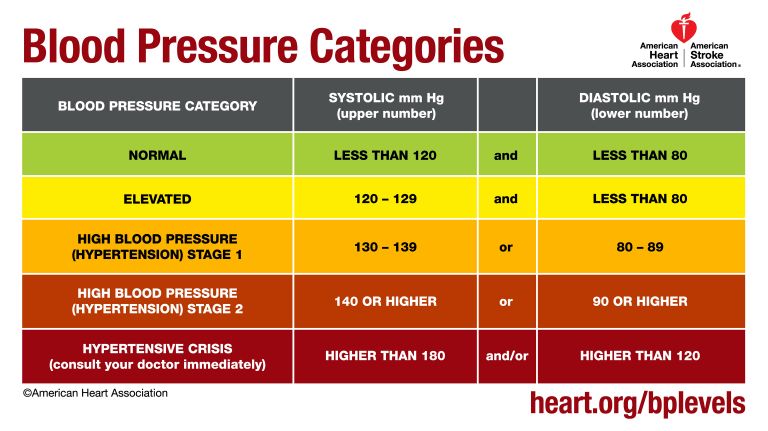
The systolic number is recorded first, with an ideal blood pressure reading being below 120/80 (expressed as “120 over 80”). The American Heart Association and American College of Cardiology define high blood pressure, or hypertension, as 130/80 or above (a systolic reading of at least 130 mm Hg or a diastolic reading of at least 80 mm Hg, or both).
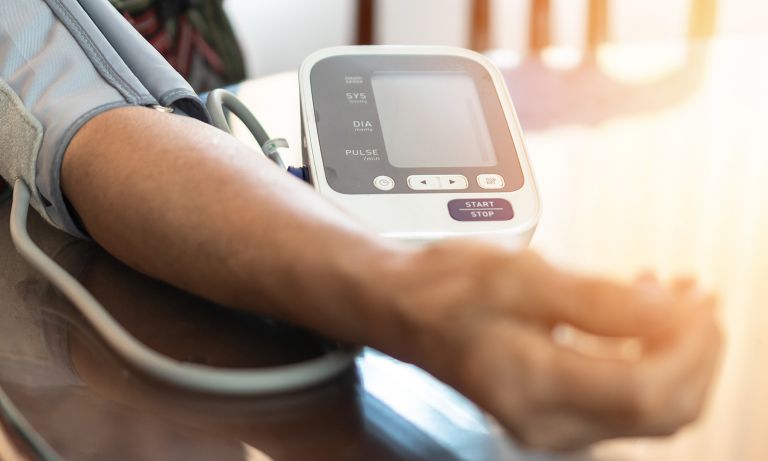
Your blood pressure fluctuates throughout the day, with lots of ups and downs. It will typically spike if you’re exercising or running late for a meeting, for example, and drop when you’re sleeping or relaxing with loved ones. Since blood pressure can vary so much, if you’ve been diagnosed with hypertension you may want to monitor your blood pressure at home.
Choose a home blood pressure monitor that wraps around your upper arm. They tend to be more accurate than those that work on your wrist or finger.
Don’t drink caffeine or smoke for at least 30 minutes before measuring your blood pressure. Sit quietly in a chair for a few minutes before measuring, then make sure your arm is supported and your elbow is at about heart level as you run the test.
Small changes can make a big difference. According to a Harvard study, having hypertension can increase your risk of stroke by 220%. On the flip side, reducing your systolic blood pressure by 10 mm Hg can cut your risk of stroke by as much as 44%.
Low blood pressure (known as “hypotension”) is a much less common problem than hypertension, but it can still significantly impact blood flow to the brain and increase your risk of shock, stroke, heart attack, and kidney failure.
There is no specific reading that determines when blood pressure is too low. Rather, doctors rely on the presence of symptoms such as dizziness, fainting, blurred vision, and unsteadiness when standing to diagnose hypotension.
If you experience such symptoms, your doctor will look for underlying causes such as medication side effects, nutritional deficiencies, or a heart issue. Aside from a low-sodium diet, many of the same lifestyle changes used to treat high blood pressure can also be effective for managing low blood pressure.
.png)