x




Mental wellness wearables such as headsets and bracelets slowly see traction, though many are still in the early stages of clinical trials. Sentio Solutions recently announced Feel, an emotion-sensing wristband with integrated biosensors that monitors a user’s physiological signals throughout the day. Paired with an accompanying cognitive-behavioral therapy (CBT) app, it aims to help those suffering from anxiety and depression.
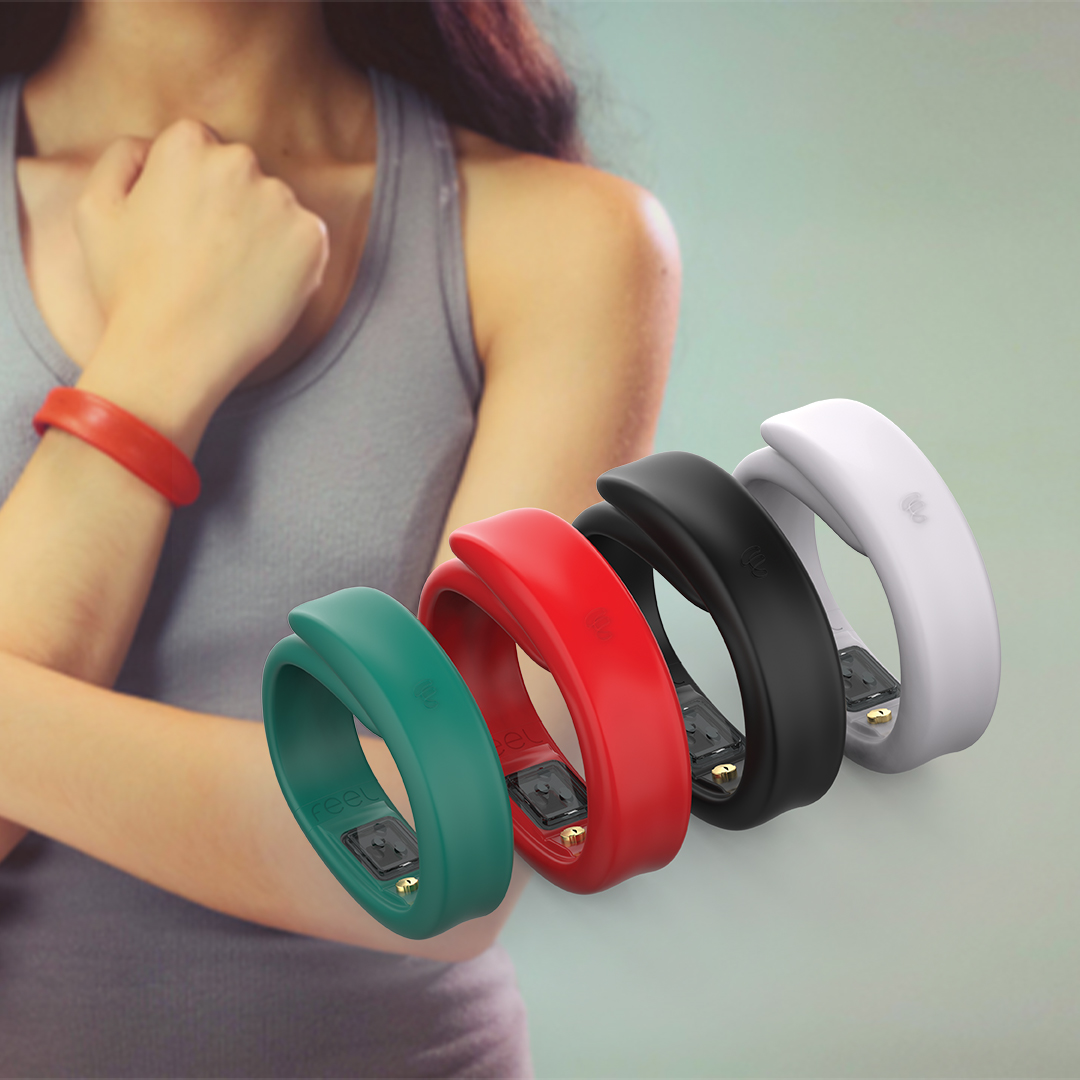
Sentio Solutions wristband with integrated biosensors monitors its user’s physiological signals to understand his or her emotional state.
“We envision a world where technology understands when someone is going through a depressive phase or panic attack and provides support in their time of need,” says Sentio Solutions Founder and CEO George Eleftheriou, noting the Feel might prevent visits to the emergency room.
Tech is also rounding out care, filling in the gaps left by traditional models. These wellness solutions are not replacements for medical professionals but often act as supplemental or preventative care.
Mindfulness and meditation apps such as Headspace, Calm and female-focused Sanity & Self offer audio tracks to relax listeners and strengthen mental resilience. Oftentimes, they’re paired with breathing exercises, visual aids and journaling guides. Israeli social network Wisdo connects individuals struggling with mental conditions, as well as those overcoming difficult emotional situations.
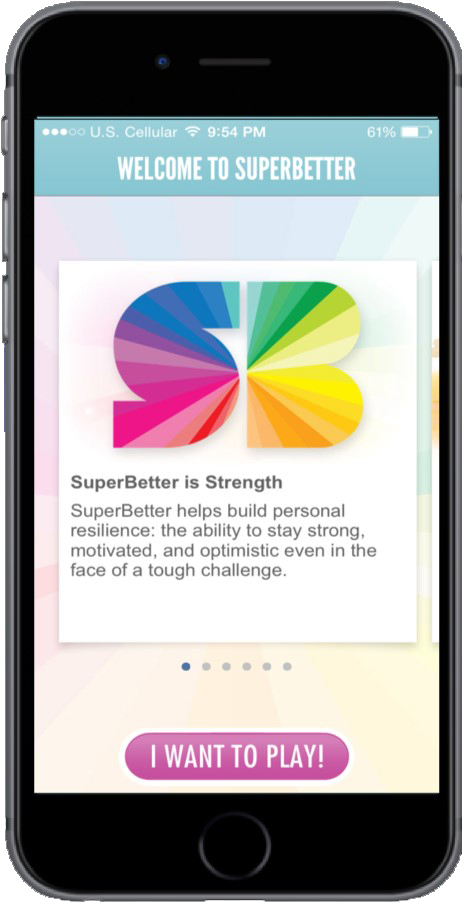
The SuperBetter app gamifies mental health upkeep.
Some apps take their cues from entirely different genres, as evidenced by the evergrowing anti-anxiety gaming space. Nearly a million people have played SuperBetter, an app that gamifies mental health upkeep. Players accrue points by persevering through stressful situations, completing breathing exercises and breaking bad habits.
Chatbots are also on the rise. Woebot is an AI-enabled “robot friend” who looks like Wall-E and engages users through uplifting or sympathetic conversations. The adorable digital therapist is now available in 120 countries, serving more than half a million people.
“We’ve been able to show that people develop an alliance with robots,” explains Athena Robinson, CCO of Woebot Labs, noting its success in conjunction with ongoing therapy.
Other therapies employ more futuristic technology. Mindstrong is an app that analyzes how users interact with their phones—how they type or scroll—to identify mood states. Its machine learning can reportedly detect a range of potential mental health patterns. It is now being tested on California patientsthrough the state’s public mental health system.
Meanwhile, virtual reality is used as an exposure therapy tool for PTSD survivors. This allows an army veteran to visually revisit the battlefield through a headset. A recent study in Frontiers in Psychology found that individuals who participated in virtual reality therapy were more likely to continue and complete treatment than those who participated in traditional programs.
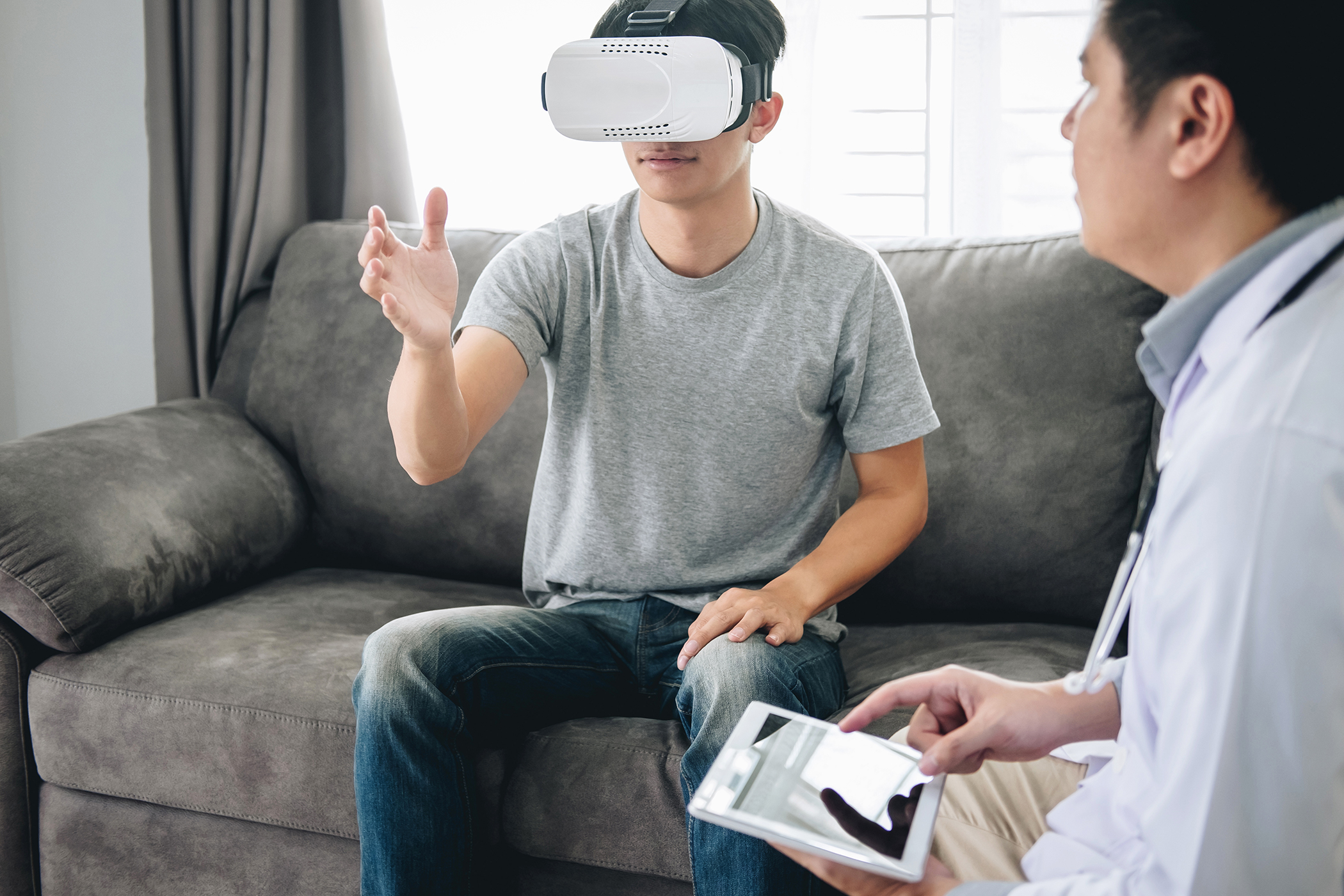
Frontiers in Psychology study: Those involved in virtual reality therapy were more likely to continue and complete treatment than those in traditional programs.
Virtual reality therapy is gaining traction in the US and specifically in China, where an estimated 90 percent of citizens with mental health disorders do not receive treatment and the number of psychiatrists is four times lower than the global average.
UK patients with an extreme, debilitating fear of heights (acrophobia) can access immersive virtual therapy through a public healthcare provider. One such available service is Oxford VR, which takes just two hours per treatment, versus six to eight hours generally required of traditional face-to-face treatment. With such tools, therapists can treat five times the amount of patients.
“We’re using technology to do the repetitive, tedious parts of therapy and enable the therapist to focus on the really important parts—triage diagnosis and care management,” explains Oxford VR CEO Barnaby Perks. The company is pursuing a clinical study exploring the treatment of psychosis and plans more programs as consumers more widely adopt virtual reality headsets such as HTC Vive and Oculus Rift. “The long-term goal is to be able to put this in people’s homes.”
Granted, tech isn’t completely replacing the human model. A slew of new companies reimagine the doctor’s visit by way of technology-aided services. Octave Health takes a hybrid approach by combining in-person therapy with virtual coaching services. Patients come in for therapy but are also paired with interactive digital programs to learn CBT skills. The digital services, says Founder Sandeep Acharya, help patients progress more quickly and ease practitioner workload.
Octave recently became one of the first behavioral health practices to ink a major insurance deal by becoming an in-network provider for Anthem Blue Cross of California.
“[Digital mental health] is a $500 billion category over the next decade,” predicts Acharya. While the industry might look crowded of late, Acharya simply sees it as evidence of growing opportunity. “We’ve seen a huge spike in patient demand… and employers are demanding that their insurance companies cover this category better.”
.png)