
x
Black Bar Banner 1
x

Alert!  New Secured Wallets are installed! new Blog system with AI  power and auto blog curation coming soon  Alert! 

Ads by Markethive - View All
Blogs
The Blog Feed
Write a New Blog Post
Search Blog Status
Most Viewed
Most Recent
Most Shared
Alphabetical
Blog Main Menu
Markethive Blog (default)
All Blogs
My Blog Posts
Friends' Blogs
Blog Categories
All
Advertising
Blockchain & Cryptocurrency
Business Development
Diet & Weight Loss
Environmental
Health and Wellness
History and Culture
Home and Garden
Marketing
Mentoring & Training
Money & Finance
Other
Political
Prayer & Religion
Programming & Technical
Real Estate
Search Engine Optimization
Social Media
Spirituality
Sports & Recreation
Transport
Travel & Events
Website Design
Blogging Tools & Assets
My Blog Info
Members Subscribed to You
Blogs You Are Subscribed To
Website Widget
Wordpress Plugin
Subscribe for Greater Services
Subscribe to one of many subscriptions, each one includes the previous ones.. Unlock powerful tools, advance features, to build a powerful reach.

DO YOU HAVE A DEFICIENCY?

Posted by Bobby Brown on March 19, 2021 - 10:56am


What is Zinc? Do You Have a Deficiency?

Zinc is an important trace mineral that helps our bodies fight infections. It also helps create the proteins needed to build strong muscles, tissues, blood, and bones.

How does someone develop a deficiency?

Small amounts of zinc are excreted through the feces, urine, hair, skin, sweat, semen and during menstruation. If insufficient amounts of zinc-containing foods are consumed in the diet, then these small amounts of zinc loss can slowly add up to a zinc deficiency. Zinc deficiencies can also be caused by liver and pancreatic disorders, chronic alcoholism, diabetes mellitus, and absorption disorders.

How much zinc do I need?

  • Children 0-6 months – 2 mg/day
  • Children 7-12 months – 3 mg/day
  • Children 1-3 years old – 3 mg/day
  • Children 4-8 years old – 5 mg/day
  • Children 9-13 years old – 8 mg/day
  • Teenage and adult males - 11 mg/day
  • Teenage and adult females - 9 mg/day
  • Pregnant and lactating women: 11-13 mg/day

What are the signs of a zinc deficiency?

  • Altered/loss of taste and smell
  • Anorexia (lack or loss of appetite)
  • Impaired cognitive function
  • Impaired memory
  • Poor night vision
  • White spotting of nails
  • Prostate issues
  • Uncoordinated movements
  • Decreased immunity
  • Depression
  • Diarrhea
  • Excessive hair loss
  • Unintentional muscle movement
  • Poor wound healing
  • Slurred speech
  • Some forms of dermatitis

How can someone increase their zinc levels?

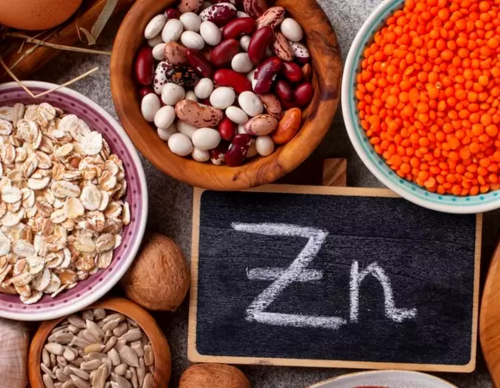
Studies show that despite differences in zinc intake, vegetarians have similar serum zinc concentrations to, and no greater risk of zinc deficiency than, non-vegetarians. Good sources of plant-based sources of zinc for both vegetarians or non-vegetarians include legumes such as chickpeas, lentils and beans which all contain substantial amounts of zinc. In fact, cooked lentils (100 grams) contain around 12% of the DV for zinc. Other good sources of plant-based zinc are green peas, tofu, tempeh, nuts and seeds (always avoid roasted or highly heated nuts/seeds). Even nutritious vegetables such as cooked mushrooms, spinach, broccoli, kale, and garlic contain small amounts of zinc, as well as other critical vitamins and minerals. For example, one cup of mushrooms and kale both contain 2% of the daily value of zinc.

Zinc supplements are also available as liquid or in capsule form. Avoid tablets which typically contain too many unwanted excipients. It may be time for you to incorporate a high quality zinc supplement into your diet.


Andries Van Tonder thanks for sharing.....
March 21, 2021 at 1:02pm
SÉRGIO LEITE Obrigado por compartilhar.
March 19, 2021 at 9:52pm
Mihai Cristian Thanks for sharing
March 19, 2021 at 5:34pm