x





What is high blood pressure?
Blood pressure is the force of your blood as it flows through the arteries in your body. Arteries are blood vessels that carry blood from your heart to the rest of your body. When your heart beats, it pushes blood through your arteries. As the blood flows, it puts pressure on your artery walls. This is called blood pressure.
High blood pressure (also called hypertension) happens when your blood moves through your arteries at a higher pressure than normal. Many different things can cause high blood pressure. If your blood pressure gets too high or stays high for a long time, it can cause health problems. Uncontrolled high blood pressure puts you at a higher risk for stroke, heart disease, heart attack, and kidney failure.
There are 2 types of high blood pressure.
Primary hypertension. This is also called essential hypertension. It is called this when there is no known cause for your high blood pressure. This is the most common type of hypertension. This type of blood pressure usually takes many years to develop. It probably is a result of your lifestyle, environment, and how your body changes as you age.
Secondary hypertension. This is when a health problem or medicine is causing your high blood pressure. Things that can cause secondary hypertension include:
Most people who have high blood pressure do not have symptoms. This is why it’s sometimes called “the silent killer.” It is very important to have your blood pressure checked regularly.
Some people experience headaches, nosebleeds, or shortness of breath with high blood pressure. However, those symptoms can mimic many other things (serious or non-serious). Usually, these symptoms occur once blood pressure has reached a dangerously high level over a period of time.
Food, medicine, lifestyle, age, and genetics can cause high blood pressure. Your doctor can help you find out what might be causing yours. Common factors that can lead to high blood pressure include:
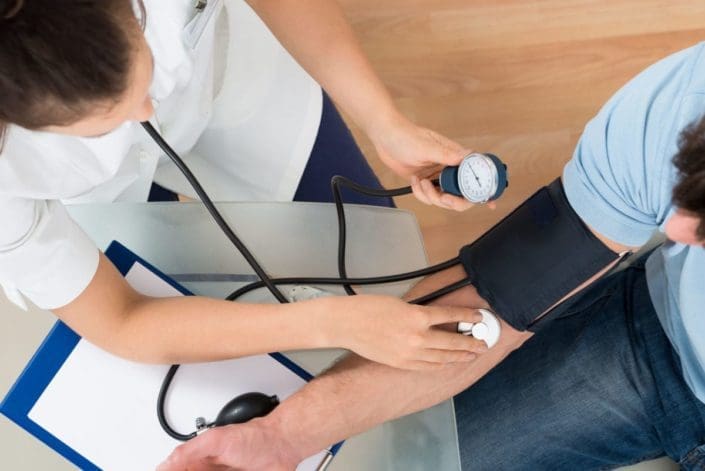
High blood pressure is diagnosed with a blood pressure monitor. This is a common test for all doctor visits. A nurse will place a band (cuff) around your arm. The band is attached to a small pump and a meter. He or she will squeeze the pump. It will feel tight around your arm. Then he or she will stop and watch the meter. This provides the nurse with 2 numbers that make up your blood pressure. The top number is your systolic reading (the peak blood pressure when your heart is squeezing blood out). The bottom number is your diastolic reading (the pressure when your heart is filling with blood). You may also hear the doctor or nurse say a blood pressure is “120 over 80.”
The higher your blood pressure is, the more often you need to have it checked. After age 18, have your blood pressure checked at least once every two years. Do it more often if you have had high blood pressure in the past.
If your high blood pressure is caused by lifestyle factors, you can take steps to reduce your risk:
If your high blood pressure is caused by disease or the medicine you take, talk to your doctor. He or she may be able to prescribe a different medicine. Additionally, treating any underlying disease (such as controlling your diabetes) can help reduce your high blood pressure.
The best way to lower blood pressure begins with changes you can make to your lifestyle to help lower your blood pressure and reduce your risk of heart disease. Additionally, your doctor may prescribe medicine to lower your blood pressure. These are called antihypertensive medicines.
The goal of treatment is to reduce your blood pressure to normal levels. Your doctor may prescribe medicine that’s easy to take and has few, if any, side effects. This treatment is highly successful. If your blood pressure can only be controlled with medicine, you’ll need to take the medicine for the rest of your life. It is common to need more than one medicine to help control your blood pressure. Don’t stop taking the medicine without talking with your doctor. Otherwise, you may increase your risk of having a stroke or heart attack.
Controlling your high blood pressure is a lifelong commitment. You will always need to monitor your weight, make healthy food choices, exercise, learn to cope with stress, avoid smoking, and limit your alcohol intake. If you need medicine to control your high blood pressure, you will likely need it all your life.
Additionally, you will need to get used to regular blood pressure checks. Your doctor may want you to come to the office regularly. Or you may be asked to check your blood pressure at home and keep track of your numbers for your doctor. Some pharmacies and retail clinics have blood pressure machines on site. You can buy your own, automated arm blood pressure cuff for use at home. Your doctor may want you to check your blood pressure several times a day. Another option is to use an ambulatory (wear as you are moving about) blood pressure monitor.