x




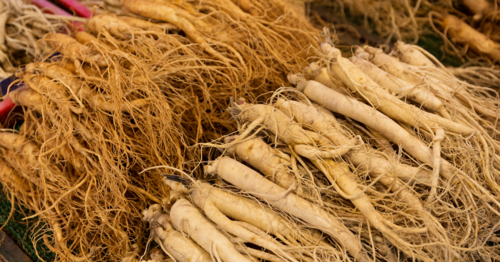
Researchers in South Korea announced a scientific breakthrough at the end of last year that centers on the well-known herb, ginseng.
This discovery wasn’t about a new active compound within this beloved herb. Instead, researchers wanted to talk about a bacterium that grows in the soil around the root of the plant.
Scientists believe a chemical that it produces called rhizolutin could be the foundation for a novel and effective treatment for Alzheimer’s disease.
In traditional Chinese medicine the ginseng root is typically used as medicine. But in the soil close to the roots is a complete ecosystem called the rhizosphere, where plants and diverse microorganisms interact.
Scientists from Seoul National and Yonsei universities collaborated to see if they could find something of medical value in the rhizosphere.
Their efforts led them to find a strain of bacteria called Streptomyces which produces a novel compound called rhizolutin.
To properly analyze this new compound, the scientists cultivated rhizolutin in a medium of ginseng powder to increase its production ten-fold. In doing so they found it had a unique chemical structure.
When they screened rhizolutin through a natural products library— a collection of tens of thousands of chemical fingerprints isolated from plants— the findings suggested benefits against Alzheimer’s disease.
Specifically, the data suggested that rhizolutin would be able to break down beta-amyloid and tau, the proteins considered the hallmarks of Alzheimer’s disease.
The scientists carried out a series of experiments in cell cultures and in mice with Alzheimer’s.
The former demonstrated that rhizolutin substantially decreases amyloid-induced inflammation and death in both neurons and in glial cells, which support and protect neurons.
In mice, researchers found rhizolutin significantly reduced plaques in the hippocampus.
The scientists summed up by writing, “Our findings introduce a unique chemical entity that targets beta-amyloid and tau concurrently by mimicking misfolded protein clearance mechanisms of immunotherapy…”
While much more research needs to be carried out, a future treatment for Alzheimer’s could well involve a combination of a drug derived from rhizolutin and compounds from ginseng itself.
The two active ingredients in the root and leaf-stem of ginseng belong to a category of compounds called ginsenosides – of which about 30 types have been identified. There is also a third valuable compound in ginseng called gintonin.
All three of these compounds have been shown in lab studies to inhibit the formation and toxicity of beta-amyloid brain plaques, increase the important neurotransmitter acetylcholine, reduce free radicals, lower brain inflammation, and increase cell growth in the hippocampus, a key memory area.
The promising results of this lab research led to a small number of trials of ginseng in Alzheimer’s patients.
In one of these, 97 patients took either panax ginseng for 12 weeks or were put in a control group. Researchers saw improvements in cognition only in the ginseng group, but cognitive ability returned to the same level as the controls 12 weeks after researchers ended supplementation.
In a longer study in patients taking Korean red ginseng for two years, researchers found a maximum improvement after 24 weeks. What’s more, these results continued for the entire two-year length of the study.
Another study tested a heat-processed form of ginseng that contains more potent ginsenosides than raw ginseng. In this study researchers found significant cognitive improvements in patients with moderately severe Alzheimer’s compared to controls at 12 weeks. These improvements were sustained during the following 24 weeks of the study.
.png)