x




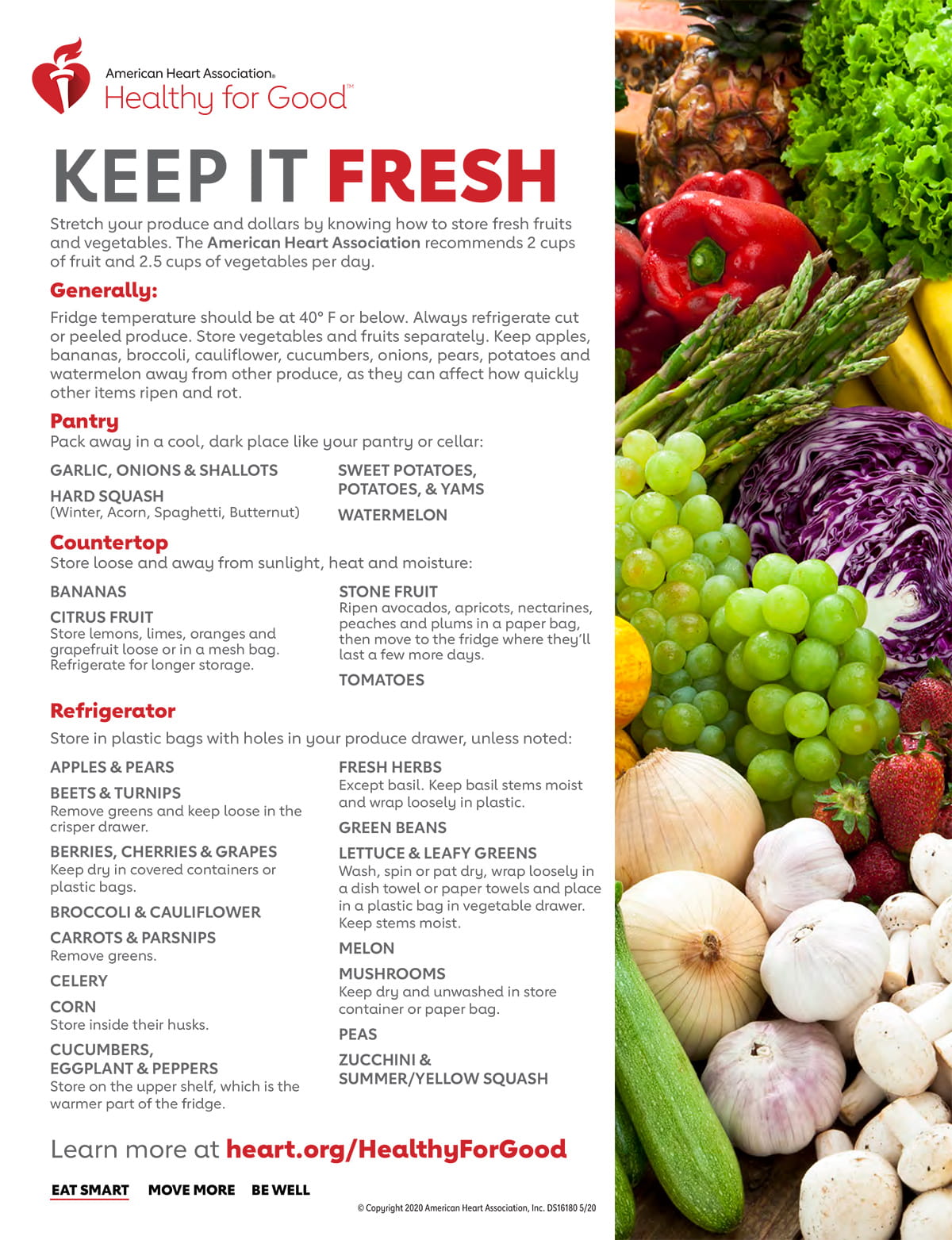
Stretch your produce and dollars by knowing how to store fresh fruits and vegetables. The American Heart Association recommends 2 cups of fruit and 2.5 cups of vegetables per day.
Generally:
Fridge temperature should be at 40° F or below. Always refrigerate cut or peeled produce. Store vegetables and fruits separately. Keep apples, bananas, broccoli, cauliflower, cucumbers, onions, pears, potatoes and watermelon away from other produce, as they can affect how quickly other items ripen and rot.
Pack away in a cool, dark place like your pantry or cellar:
Garlic, onions and shallots
Hard Squash
(Winter, Acorn, Spaghetti, Butternut)
Sweet potatoes, potatoes and yams
Watermelon
Store loose and away from sunlight, heat and moisture:
Bananas
Citrus Fruit
Store lemons, limes, oranges and grapefruit loose or in a mesh bag. Refrigerate for longer storage.
Stone fruit
Ripen avocados, apricots, nectarines, peaches and plums in a paper bag, then move to the fridge where they’ll last a few more days.
Tomatoes
Store in plastic bags with holes in your produce drawer, unless noted:
Beets and turnips
Remove greens and keep loose in the crisper drawer.
Berries, cherries and grapes
Keep dry in covered containers or plastic bags.
Broccoli and cauliflower
Carrots and parsnips
Remove greens.
Celery
Corn
Store inside their husks.
Cucumbers, eggplant and peppers
Store on the upper shelf, which is the warmer part of the fridge.
Fresh herbs
Except basil. Keep basil stems moist and wrap loosely in plastic.
Green beans
Lettuce and leafy greens
Wash, spin or pat dry, wrap loosely in a dish towel or paper towels and place in a plastic bag in vegetable drawer. Keep stems moist.
Melon
Mushrooms
Keep dry and unwashed in store container or paper bag.
Peas
Zucchini and summer/yellow squash
Learn more at heart.org/HealthyForGood
Eat Smart Move MoreBe Well
3Min Story That Will Change Your Life: www.bsuccessful.com