x





There are countless techniques for managing stress. Yoga, mindfulness meditation, and exercise are just a few examples of stress-relieving activities that work wonders. But in the heat of the moment, during a high-pressured job interview, for example, or a disagreement with your spouse, you can’t just excuse yourself to meditate or take a long walk. In these situations, you need something more immediate and accessible.
One of the speediest and most reliable ways to stamp out stress is to engage one or more of your senses—sight, sound, taste, smell, touch—or through movement. Since everyone is different, you’ll need to do some experimenting to discover which technique works best for you—but the payoff is huge. You can stay calm, productive, and focused when you know how to quickly relieve stress.
Social interaction is your body’s most evolved and surefire strategy for regulating the nervous system. Talking face-to-face with a relaxed and caring listener can help you quickly calm down and release tension. Although you can’t always have a pal to lean on in the middle of a stressful situation, maintaining a network of close relationships is vital for your mental health. Between sensory-based stress relief and good listeners, you’ll have your bases covered.
It might seem obvious that you’d know when you’re stressed, but many of us spend so much time in a frazzled state that we’ve forgotten what it feels like when our nervous systems are in balance: when we’re calm yet still alert and focused. If this is you, you can recognize when you’re stressed by listening to your body. When you’re tired, your eyes feel heavy and you might rest your head on your hand. When you’re happy, you laugh easily. And when you’re stressed, your body lets you know that, too. Get in the habit of paying attention to your body’s clues.
Observe your muscles and insides. Are your muscles tense or sore? Is your stomach tight, cramped, or aching? Are your hands or jaw clenched?
Observe your breath. Is your breathing shallow? Place one hand on your belly, the other on your chest. Watch your hands rise and fall with each breath. Notice when you breathe fully or when you “forget” to breathe.
Internally, we all respond the same way to the “fight-or-flight” stress response: your blood pressure rises, your heart pumps faster, and your muscles constrict. Your body works hard and drains your immune system. Externally, however, people respond to stress in different ways.
The best way to quickly relieve stress often relates to your specific stress response:
Overexcited stress response: If you tend to become angry, agitated, overly emotional, or keyed up under stress, you will respond best to stress relief activities that quiet you down.
Underexcited stress response: If you tend to become depressed, withdrawn, or spaced out under stress, you will respond best to stress relief activities that are stimulating and energizing.
Do you freeze when under stress? The immobilization stress response is often associated with
a past history of trauma. When faced with stressful situations, you may find yourself totally stuck and unable to take action. Your challenge is to break free of your “frozen” state by rebooting your nervous system and reactivating the body’s natural “fight-or-flight” stress response. Physical movement that engages both your arms and legs, such as walking, swimming, running, dancing, climbing, or tai chi, can be particularly helpful. As you move, focus on your body and the sensations you feel in your limbs rather than on your thoughts. This mindfulness element can help your nervous system become “unstuck” and move on.
To use your senses to quickly relieve stress, you first need to identify the sensory experiences that work best for you. This can require some experimentation. As you employ different senses, note how quickly your stress levels drop. And be as precise as possible. What is the specific kind of sound or type of movement that affects you the most? For example, if you’re a music lover, listen to many different artists and types of music until you find the song that instantly lifts and relaxes you.
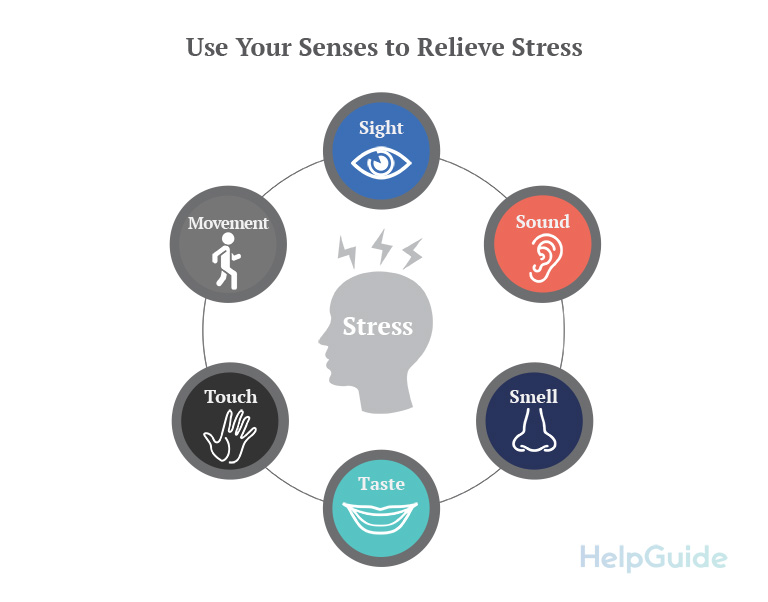
Explore a variety of sensory experiences so that no matter where you are, you’ll always have a tool to relieve stress.
The examples listed below are intended to be a jumping-off point. Let your imagination run free and come up with additional things to try. When you find the right sensory technique, you’ll know it!
Slowly savoring a favorite treat can be very relaxing, but mindless eating will only add to your stress and your waistline. The key is to indulge your sense of taste mindfully and in moderation.
If you tend to shut down when you’re under stress or have experienced trauma, stress-relieving activities that get you moving may be particularly helpful.