x




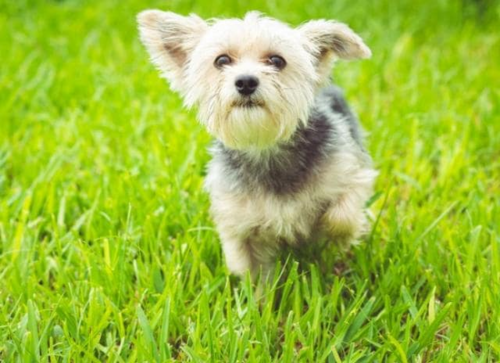
Reverse sneezing in dogs can be alarming if you have never experienced it before, but luckily, it’s not quite as scary as it sounds.
Reverse sneezing occurs primarily in dogs and much less frequently in cats. Here’s what you need to know about reverse dog sneezing and what you can do to help stop the reverse sneezing.
Reverse sneezing, or a “backward sneeze,” can occur if a dog’s soft palate becomes irritated. The soft palate of a dog is the muscular area of the back of the roof of the mouth that assists with vocalization, swallowing, and breathing.
The irritation causes that soft palate muscle to spasm, which then narrows the trachea. The dog will extend their neck as they try to expand their chest to breath, but the narrowed trachea does not allow them to inhale a full breath of air.
The dog will then forcefully attempt to inhale through their nose, which causes the dog to backward sneeze.
Reverse sneezing sounds like the dog is actually inhaling their sneezes, hence how the name “reverse sneezing” came about. It’s a loud snorting sound that can sometimes sound like a goose honking.
The first few episodes of reverse sneezing that a dog has can be scary if you have never heard it before. That’s why it’s best to have your dog evaluated by a veterinarian to determine if it’s simply a reverse sneeze or something more concerning such as coughing or choking.
If possible, take a video of the episode to show your veterinarian, and if you have any concern that your dog may be choking, call your vet immediately.
Bouts of reverse sneezing in dogs will usually last only about 30 seconds or less, although it might feel like a lot longer.
Dogs reverse sneeze for similar reasons that they sneeze normally or cough, which is to expel an irritant.
A regular sneeze helps expel an irritant in the nasal cavity. Coughing helps expel irritants located further down in the trachea. A reverse sneeze is the body’s way of expelling an irritant that’s slightly further down, at the nasopharynx (area by the soft palate).
Some possible causes of irritation of the soft palate that results in reverse sneezing include:
Allergies
Household products (perfume, cleaning products, air fresheners)
Pulling on the leash while attached to a collar
Overexcitement
Exercise intolerance
Objects in the throat area (such as a foreign body or a mass)
Nasal mites
Elongated soft palate (common in brachycephalic breeds, or breeds with shortened snouts)
Eating/drinking
Reverse sneezing does not require medication or treatment and is typically a fairly benign process in your dog—as long as it is infrequent.
If a dog has never had an episode before, they should see a veterinarian to ensure that it is actually reverse sneezing and not something else, such as coughing or choking.
If the episodes become more frequent or severe, consult a veterinarian to evaluate the underlying cause. They will likely perform chest x-rays and possibly rhinoscopy (where a camera is inserted in the nasal cavity and throat) to look for any abnormalities.
There are a variety of different tricks to try to get the episode of reverse sneezing to stop.
Some suggest briefly covering the nostrils to cause your dog to swallow, which then helps get rid of the irritant that caused the episode.
You can also try massaging your dog’s throat, which could then dislodge or soothe the irritation in that area.
If the problem is chronic, a veterinarian would have to diagnose the underlying cause and provide appropriate treatment, such as an antihistamine for allergies, an antiparasitic for nasal mites, or the removal of foreign material.
.jpg)