x




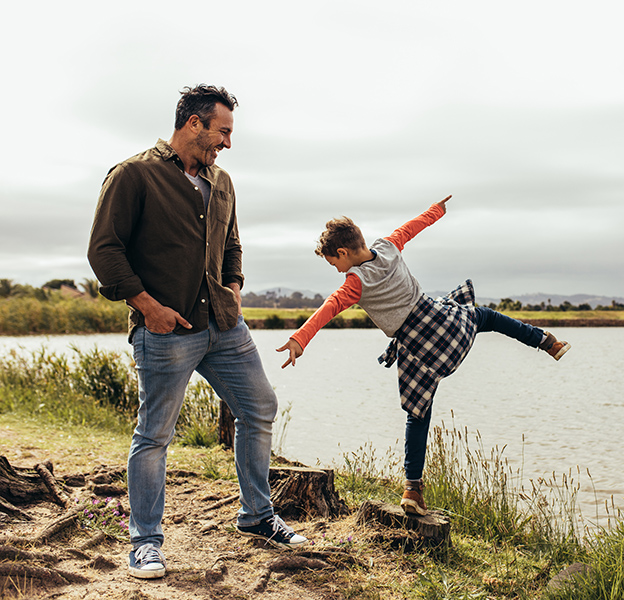
Our balance starts to weaken in our 20s and goes slowly downhill from there.
For most of our lives, we can stand upright and move without thought or mindfulness. But according to the Centers for Disease Control and Prevention, 1 in 4 people over 55 are heading to the emergency room each year as the result of a fall, suffering from sprains, fractures, dislocations, traumatic brain injury, and death.
“We are under the illusion that things start going physically downhill later, much later, in life,” said Liz Grantham, founder of theOptimal.me. “Maybe it’s because most of us at 50 still think like and are as active as 30-year-olds. But we’re sorely mistaken.
She was shocked to realize that she had to firmly grip the railing after a near tumble down a flight of stairs in high heels. In the days following, she found herself a little fearful of speeding down the stairs and thought, ‘This is ridiculous! I’m only 53; I can’t be intimidated by stairs … or my shoes!’”
The fear of falling can be as debilitating as a fall itself, causing us to become even weaker and less active, increasing our chance of taking another tumble.
“It was a wake-up call that the issues she’d thought would be years off were a lot closer,” Grantham said.
The good news? Even though research shows that our balance starts slowly deteriorating as early as our 20s, we can do something about it.
Behind this not-so-simple act, the complex systems of our body must synchronize:
• We need an intact sensory nervous system as we rely on input from our sight, hearing, smell, touch, taste, and intuition to balance.
• Our central nervous system (brain and spinal cord) must be functioning well. Our brain remains the “CEO” of every system and every action, whilst our autonomic nervous system is responsible for our fight or flight (stress) and our rest and digest (de-stress) balance.
• We also need muscular strength, stability, flexibility, mobility, and endurance. This also helps us maintain good posture. The ability to hold ourselves upright and strong is an essential part of balance.
So to bolster our anti-aging defenses, we must control what we can –our strength, endurance, flexibility, and focus on posture.
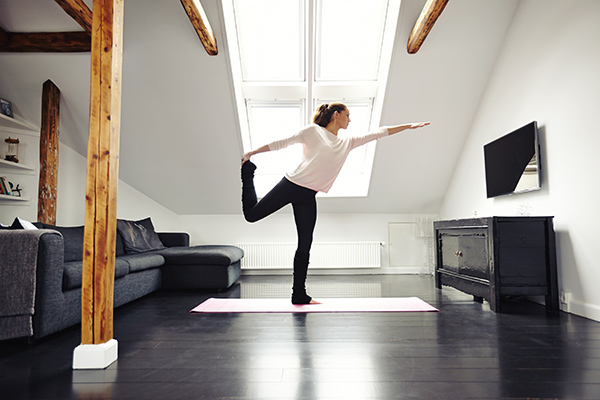
Probably not. But much of the exercise we enjoy doesn’t require fully integrated movement and only scratches the surface of the movement your body needs. Our bodies are made of over 600 muscles and around 206 bones, each with a job to do and connected to another with no part moving or functioning in isolation.
So although the demands we place on our bodies continually evolve throughout the decades, the need for our movements to be integrated, working our entire body as a whole, does not.
To regain any of the functionality we have lost over time—through too much sitting, isolated exercise, injury, or stress—we should look to retrain our whole body and make it more balanced and strong.
“Think about your body right now. You might scoff and say, ‘My balance is great. I’m not scared of falling. I’m perfectly fine on my own two feet.’ But I can guarantee you that there’s work to be done,” said Grantham. “For many of us, to achieve total freedom of movement, we will need to retrain our bodies to regain the balance that has already been lost—whether or not you notice it. You shouldn’t wait for a fall or inability to perform a basic functional movement (think standing, sitting, twisting, etc.) to start.
Integrated functional movement routines (IMRs) can stand alone as your daily exercise or work superbly as an addition to any existing exercise you do. You can never move too much.
In just 15 minutes a day, you can perform a routine of simple integrated movements, designed by TheOptimal.me experts, that mimic the way we move in daily life. These are not exercises to just flatten your abs or sculpt your arms. They are to keep you balanced, steady, and strong, as well as help you fight the natural effects of aging, getting you ready for any task or sport the day will bring. Think of IMRs as your anti-aging superpower.
.png)