x




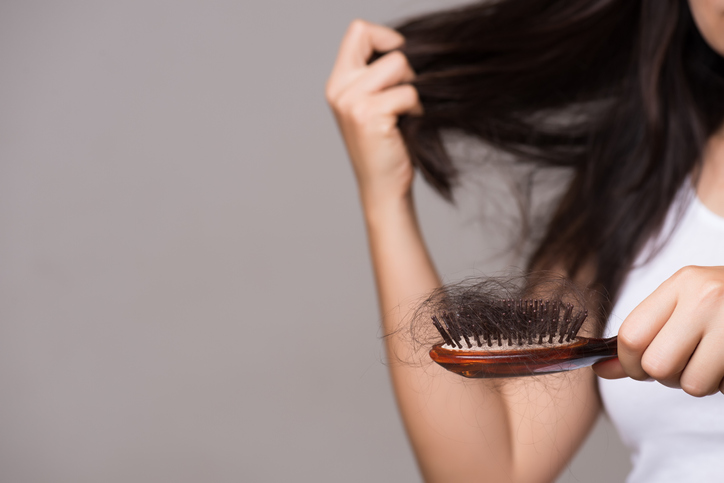
Many people think of hair loss as a male problem, but it also affects at least a third of women. But unlike men, women typically experience thinning hair without going bald, and there can be a number of different underlying causes for the problem.
“Some are associated with inflammation in the body. Some are female-pattern hair loss,” says Dr. Deborah Scott, assistant professor of dermatology at Harvard Medical School and co-director of the Hair Loss Clinic at Brigham and Women’s Hospital. But the good news is that in many cases this hair loss can be stabilized with treatment, and it may be reversible. When it’s not, there are a number of new cosmetic approaches that can help.
The first step in dealing with thinning hair is determining what’s happening inside your body that is causing those extra strands to cling to your shoulders and your brush. Some hair loss is normal. Everyone loses hair as part of the hair’s natural growth cycle, which occurs in three stages:
Normal hair loss is highly individual. Most people have a sense of how much hair is normal for them to lose. If you suddenly notice more hair than usual falling out, you’re shedding clumps of hair, or your hair seems to be visibly thinning, it may be a sign that something is amiss, says Dr. Scott.
Numerous problems can trigger female hair loss. Some are external, such as taking certain medications, frequently wearing hairstyles that pull the hair too tight, or even a stressful event such as surgery. In other cases, thinning hair is triggered by something going on inside the body — for instance, a thyroid problem, a shift in hormones, a recent pregnancy, or an inflammatory condition.
Hair loss may also be genetic. The most common genetic condition is known as female-pattern hair loss, or androgenic alopecia. Women with this condition might notice a widening of the part at the top of the head, often beginning when a woman is in her 40s or 50s. You might experience this if you inherit certain genes from one or both parents. Hormonal shifts that occur during menopause may also spur it.
Another trigger for hair loss in women is an inflammatory condition affecting the scalp. That might be eczema, psoriasis, or a condition called frontal fibrosing alopecia, which typically causes scarring and hair loss — sometimes permanent — at the front of the scalp above the forehead.
Other common causes of hair loss include overuse of damaging hair products, or tools such as dryers and other devices that heat the hair. Underlying illness, autoimmune conditions such as lupus, nutritional deficiencies, or hormonal imbalances may also cause hair to shed.
.png)