x



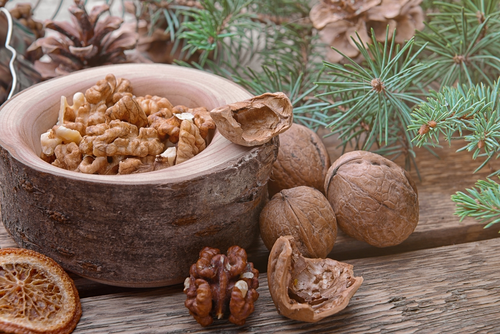
This delicious food has a hard protective shell – much the way the brain has a skull. Its ‘meat’ is divided into two halves – the brain has two hemispheres. It’s covered in furrows – the brain is also covered in furrows. It contains approximately 68% beneficial fat – the brain contains about the same amount of fat.
Does it follow that this food will be good for your brain? It sounds unscientific, but reasoning by analogy actually has a respectable medical history. And it turns out, sometimes it’s on target.
You may have guessed I’m talking about walnuts.
Ancient scholars believed a walnut looked like the brain so it must be good for the brain. Modern science confirms they were right, although their reasoning gives a modern scientist fits.
Walnuts are now considered an important food for maintaining cognitive health — and may even protect against Alzheimer’s (they definitely protect against cancer, but I digress).
A recent study found that mice genetically susceptible to Alzheimer’s showed significant improvement in learning when given a walnut-enriched diet for nine months. They also experienced improvement in memory and motor skills as well as a reduction in anxiety compared to control mice that weren’t fed walnuts.
Lead researcher Dr. Abha Chauhan said, “These findings are very promising and … add to the growing body of research that demonstrates the protective effects of walnuts on cognitive functioning.”
This study was a follow-up to previous research by the same team that found walnuts protect against free radical oxidative damage caused by toxic amyloid beta proteins that are implicated in dementia. The earlier study concluded that a walnut rich-diet would reduce the risk of Alzheimer’s disease.
Other animal research suggest walnuts improve balance and coordination and are associated with substantially reducing an enzyme called acetylcholinesterase that highly damages brain function. This enzyme is found at higher levels in people with Alzheimer’s.
Most human research has focused on the walnut’s benefits to the cardiovascular system. However, these in themselves are also advantageous to the brain, because heart disease increases the risk of cerebrovascular disease, stroke and mild cognitive impairment.
One study examined the cognitive benefits among 447 men and women aged 55 – 80 who were at high cardiovascular risk. Looking at a number of food components common to a Mediterranean diet, the researchers found that walnuts were associated with better working memory. Other nuts did not have the same benefit.
Other studies have confirmed that upping your nut intake in general — and walnuts in particular — will improve your processing speed, memory, cognitive flexibility and function.
Researchers speculate that the benefits of walnuts come from multiple factors. They are rich in components that contain antioxidant and anti-inflammatory properties. These protect against neuron damage and death.
Out of a list of 1,100 foods with antioxidant properties, walnuts ranked 2nd. Only blackberries packed a bigger antioxidant punch.
Walnuts are also excellent sources of polyunsaturated fatty acids that are highly beneficial to the function and health of the brain.
Walnuts also contain vitamin E, folic acid, melatonin, polyphenols, flavonoids and a number of other brain-healthy components.
A recent review of the role of walnuts in maintaining brain health concluded, “Taken together this evidence suggests that the integration of walnuts into a healthy diet could be an effective means of prolonging health spans, slowing the processes of brain aging and reducing the risk of chronic neurodegenerative disease.”
The good news is that the brain-healthy rewards of eating walnuts come from only eating a handful a day. Research suggests eating just 6 or 7 will give you tremendous brain as well as cardiovascular benefits. Eating more won’t necessarily be any better for you.
This must be one of the simplest, easiest and tastiest ways to keep your brain functioning at its best.