x




Puppies are often clueless when it comes to what they put in their mouths, which means they may end up eating some strange things. Even as you're learning what to feed your puppy and how often to fill its bowl, it may insist on munching all sorts of odd, disgusting, or dangerous stuff that mystifies or nauseates you. Fortunately for both of you, your puppy may outgrow this puzzling habit, and there are steps you can take to help it along.
Puppies pick up objects and explore the world with their mouths. Chewing, mouthing, and sometimes swallowing stuff is their way of finding out what's edible and (ideally) what's not. Although this behavior stems from a natural instinct that puppies often outgrow—especially with the help of training—it can get them into trouble, even leading to blockages or poisoning.
Eating an inappropriate object can becme tempting—even irresistible—when it's flavored or scented. Common problem items include grease-covered utensils from the kitchen, milky baby bottle nipples, and used tampons or soiled diapers.
Other problem items are those that tend to smell like you, such as worn socks or slippers, so it's important to keep all such items out of your puppy's reach until it learns that they're not acceptable chow.
:max_bytes(150000):strip_icc():format(webp)/why-your-puppy-eats-everything-2804589-01-25b7065f1748408c9def0faa2c9ee493.jpg)
The Spruce / Phoebe Cheong
Repeatedly ingesting non-edible objects is called pica. Puppies often accidentally swallow pieces of toys, but pica refers to an almost-obsessive urge to eat rocks or chomp mouthfuls of dirt, sticks, sand, or other nondigestible material. One cause is that essential nutrients are missing from an animal's diet.1 If you suspect your puppy is exhibiting signs of this behavior, consult your veterinarian.
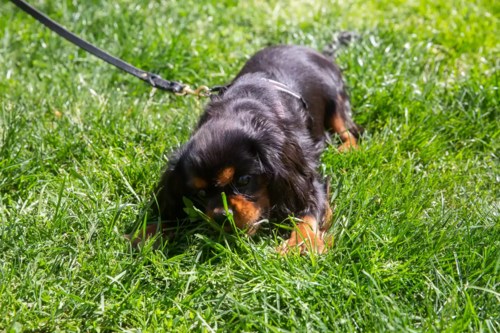
Many canines occasionally eat grass, which may provide vitamins that your puppy craves. Your pup might also simply like the taste. Occasional grazing typically isn't a cause for concern unless it develops into gnawing on poisonous plants.
:max_bytes(150000):strip_icc():format(webp)/why-your-puppy-eats-everything-2804589-03-7730a973d0a649aaae234e6b98b1b892.jpg)
The Spruce / Phoebe Cheong
Some puppies seem to be drawn to different kinds of dirt or want to chew rocks. It's possible that smell plays a role in the attraction. That's particularly true if some other critter has urine marked the area. Puppies may taste the dirt to better understand what the message says.
Some dogs may prefer specific areas, such as mulch piles that may have a mushroom-like aroma or taste. Too much dirt munching can obstruct your puppy's digestive system, but an occasional taste probably won’t cause issues.
Chewing rocks, on the other hand, is a habit that should be prevented. Not only is this destructive to your puppy's teeth but it also presents a danger of choking. If your puppy is teething and has an intense desire to chew, provide him with pet-safe chew toys. Ask your veterinarian for options.
People whose dogs eat feces find it to be a disgusting habit, and it's common in puppies. Pups may be particularly drawn to snack on cat box nuggets, cow patties, or horse droppings. Some of these animals don’t always completely digest their food, so there may still be nutrients left in their waste. This behavior should definitely be discouraged, though, because any feces may harbor harmful parasites. The good news is that many puppies grow out of poop eating as they mature.
Part of your pup's basic training should include teaching it not to eat or chew anything other than its toys, food, or treats. Most puppies outgrow indiscriminate munching, but if your pup continues to vacuum up anything that hits the floor:
Before your training sinks in, your puppy may still eat something that's forbidden at least a few times. If this happens, there are some steps you can take to help keep your pet safe: