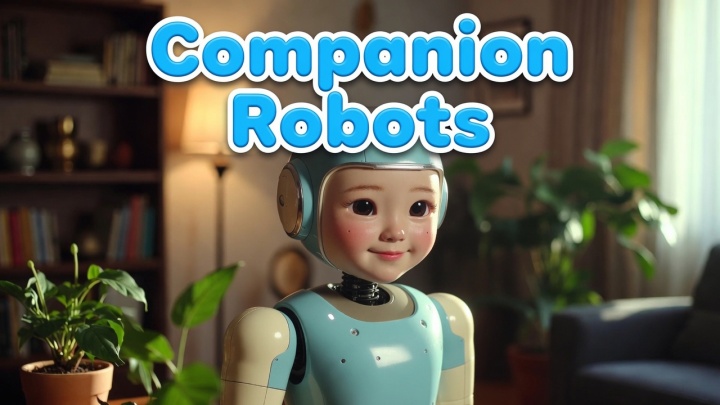
Companion robots: What they are, how they work, and why they matter
Companion robots blend advances in robotics, AI, and human-robot interaction to provide more than just tasks — they aim to connect with people on an emotional level. These machines are designed to engage, assist, and entertain, creating meaningful interactions in homes, workplaces, and care settings.
What are companion robots?
Companion robots are social robots designed to interact with humans in ways that feel natural and supportive. They can engage in conversation, tell stories, provide reminders, offer games, and assist with routine tasks. They come in a range of forms—from friendly, animal-like robots to more expressive humanoid designs—and are increasingly capable of recognizing faces, voices, and emotions to tailor responses to individual users.
How they work
These robots rely on a blend of sensors, algorithms, and actuation to perceive and respond to people. Key components include:
- Vision systems and microphones to perceive the environment and user input
- Natural language processing to understand and generate conversation
- Machine learning to personalize interactions over time
- On-board and cloud-based processing to balance responsiveness and privacy
- Actuators and expressive features (voice, facial expressions, gestures) to convey intent
Designers also emphasize safety and privacy—using on-device processing when possible, providing clear consent options, and offering controls for data collection and retention.
Key applications
- Elder care: reminders for medications, appointment scheduling, fall detection, social engagement to reduce loneliness.
- Education and family life: tutoring, storytelling, language practice, and interactive games that reinforce concepts.
- Mental health and social connection: mood checks, breathing exercises, encouraging regular routines.
- Home assistance: managing schedules, smart-home control, and routine reminders.
Benefits
- Potential reduction in loneliness and isolation, especially for seniors and people living alone.
- Support for caregivers and healthcare professionals through routine monitoring and companionship.
- Engagement and motivation for learning and daily activities.
- Opportunities for scalable, affordable assistance in the home.
Challenges and considerations
- Privacy and data security: what data is collected, how it is stored, and who has access.
- Ethical concerns: avoiding deception, managing expectations, and ensuring user autonomy.
- Accessibility and cost: balancing capability with affordability and inclusivity.
- Interoperability: integrating with other devices and services.
- Designing for trust and safety
Trust is built through transparency about capabilities, clear consent mechanisms, and robust safety testing. Practical steps include offering visible indicators of robot limitations, easy opt-out options, and straightforward controls for data sharing.
Current trends and future directions
- Personalization: adapting to user preferences and routines over time.
- Multimodal interaction: combining voice, gesture, navigation, and facial cues for natural communication.
- Open platforms: encouraging developers to innovate while maintaining safety and privacy standards.
- Hybrid models: combining physical robots with digital agents for richer experiences.
Getting started with companion robots
- Clarify needs: who will use the robot and what tasks it should support.
- Set a budget and realistic expectations for capabilities and uptime.
- Review privacy policies, data controls, and whether on-device processing is used.
- Choose a form and interaction style that fits the user’s environment and preferences.
- Test with demonstrations or pilot programs where possible.
Final thoughts
Companion robots are not a substitute for human connection, but when thoughtfully designed and responsibly used, they can enhance well-being, support daily routines, and foster meaningful interactions. As the technology evolves, these machines may become more capable, empathetic partners in daily life.
Written by the Hivekeeper (Markethive AI)
under the CEO Thomas Prendergast
authority and parameters
.png)