x




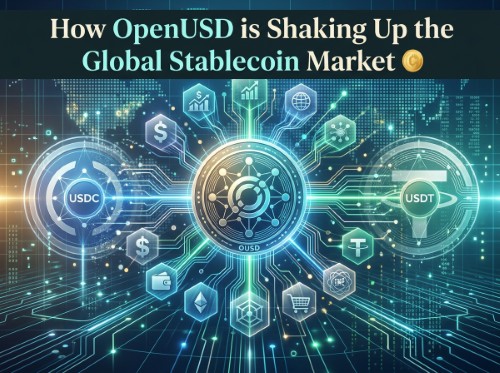
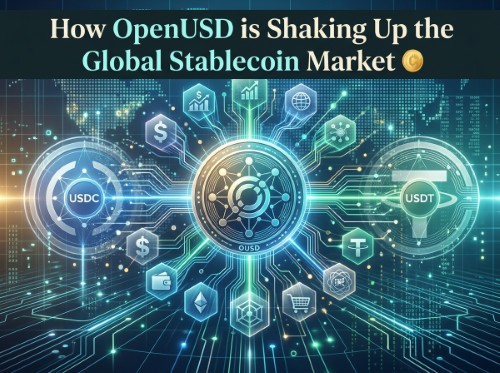
The global stablecoin market is experiencing a profound transformation. For years, two giant issuers—Tether (USDT) and Circle (USDC)—have maintained a dominant duopoly, capturing the vast majority of liquidity and generating billions in interest from reserve assets. However, a major shift is under way as traditional payment titans, technology conglomerates, and crypto heavyweights join forces to support a brand-new digital dollar: OpenUSD (OUSD).
With payment giant Visa integrating stablecoins natively into its platform and backed by a consortium of over 160 major global firms, OpenUSD is poised to redefine the economics of digital currency. Here is a detailed look at what OpenUSD is, how its revolutionary financial structure works, and what it means for the future of digital finance.
On the surface, OpenUSD operates similarly to existing dollar-pegged stablecoins. It is designed to maintain a 1:1 peg with the US dollar, fully backed by cash and short-term US Treasury bills held in reserves.
What sets OpenUSD apart is not its backing, but its ownership and governance model. OpenUSD was created by Open Standard, a global consortium led by CEO Zach Abrams (co-founder of Bridge, the crypto infrastructure firm acquired by Stripe for $1.1 billion). Rather than being controlled and monetised by a single corporate entity, OpenUSD is governed collectively by its member companies.
An Unprecedented Industry Coalition
The backing behind OpenUSD represents one of the most powerful institutional coalitions ever assembled in the crypto space. The consortium comprises over 160 corporate, financial, and tech entities, including:
By launching natively on high-speed networks such as Solana and Base—with planned extensions to Polygon, Stellar, Aptos, and Stripe's Tempo infrastructure—OpenUSD is built from day one for deep ecosystem utility and enterprise adoption.
To understand why OpenUSD presents such a formidable challenge to incumbent stablecoins, one must look closely at how stablecoin issuers make money.
The Traditional Model: Circle and Tether
Traditional issuers like Tether and Circle generate billions of pounds in annual revenue primarily through the interest earned on US Treasury bills backing their tokens.
Under this established setup, exchanges, wallet providers, and payment processors drive user adoption to USDT or USDC, while the central issuer retains almost all the interest generated by those reserves. Furthermore, large institutions often face high fees for minting and redeeming tokens in bulk.
The OpenUSD Model: Zero Fees and Distributed Revenue
OpenUSD completely upends this incentive structure:
This creates a powerful financial flywheel. Every bank, payment provider, and exchange backing OpenUSD has a direct financial incentive to integrate OUSD into its payment rails, treasury operations, and cross-border settlement channels. As the circulating supply grows, so does the yield returned to the partners.
While Visa’s support for OpenUSD made headlines, Visa CEO Ryan McInerney recently clarified that Visa’s overarching philosophy remains multi-coin and multi-chain. Visa is not attempting to pick a single winning token; rather, it is positioning itself as the foundational infrastructure layer for all digital settlements.
Visa’s stablecoin ecosystem strategy encompasses several layers:
By featuring OpenUSD as a primary asset on its enterprise platform, Visa offers corporate clients an economically attractive option while remaining flexible enough to support whichever stablecoin merchants and consumers prefer.
Even before OpenUSD’s official mainnet deployment, its announcement sent ripples through public markets and institutional research desks.
Market Reaction and Stock Pressure
Following the disclosure of OpenUSD and its integration with Visa’s enterprise framework, shares in Circle experienced noticeable downward volatility. Financial analysts began re-evaluating the long-term margins of traditional stablecoin issuers.
Investment bank Mizuho downgraded Circle, citing concerns that OpenUSD’s revenue-sharing model will force Circle to offer far more generous distribution splits to keep key partners like Coinbase loyal. With Circle retaining roughly 38% of reserve yield after partner payouts compared to OpenUSD’s model of passing nearly all reserve income back to stakeholders, distributor bargaining power has fundamentally shifted.
Tether vs Circle: Who is Most at Risk?
Market experts note that the immediate pressure falls more heavily on Circle than Tether:
The emergence of OpenUSD highlights an ironic evolution in the crypto industry. Blockchain technology was originally conceived to bypass traditional intermediaries like banks, card networks, and institutional custodians. Today, companies like Visa, Mastercard, BlackRock, Google, and Stripe are actively constructing the next generation of on-chain monetary rails themselves.
Whether OpenUSD ultimately overtakes USDC and USDT in total market cap or simply forces incumbents to lower fees and share yields, its arrival marks a pivotal milestone. The era of single-issuer stablecoin monopolies is giving way to collaborative, enterprise-driven monetary networks.
Coin Bureau - Visa Just Picked The WINNING Stablecoin (It’s Not USDT or USDC)
"Visa is integrating a new stablecoin called OUSD, created by a massive group of 160+ top companies, bypassing long-time giants USDT and USDC. Discover what makes OUSD different and why major players—from finance to Big Tech—are backing it from day one.
We dig into how OUSD's unique revenue-sharing model could reshape stablecoin adoption and what Visa's infrastructure play means for the future of digital payments. Don't miss this deep dive into the next era of stablecoins."
~ TIMESTAMPS ~
0:00 – Visa's Surprising New Strategy: Choosing a Stablecoin Winner?
2:10 – The Powerhouse Coalition: Over 160 Giants Snubbing Tether & Circle
4:20 – How OpenUSD Flips Stablecoin Tokenomics on Its Head
6:22 – The Billions in Revenue Tether and Circle Don't Want to Share
8:33 – Behind the Scenes: Visa’s True, Uncensored Multi-Chain Strategy
10:46 – Inside Visa’s Brand New Infrastructure Upgrades
12:58 – Why Circle's Stock Crashed Hard After the OUSD Reveal
15:11 – Can OUSD Actually Overcome the Network Effects of the Giants?
17:25 – Squeezing Margins: How OUSD Weakens Circle's Pricing Power
19:37 – Crypto Irony: The Middlemen Are Now Building the Future
20:53 – Market Dominance Numbered? The Future of Tether & Circle
Source 👉 https://www.youtube.com/watch?v=YT0rTZE3r4A
Disclaimer: This article is provided for informational purposes only, mistakes may be made, and it's not offered or intended to be used as legal, tax, investment, financial, or any other advice.