x




China is intensifying efforts to turn Hong Kong into a major global gold trading hub, aiming to expand its influence over bullion markets that are currently dominated by Western financial centres such as London and New York. The Hong Kong government has created a fully state-owned clearing company, Hong Kong Precious Metals Central Clearing, which is expected to begin trial operations before the end of 2026, while also planning to expand the city’s gold storage capacity to more than 2,000 metric tonnes within three years. Closer cooperation with the Shanghai Gold Exchange is also planned to allow mainland investors to trade and store gold in Hong Kong, potentially reducing logistics costs for Asian countries that currently rely on Western markets.
At the same time, Chinese mining companies are using Hong Kong’s stock market to fund overseas expansion, including Zijin Gold International’s proposed acquisition of Canada’s Allied Gold for about $4 billion and Chifeng Jilong Gold Mining’s international mining investments. Strong share price performance among Chinese gold miners has reinforced this strategy by helping them raise capital for further global projects. Officials say the broader goal is to increase China’s role in international gold pricing while building an integrated trading, storage and financial ecosystem in Hong Kong, a move that also reflects geopolitical shifts as more countries seek to keep gold reserves closer to home following Western asset freezes on Russia after the invasion of Ukraine. Source
Momentum is returning to the mining sector after more than a decade of weak performance, with strong gains suggesting a new bull market cycle may be emerging. Over the past year the VanEck Gold Miners ETF has surged more than 160 percent to around $106.22, significantly outperforming gold itself, which has climbed about 98 percent to roughly $5,125.80 an ounce. Despite these strong gains, Soar Financial CEO Kai Hoffmann said the rally appears to be driven mainly by rising metal prices rather than widespread investor excitement, noting that sentiment remains far from the euphoric levels that typically signal a market peak.
Hoffmann said capital is flowing into mining equities, but a major rotation from other sectors such as technology and artificial intelligence has not yet occurred, and broader institutional participation remains limited. Strong fundamentals are currently supporting the rally, with producers generating record margins and cash flow as gold prices rise, while companies are increasingly emphasising dividends and share buybacks to attract long-term investors. However, the industry still faces structural challenges including declining production among major miners and a lack of major new discoveries, meaning growth could be constrained even as higher gold prices continue to boost profitability and gradually draw investment further across the sector. Source
The global platinum market is expected to record a fourth straight annual deficit in 2026, although the shortfall is forecast to shrink significantly compared with the record levels seen in 2025. The World Platinum Investment Council estimates a deficit of 240,000 ounces this year following a 1.082 million ounce deficit last year, which was the largest recorded since the series began in 2013. Despite the smaller gap between supply and demand, cumulative deficits since 2023 are approaching 3 million ounces, leaving above-ground stocks projected to fall to around 2.6 million ounces by the end of 2026, equivalent to just over four months of global demand.
Last year’s record deficit was largely driven by a surge in investment demand as geopolitical uncertainty and strong precious metals sentiment boosted purchases of ETFs, bars and coins. Total demand reached 8.297 million ounces in 2025 while supply slipped slightly to 7.215 million ounces. Demand is expected to ease by about 8 percent in 2026 as investment inflows moderate, although industrial demand is projected to rebound and automotive demand remains supported by slower electric vehicle adoption and continued hybrid production. With supply still tight and macroeconomic and geopolitical risks ongoing, the market is expected to remain volatile while the underlying investment case for platinum continues to be supported by persistent structural deficits. Source
Gold and silver may need more time to consolidate after their recent rally as other safe-haven assets, particularly government bonds, begin to look more attractive to investors. MarketGauge’s chief market strategist Michele Schneider said the recent escalation in military operations involving the United States, Israel and Iran has not produced a sustained safe-haven surge in precious metals. Gold failed to break through resistance around $5,400 an ounce while silver struggled to hold gains above $100, with both metals experiencing selling pressure that pushed gold back toward $5,000 and silver briefly below $80. The recent volatility is seen as part of a broader consolidation phase rather than the start of a sustained decline.
Schneider said bond markets could increasingly compete with precious metals for safe-haven demand as 10 year U.S. Treasury yields fall below 4 percent and investors reassess asset allocations amid economic uncertainty. She believes concerns about credit markets and financial system stability may lead traders to reconsider bonds as a protective asset, particularly if central banks intervene to support markets. The gold to silver ratio, currently around 61, remains a key indicator, with a drop below 55 signalling stronger upside for silver and a rise above 65 suggesting weakening momentum in the metals sector. Despite the possibility of short term consolidation, ongoing geopolitical tensions, commodity strength and broader economic uncertainty are expected to continue supporting precious metals over the longer term. Source

Image Source: Kitco News
Gold prices edged slightly higher in Wednesday trading, hovering near $5,400 per ounce and remaining just below the record high of $5,417 reached earlier in the week. The move was supported by a softer U.S. dollar after the currency had surged the previous day, making gold cheaper for buyers using other currencies. Investors were also digesting mixed signals from the American labour market, as private payrolls data showed stronger than expected job growth in February but included a sharp downward revision to the prior month. Attention has now shifted to Friday’s nonfarm payrolls report, where economists expect job growth to slow significantly to around 59,000 from January’s 130,000.
Safe-haven demand has been reinforced by escalating geopolitical tensions in the Middle East, with the United States and Israel continuing military operations against Iran. The conflict intensified after a U.S. submarine reportedly sank an Iranian warship near Sri Lanka, expanding naval confrontations and fuelling global market anxiety, while Iranian threats to disrupt the Strait of Hormuz raised fears of an oil supply shock. Gold has also been supported by expectations that the Federal Reserve could cut interest rates later in 2026, continued central bank purchases of the metal, and a broader shift away from dollar-denominated assets, all of which have helped drive prices to record territory. Source
Gold and silver prices rose by midday Wednesday as investors returned to safe-haven assets amid escalating war in the Middle East and uncertainty over how the conflict will unfold. Despite pulling back slightly from earlier session highs due to profit-taking by short-term futures traders, April gold futures were still up $37 at $5,160, while March silver futures gained $0.607 to reach $83.485. Outside markets showed a weaker U.S. dollar index, steady oil prices around $74.25 a barrel and a 10-year U.S. Treasury yield near 4.1 percent.
Technical signals suggest gold bulls are aiming for a close above the record resistance level of $5,626.80, while bearish pressure would require prices to fall below the key support level of $5,000. Immediate resistance is identified at $5,200 and $5,250, with support at $5,092.80 and $5,000. In the silver market, bulls are targeting a move above this week’s high of $95.86, while bears would need prices to drop below the February low of $71.815. Resistance levels are seen at $87.50 and $90.00, with support at $83.00 and $81.00. Source
The U.S. services sector expanded more strongly than expected in February, with the Institute for Supply Management reporting that its Services Purchasing Managers Index rose to 56.1 from a revised 53.8 in January. Economists had anticipated a reading of 53.5, making the latest figure a clear upside surprise and the highest level since July 2022. The data marked the 20th consecutive month of expansion following seasonal adjustments, with all four major subindexes remaining in growth territory and all ten tracked indicators also showing expansion for the first time since March 2021.
Despite the stronger economic data, gold prices continued trading near the middle of their daily range following the release, with spot gold last recorded at $5,150.38 per ounce, up 1.21 percent on the day. The report highlighted stronger readings in business activity, new orders, new export orders and backlogs, while the prices index declined slightly but remained elevated. Survey responses also pointed to rising gasoline and copper costs, while companies indicated that trade uncertainty and tariff-related impacts had largely stabilised and become embedded in supply chain costs. Source
Gold prices remain volatile as investors step in to buy after a sharp 4 percent selloff earlier in the week, though stronger-than-expected private-sector employment data is creating a potential headwind for the metal. Payroll processor ADP reported that 63,000 jobs were added in February, beating forecasts of 50,000, while January’s figure was revised down to 11,000. Despite the stronger headline number, gold prices showed little reaction to the report, with trading largely driven by technical momentum after the previous day’s drop. Spot gold was last trading around 5,193.22 dollars an ounce, up roughly 2 percent on the day.
The labour market data suggests resilience but also highlights uneven conditions, with hiring concentrated in a limited number of sectors and limited pay advantages for workers switching jobs. Annual wage growth for employees who stayed in their roles rose 4.5 percent, while those changing jobs saw pay increases slow to 6.3 percent, marking a record low premium for job-switchers. Analysts note that this mixed picture may not be strong enough to push the Federal Reserve into aggressive interest rate cuts, with markets expecting policymakers to keep a neutral stance until at least the summer. Although gold continues to attract safe-haven demand, the metal may struggle to reach new record highs without clearer signals from the central bank, particularly after failing to hold gains above 5,400 dollars an ounce even following military strikes against Iran. Source
Gold and silver prices have been supported by a range of geopolitical and economic developments, including escalating conflict involving Iran, uncertainty surrounding new tariffs proposed by Donald Trump, and higher-than-expected US inflation. According to StoneX analyst Rhona O’Connell, these factors would normally provide strong backing for precious metals, as investors seek safe-haven assets during periods of instability. Tensions in the Middle East have also pushed oil prices higher amid fears of supply disruption, while legal disputes and uncertainty over tariffs have added to market volatility. At the same time, a sharp rise in US producer prices, marking the biggest monthly increase since January 2025, has reinforced inflation concerns that typically favour gold.
Despite these supportive conditions, O’Connell believes both metals may pause after strong gains as technical indicators suggest they are overbought. Gold is near the top of its uptrend with momentum indicators approaching overbought territory, while silver is sitting near a key retracement level following a steep correction. Market positioning also shows reduced speculative exposure, with smaller holdings in exchange-traded funds and shifts in futures market positions, while inventories on COMEX have declined in recent weeks. Although these factors could limit further selling pressure, they also suggest the rally may have run its course for now, meaning prices could consolidate while overbought conditions unwind, even as safe-haven demand remains elevated amid ongoing geopolitical uncertainty. Source
Investors are pouring money into gold and bullion exchange traded funds as escalating conflict involving Iran and sharp declines in global equity markets drive demand for safe-haven assets. According to Bank of America data cited by The Kobeissi Letter, global gold funds recorded 6.2 billion dollars in inflows last week, marking the third consecutive week of gains, while annualised inflows for the year have reached a record 148 billion dollars. January alone saw 19 billion dollars move into gold funds, the strongest monthly intake on record. With Middle Eastern oil flows under threat and global markets facing heightened uncertainty, demand for precious metals ETFs has surged, particularly in major Asian markets.
Market participants say gold ETFs remain the preferred defensive asset during geopolitical tensions, while silver ETFs can provide complementary exposure due to their industrial demand component. Analysts suggest investors consider allocating around 10 to 15 percent of their portfolios to precious metals, with a larger share in gold for stability. Gold has significantly outperformed equities recently, rising 64 percent in 2025 and a further 18 percent so far in 2026, compared with only a modest gain for the S&P 500. While exchange traded funds offer an easier way to track gold prices without the challenges of storing physical bullion, experts caution that the metal’s long term annual return averages about 8 percent and emphasise the importance of diversification, with gold acting as a hedge against inflation, rising debt and economic uncertainty rather than a replacement for equities. Source
Central bank purchases of gold slowed sharply in January, dropping to just 5 tonnes, less than 20 percent of the average monthly demand seen in 2025, according to the World Gold Council. Volatile gold prices and the holiday season likely contributed to the slowdown, though ongoing geopolitical tensions are expected to maintain demand throughout 2026. Despite the overall reduction in buying, sovereign activity became more geographically diverse, with countries such as Uzbekistan, Malaysia, the Czech Republic, Indonesia, China, and Serbia adding to their reserves. Uzbekistan continued a strong accumulation trend, raising its reserves to 399 tonnes, while Malaysia made its first purchase since 2018, increasing reserves to 42 tonnes.
The landscape of central bank gold demand is also shifting in terms of investment methods, with South Korea announcing plans to include overseas-listed physical gold ETFs in its foreign reserve portfolio for the first time since 2013, highlighting a preference for liquidity and tradability over physical holdings. Meanwhile, Russia led net sales with 9 tonnes, and Bulgaria, Kazakhstan, and Kyrgyzstan also reduced reserves. Analysts suggest that the entry of new buyers and the renewed interest from previously inactive central banks could broaden the base of sovereign gold demand in 2026, with geopolitical tensions such as US-Iran relations likely influencing accumulation strategies and the positioning of national reserves in an evolving global order. Source
Gold price formation during weekends has increasingly shifted to blockchain-based markets, as traditional U.S. futures markets are closed from Friday evening until Sunday evening. Tokenized gold assets such as PAXG and XAUt provide some of the few continuously traded and publicly visible instruments, allowing onchain platforms to effectively determine weekend price movements. According to Iggy Ioppe, chief investment officer at Theo, these moves are often reflected in CME futures when trading resumes, highlighting the growing influence of blockchain markets in real-time price discovery. The market for tokenized gold has expanded substantially, with a market cap reaching 4.4 billion dollars and the number of wallets nearly tripling over the past year, while gold accounts for roughly a quarter of all net inflows into blockchain real-world assets.
Despite its growth, blockchain gold trading faces challenges that limit broader institutional adoption. Liquidity remains lower than in traditional futures or ETFs, making large trades potentially disruptive, and regulatory fragmentation across jurisdictions adds complexity for custodians and institutional investors. Market participants such as cross-venue liquidity providers and macro traders actively arbitrage differences between digital and traditional platforms, yet many traditional financial institutions still treat blockchain pricing as informational rather than a basis for active trading. Ioppe expects tokenized gold to continue operating alongside conventional products, each serving complementary roles rather than one fully replacing the other. Source
The Canadian dollar strengthened against the U.S. dollar as easing fears over the Middle East conflict reduced demand for safe-haven currencies. The loonie traded 0.2 percent higher at 1.3650 per U.S. dollar, benefiting from gains in oil prices, which settled slightly higher at 74.66 dollars a barrel amid disruptions to Middle Eastern output. Positive sentiment in global markets, including rises on Wall Street, also contributed to the loonie’s performance, as reports emerged that Iranian operatives had sought secret talks with the U.S. to de-escalate tensions. Strategists expect volatility to remain elevated but see commodity fundamentals supporting the Canadian dollar relative to European currencies.
Economic data painted a mixed picture for Canada, with the services sector contracting for the fourth consecutive month in February and labor productivity falling slightly in the fourth quarter. Despite this, investors anticipate the Bank of Canada will maintain its benchmark interest rate at 2.25 percent this year, providing some stability for the currency. Canadian bond yields showed mixed movements, with the 10-year yield rising marginally to 3.263 percent, reflecting cautious optimism amid ongoing global uncertainties. Source
Disclaimer: These articles are provided for informational purposes only. They are not offered or intended to be used as legal, tax, investment, financial, or any other advice.
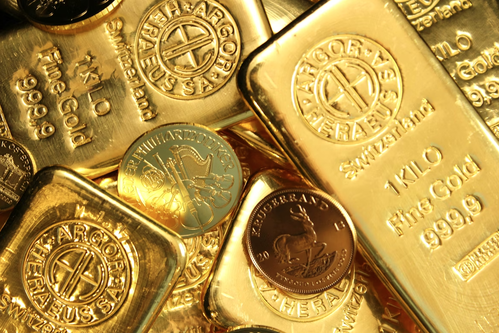
Featured Image - Source: Unsplash















