x




Gold has overtaken stocks to become the second most favoured long-term investment in the U.S., according to the latest Gallup poll, following a significant surge in its market value. While real estate retains its top position for the 12th consecutive year with 37% of respondents selecting it, gold has risen to 23%, up five percentage points from 2024, overtaking stocks, which dropped to 16%. The shift appears tied to economic uncertainty during President Trump’s second term, particularly surrounding an April 2 tariff announcement that triggered steep stock market losses. Other investment preferences remained stable, with 13% favouring savings accounts, 5% bonds, and 4% cryptocurrency.
Historically, gold has experienced similar surges during periods of financial instability, most notably topping Gallup’s poll in 2011 and 2012 following the Great Recession. While real estate remains dominant across income groups, the poll revealed a trend where lower-income Americans gravitate toward safer, tangible investments like gold and savings accounts, while higher earners are more likely to favour stocks. The data also reflects a decline in inflation concerns compared to recent years, though it remains a key issue. Overall, the findings suggest Americans are closely tracking economic developments and adjusting their investment perceptions in response to market volatility. Source
Despite recent pauses in geopolitical tensions, such as the U.S.–China trade truce, Nitesh Shah of WisdomTree sees strong potential for gold prices to rise significantly due to deeper structural risks—particularly those surrounding U.S. monetary policy and the Federal Reserve’s independence. As President Trump continues to publicly pressure Fed Chair Jerome Powell to cut interest rates, investors may begin to doubt the Fed's autonomy, which Shah argues could undermine confidence in fiat currencies and increase demand for hard assets like gold. This erosion of institutional credibility could spark a gold rally, especially in a climate of rising inflation and recession risks.
Shah's models forecast a baseline gold price of $3,610/oz by early 2026, with a bullish case of $4,000/oz and an extreme scenario—dubbed the "Mar-a-Lago Accord"—projecting gold could reach $5,080/oz if the U.S. deliberately devalues the dollar to boost manufacturing and reduce debt costs. This scenario mirrors the 1985 Plaza Accord, when the U.S. dollar dropped nearly 50%. Shah acknowledges that while gold may dip to $2,700 in a bear case, the broader risk environment skews heavily in favour of further gains. With global economic credibility in question and volatile debt markets looming, Shah concludes that gold remains a vital strategic asset for investors navigating an uncertain future. Source
Gold prices remain well-supported above $3,200 an ounce as softer-than-expected inflation data provides potential breathing room for the Federal Reserve to lower interest rates if economic conditions continue to deteriorate. The Consumer Price Index rose just 0.2% in April, and annual inflation slowed to 2.3%, marking the smallest 12-month increase since early 2021. Core inflation, which excludes food and energy, also rose less than expected, suggesting that price pressures may be easing. This has sparked modest buying interest in gold, though prices remain range-bound for now.
Despite the subdued inflation data, analysts caution that it may not be enough to shift the Fed’s neutral stance immediately, though it does provide more policy flexibility if the economy weakens. Broader economic uncertainty persists, particularly around the temporary nature of improved U.S.–China trade relations and ongoing concerns about stagflation. Rising shelter costs remain a key inflationary pressure, while falling energy prices offer some consumer relief. Overall, while inflation is cooling slightly, market sentiment remains cautious, and gold continues to be viewed as a safe-haven asset amid ongoing global and domestic economic ambiguity. Source
Gold prices remain resilient amid shifting global trade dynamics, holding support around $3,200 an ounce despite retreating from last month’s record high of $3,500. The market saw a 3% drop after the U.S. announced reduced tariffs on Chinese imports, signalling progress in U.S.–China trade relations. However, analysts at TD Securities believe the precious metal remains well-supported, buoyed by investor reluctance to short gold and a pullback in the U.S. dollar, which has eased from recent highs. Gold's performance is seen as stable, even in the face of improving trade news, due to lingering macroeconomic uncertainties.
Investment demand remains a key pillar for gold's price strength, with increased inflows into gold-backed ETFs, particularly from Asian markets like China, where buying momentum has intensified. TD Securities highlights that this evolving profile of gold investors — from speculative traders to more strategic institutional holders — is creating a more stable support base for the metal. Although Commodity Trading Advisors (CTAs) have yet to show aggressive bullish behaviour, they’re not exiting their long positions either, indicating confidence unless prices drop sharply. Overall, gold continues to benefit from its role as a store of value amid questions about the U.S. dollar’s long-term purchasing power. Source
Macro strategist Stephanie Pomboy warns that the current market optimism following the temporary U.S.–China trade truce is misplaced, arguing that deep structural economic issues remain unresolved. In an interview with Kitco News, Pomboy pointed to rising long-term interest rates, ballooning corporate debt obligations, and weakening consumer fundamentals as signs of an impending financial reckoning. She emphasized that over $1 trillion in corporate bonds will need to be refinanced in 2025 at much higher rates, while foreign demand for U.S. Treasuries is faltering—leaving the Federal Reserve as the likely fallback buyer. However, political pressure is complicating the Fed’s ability to respond freely to economic data, making interest rate cuts less likely despite clear signs of economic stress.
Pomboy highlighted alarming trends in credit card delinquencies, bankruptcies, and declining consumer spending—even noting McDonald’s reporting its weakest sales since the pandemic lockdowns. Despite these red flags, equity markets remain highly overvalued, in her view, and she cautioned that stocks could still be overpriced even after a significant correction. As a hedge against this potential downturn and broader financial instability, Pomboy is increasing her gold holdings, believing that a systemic reset in global trade and debt financing will ultimately favour hard assets. While she remains pessimistic about short-term market prospects, she sees a long-term opportunity if the U.S. can transition to a more sustainable, production-driven economy. Watch the podcast
.png)
Image Source: Kitco News
Gold prices edged higher as the U.S. dollar weakened on Tuesday, driven by April inflation data that showed consumer prices rising at their slowest pace in four years. June 2025 gold futures gained 0.46%, settling at $3,256.90, a modest rebound from a recent four-day correction that saw prices fall sharply from $3,448. The dollar index fell 0.79% to 100.945, enhancing gold’s appeal. Although the Consumer Price Index rose slightly above expectations at 3.2% annually, the core CPI remained steady at 2.8%, suggesting ongoing disinflation and supporting gold's role as a hedge amid uncertain economic signals.
Despite improved sentiment from a temporary U.S.-China trade truce and reduced tariffs, questions remain about the durability of the agreement. These uncertainties, combined with evolving expectations around the Federal Reserve’s monetary policy, continue to support gold’s safe-haven status. Market forecasts for a Fed rate cut at the June meeting have plummeted, with the probability dropping from 30.5% to 8.2% in just a week. Analysts suggest that while trade developments have bolstered short-term optimism, ongoing economic and geopolitical risks will keep gold relevant and potentially bullish throughout the year. Source
China’s gold market experienced a historic surge in April, driven by strong performance across spot prices, investment inflows, and physical demand. According to the World Gold Council, gold prices in both USD and RMB saw their best April in over a decade, supported by a weaker dollar, geopolitical uncertainty, and record gold ETF inflows. Wholesale gold demand rose significantly, with a 27% month-over-month increase in withdrawals from the Shanghai Gold Exchange. Chinese gold ETFs added a record $6.8 billion in April alone, pushing total assets under management to an all-time high. Futures trading also reached record volumes, while the People's Bank of China continued its gold-buying streak, adding 2.2 tonnes to reserves in April.
However, despite the booming demand, signs of a cooling trend are emerging. The surge in ETF inflows and futures trading has slowed in early May, coinciding with easing U.S.-China trade tensions following successful Geneva talks. Jewelry demand remained weak in Q1, contributing to low gold imports, which hit their lowest level since the COVID-era in 2021. Analysts suggest that investment demand for gold may moderate in the short term due to profit-taking, range-bound prices, and reduced trade uncertainty. Nevertheless, the World Gold Council remains optimistic about gold's long-term appeal in China, citing continued geopolitical risks and growing institutional interest, particularly from insurers. Source
Despite widespread speculation, the London Bullion Market Association (LBMA) has confirmed that gold is not being reclassified as a high-quality liquid asset (HQLA) under Basel III regulations. Rumors had suggested that gold would receive Tier-1 HQLA status by July 1, but the LBMA clarified that while allocated gold has long held Tier-1 capital status, it is still not recognized as an HQLA. The distinction is critical: while Tier-1 status acknowledges gold’s role in capital adequacy, HQLA classification would allow it to be used more freely as a liquidity buffer in financial regulation. Unallocated gold, under current Basel rules, faces a high 85% required stable funding ratio, making it far less attractive for banks in liquidity planning.
The LBMA, alongside the World Gold Council, continues to lobby for HQLA status, arguing that gold’s liquidity, trust, and performance during financial stress make it ideal for such recognition. A recent joint paper emphasized gold’s global accessibility and its increasing use by central banks seeking to diversify away from the U.S. dollar—evidenced by over 1,000 tonnes added to global reserves annually for the past three years. Despite growing central bank and private investor interest, gold remains underutilized by large institutional investors like pension funds. The LBMA asserts that granting gold HQLA status could strengthen global financial stability by reducing overreliance on sovereign bonds and enhancing diversification in liquidity reserves. However, with key jurisdictions like the EU, U.K., and U.S. delaying final Basel III implementations, no timeline has been set for such a reclassification. Source
Gold and silver prices fell sharply on Wednesday, with June gold dropping $60.90 to $3,187.00 and July silver losing $0.675 to $32.425. The declines were attributed to profit-taking and liquidation by weaker long positions in the futures markets. Investor sentiment improved broadly this week, reducing demand for safe-haven assets like precious metals. This shift followed easing trade tensions between the U.S. and China, as both nations reduced some tariffs, and after a tame U.S. consumer price index report soothed inflation fears. U.S. stock indexes continued to rise, reaching three-month highs, further reflecting increased risk appetite among investors.
In technical terms, gold bulls and bears are now on even footing in the near term, but momentum appears to be favoring the bears. Bulls aim to reclaim resistance at $3,350.00, while bears are targeting a drop below $3,100.00. Silver bulls hold a slight technical edge, with their next goal being a close above $34.015, and bears aiming for a break below $31.00. Broader market factors like a modestly lower U.S. dollar index, slightly declining crude oil prices, and a stable 10-year Treasury yield around 4.45% also played into the trading dynamics for precious metals midweek. Source
Gold prices have recently slipped below $3,200 an ounce amid improved market sentiment following progress in U.S.-China trade talks and a temporary tariff reduction. Despite this short-term dip and a 9% decline from last month’s all-time high, George Milling-Stanley, Chief Gold Strategist at State Street Global Advisors, remains bullish on gold’s outlook. He argues that ongoing economic uncertainty and inflationary pressures are eroding the U.S. dollar’s purchasing power, limiting the dollar’s ability to strengthen and creating a favorable environment for gold as a safe-haven asset.
Milling-Stanley highlights that, although higher inflation typically prompts Federal Reserve rate hikes that support the dollar, the current slowing economy is causing the Fed to hold off on tightening, with potential rate cuts expected later this year. This dynamic, combined with geopolitical tensions and volatile markets, strengthens gold’s appeal not just as an investment for profit but as a protective asset. He emphasizes gold’s historical role in guarding against inflation, equity market weakness, and geopolitical turmoil—factors that remain highly relevant in today’s uncertain economic landscape. Source
Trade tariff uncertainty continues to severely disrupt U.S. gold and silver imports despite temporary tariff reductions announced amid ongoing U.S.-China negotiations. Josh Phair, CEO of Scottsdale Mint, explains that while bullion may be officially exempt from tariffs, the complexity of tariff codes and varying definitions of bullion create confusion and risk for importers. This uncertainty has led many to delay or halt shipments to avoid potentially huge unexpected taxes, causing noticeable gaps in the precious metals market. Additionally, while gold and silver have clearer tariff statuses, other metals like platinum and palladium face more ambiguity, prompting companies to seek legal clarifications from U.S. Customs to avoid costly misclassifications.
Jeff Christian, Managing Partner of CPM Group, adds that the real issue is not just the level of tariffs but their unpredictable and arbitrary application, which is creating significant market distortions. Although tariffs may reduce demand for metals used in manufacturing, they could boost investment demand as economic uncertainty rises. Christian also highlights growing investor anxiety over counterparty risks and bullion storage security, reflecting deeper concerns about financial stability. Ultimately, he warns that tariffs risk damaging the broader economy, recalling how past high tariffs worsened the Great Depression, which could paradoxically increase gold and silver’s appeal as safe-haven investments amid rising economic risks. Source
Disclaimer: These articles are provided for informational purposes only. They are not offered or intended to be used as legal, tax, investment, financial, or any other advice.
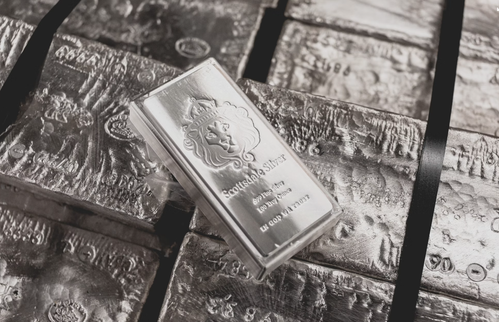
Featured Image - Source: Unsplash















