x




The World Gold Council (WGC) anticipates a sustained trend of central bank gold accumulation and diversification away from the U.S. dollar over the next 12 to 18 months. This expectation is based on recent survey data indicating that a significant portion of central banks intend to increase their gold reserves. The primary drivers behind this continued demand for gold are geopolitical instability, persistent inflation concerns, and a desire to reduce reliance on any single reserve currency. Central banks view gold as a safe-haven asset that offers portfolio diversification benefits and acts as a hedge against economic uncertainties, making it an attractive component of their foreign exchange reserves.
This strategic shift reflects a broader re-evaluation of reserve management practices globally, as nations seek to enhance the security and stability of their financial assets. The WGC highlights that emerging market central banks, in particular, have been prominent buyers of gold, driven by a need to mitigate currency risks and bolster their financial independence. The ongoing geopolitical tensions and the weaponization of economic tools have further incentivized central banks to diversify their holdings, with gold serving as a neutral and universally accepted asset. This trend is expected to contribute to continued strong demand for gold in the global market, supporting its price. Source
China's gold market experienced a slowdown in May, characterized by a mild drop in prices and the first monthly outflow from gold exchange-traded funds (ETFs) since January. While the People's Bank of China continued its gold purchasing streak for the seventh consecutive month, adding 1.9 tonnes to its reserves, the overall sentiment points to sustained weakness in consumer demand. This cooling investment momentum, with investors selling gold ETFs and a decrease in gold's implied volatility, overshadowed the lingering impact of a weaker U.S. dollar, contributing to the gold price weakness. Wholesale gold demand also saw a seasonal decline, falling 35% month-on-month, as the second and third quarters are typically off-seasons for gold consumption in China, leading to reduced re-stocking activities by manufacturers.
Despite the May dip, overall gold ETF demand in China remains robust for the first five months of 2025, with holdings surging by an unprecedented 84 tonnes. However, the World Gold Council (WGC) expects gold jewelry consumption, in tonnage terms, to remain subdued as it enters its off-season. While a recent price adjustment could offer some support, investment demand may also cool in the near term due to potential profit-taking, range-bound price movements, and easing U.S.-China trade tensions. Nevertheless, the WGC believes that in the longer term, gold's investment appeal in China should remain strong, supported by its attractive performance, ongoing global economic and geopolitical risks, and increasing institutional allocations from Chinese insurers. Source
Resolve Asset Management predicts that ongoing currency debasement will be a significant driver for higher gold prices. This perspective emphasizes that the continuous expansion of money supply by central banks globally, particularly in the U.S. through increased fiscal deficits and debt, is eroding the purchasing power of fiat currencies. This debasement makes gold an increasingly attractive asset, as it cannot be "printed" and historically serves as a reliable store of value during periods of monetary dilution. The argument suggests that traditional inflation measures might not fully capture the extent of this debasement, leading investors to seek out assets that offer true protection against the loss of wealth.
Furthermore, the article highlights that the relationship between gold and traditional drivers like real interest rates has evolved, with fiscal policy playing a more prominent role. As governments continue to pursue expansionary fiscal policies that are not always offset by monetary tightening, the result is increased liquidity in the system, which favours gold. The global nature of currency debasement means it's not just a U.S. phenomenon, but a widespread trend among major fiat currencies relative to gold. This broader context, coupled with ongoing geopolitical risks and central bank gold accumulation, solidifies the view that gold's upward trajectory will continue as a hedge against systemic currency weakness. Source
Nassim Nicholas Taleb, the renowned author of "The Black Swan," posits that gold has effectively supplanted the U.S. dollar as the world's reserve currency. He contends that the inherent fragility of a national currency serving as the global reserve stems from governments' ability to print money, leading to its debasement. In contrast, gold's finite supply and independence from governmental control naturally position it as a stable store of value in an increasingly volatile global landscape. This shift, according to Taleb, is not a formal declaration but an emergent reality driven by ongoing geopolitical instability, various economic policies, and a growing erosion of trust in fiat currencies.
Taleb further expresses significant concern regarding the potential destabilizing effects of President Donald Trump's protectionist policies, specifically his tariffs and immigration stances. He argues that these measures, while ostensibly aimed at national interests, are ultimately detrimental to global trade and economic interconnectedness. Such policies risk triggering trade wars, disrupting supply chains, and diminishing overall economic efficiency, thereby escalating volatility and uncertainty within financial markets. In this turbulent environment, gold's appeal as a safe-haven asset is considerably enhanced. Taleb suggests that these policies, rather than bolstering national economies, could "wreck the boat" of the global financial system, thereby solidifying gold's position as the de facto ultimate arbiter of value. Source
Gold prices are currently in a period of consolidation, holding steady near session highs and testing resistance levels just below $3,400 an ounce, as the U.S. labor market continues to show signs of weakening. Initial claims for state unemployment benefits remained elevated at a seasonally adjusted 248,000 for the week ending June 7, unchanged from the previous week's revised figure and higher than consensus estimates of 242,000. This marks the highest level for jobless claims since early October. The four-week moving average for new claims, considered a more reliable indicator, also rose to 240,250, the highest since late August 2023. This softer employment data is largely seen as a supportive factor for the precious metal, as it hints at a potential need for the Federal Reserve to consider interest rate cuts, which would typically benefit gold.
While gold is displaying renewed momentum, analysts caution that the $3,400 level has become a significant resistance point, with investors closely watching the April record high of $3,500 an ounce. For many, the ongoing weakness in the U.S. labor market is the primary driver behind the current upward pressure on gold prices. However, a clear signal from the Federal Reserve about a readiness to cut interest rates again might be needed to decisively break above current resistance. The U.S. central bank has maintained a neutral monetary policy stance, citing persistent inflation risks and a labor market that, despite softening, is still relatively stable. Adding to the gloomy labor outlook, unemployed workers are finding it increasingly difficult to reenter the job market, with continuing jobless claims rising to 1.956 million for the week ending May 31, the highest level for insured unemployment since November 2021. Source
Gold prices are holding relatively flat, trading around $3,387 per ounce, despite recent U.S. economic data indicating a significant deterioration in the housing market. In May, U.S. housing starts plummeted by 9.8% to a seasonally adjusted annual rate of 1.256 million units, a figure considerably worse than economists' expectations. This marks the lowest reading for housing starts since May 2020, during the initial phase of the COVID-19 pandemic. Concurrently, building permits, a forward-looking indicator for future homebuilding, also declined by 2.0% to 1.393 million units, further underscoring the weakness in the sector. The housing market's struggles are attributed to persistently high prices and elevated mortgage rates, which have deterred many potential homebuyers.
The gold market's muted reaction to this bearish housing data, which was released alongside weekly jobless claims, suggests that other factors might be at play in determining its price movements. While a weakening economy typically supports gold as a safe-haven asset, the current environment also features a Federal Reserve that is cautious about interest rate cuts due to lingering inflation risks. Economists note that if businesses are unable to pass on higher costs (possibly due to tariffs) to consumers, it could lead to weaker profits, capital spending, and hiring, further slowing the economy. This complex interplay of economic indicators is likely contributing to gold's current consolidation phase, as market participants await clearer signals regarding future monetary policy and broader economic trends. Source
According to Bank of America's (BoA) latest Global Fund Manager Survey, "long gold" remains the most crowded trade for the third consecutive month, indicating widespread investor conviction in the precious metal. This strong positioning comes amidst persistent geopolitical tensions and lingering fears of stagflation, which have historically driven demand for safe-haven assets like gold. Despite gold's significant rally this year, breaking all-time highs multiple times, BoA analysts believe there's still a clear path for prices to reach $4,000 per ounce within the next 12 months. This bullish outlook is primarily underpinned by expectations of continued interest rate volatility and a weakening U.S. dollar, both of which tend to be supportive factors for gold. The survey also revealed that while central banks have been active gold buyers, investor allocation to gold (around 3.5% of portfolios) remains below the 2011 peak, suggesting further room for individual investors to increase their exposure.
The Bank of America report emphasizes that the primary long-term driver for gold is the unsustainable growth of U.S. government debt and the associated concerns over fiscal sustainability. While geopolitical events can provide short-term catalysts, the structural issues related to fiscal deficits and the potential for increased market intervention by the Federal Reserve or Treasury are seen as more enduring forces supporting gold. BoA analysts anticipate gold will consolidate between $3,000 and $3,500 an ounce in the near term, but a renewed surge in investment demand, potentially coupled with a stabilization in jewelry demand, could propel it towards the $4,000 target. The bank also points to the broader rally in precious metals, with silver and platinum gaining momentum, as a sign of expanding bullish sentiment across the sector. Source
Gold prices showed a largely subdued reaction to the Federal Open Market Committee (FOMC) statement, as the U.S. central bank maintained its interest rates at an unchanged level. Despite this decision, which was widely anticipated by the market, gold hovered around $3,380 an ounce, indicating minimal daily fluctuation. The FOMC's statement noted that while economic activity continues to expand robustly and the unemployment rate remains low with solid labor market conditions, inflation continues to be "somewhat elevated." This mixed economic assessment, coupled with the Fed's cautious "wait-and-see" approach, contributed to the gold market's neutral response, as investors await clearer indications regarding the future direction of monetary policy.
The Federal Reserve's updated economic projections, released concurrently with the statement, revealed a downward revision of U.S. GDP growth forecasts for 2025 and 2026, alongside an upward adjustment of inflation expectations for 2025. Despite these shifts and an acknowledgment of "elevated" uncertainty in the economic outlook, the FOMC still projects two interest rate cuts by the end of 2025. However, this expectation remains contingent on incoming economic data, particularly concerning inflation and the potential impact of tariffs. The absence of a definitive move from the Fed, combined with the complex interplay of various economic indicators, has led to gold consolidating, as market participants endeavor to interpret the implications of a data-dependent and cautious central bank. Source

Image Source: Kitco News
Gold markets experienced extraordinary volatility this week, showcasing both its enduring appeal as a safe-haven asset and the ephemeral nature of crisis-driven rallies. The dramatic price action began last Friday when spot gold surged to an unprecedented closing high of $3,432.63, and the August 2025 futures contract reached $3,452.40, following Israel's military operations targeting nuclear facilities in Iran. This immediate flight to safety exemplified gold's classic safe-haven dynamics. However, the euphoria was short-lived, with prices failing to maintain these elevated levels. Monday's opening at $3,473.00 initially suggested continued strength, but the trading session delivered a harsh reality check, with selling pressure resuming throughout the week and pushing gold futures below the psychologically important $3,400 level to settle around $3,386.40.
Adding another layer of complexity to gold's narrative was the Federal Reserve's policy announcement, which maintained benchmark interest rates between 4.25% to 4.50%. The Fed's cautious, data-dependent approach and monitoring of President Trump's trade policies, particularly tariffs, alongside expectations of intensifying inflation pressures, contributed to the market's uncertainty. Despite maintaining projections for two additional rate cuts before year-end, Fed Chair Jerome Powell's measured commentary underscored the prevailing ambiguity, stating that policymakers are "well positioned to wait to learn more." While the fundamental backdrop, including aggressive central bank gold accumulation and ongoing geopolitical tensions, initially drove gold to new highs, the rapid reversal demonstrates how quickly sentiment can shift, with profit-taking and technical selling outweighing initial safe-haven demand. Source
Gold prices have shown a largely flat reaction following the Federal Open Market Committee (FOMC) statement, with the precious metal hovering around $3,380 an ounce despite the U.S. central bank's decision to keep interest rates unchanged. This widely anticipated decision came alongside the Fed's assessment that while economic activity continues to expand at a solid pace and the unemployment rate remains low with robust labor market conditions, inflation continues to be "somewhat elevated." This combination of factors, alongside a "wait-and-see" approach from the Fed, has resulted in a neutral market reaction for gold, as investors await clearer guidance on future monetary policy.
The Federal Reserve's updated economic projections, released concurrently with the statement, indicated a lowered forecast for U.S. GDP growth in both 2025 and 2026, while concurrently raising inflation expectations for 2025. Despite these adjustments and an acknowledgment of "elevated" uncertainty in the economic outlook, the FOMC still projects two interest rate cuts by the end of 2025. However, this expectation is contingent upon the evolution of incoming economic data, particularly concerning inflation and the potential impact of tariffs. The lack of a decisive shift from the Fed, coupled with the complex interplay of various economic indicators, has left gold in a consolidating phase, as market participants digest the implications of a cautious and data-dependent central bank. Source
While gold prices remain in a period of consolidation, hovering below $3,400 an ounce, the broader precious metals market is witnessing significant bullish momentum, particularly in platinum. With gold having rallied by nearly 30% in 2025, investors are now increasingly turning their attention to other precious metals. Platinum, in particular, has seen a remarkable surge, recently surpassing $1,300 for the first time in almost five years and boasting a year-to-date gain of 45%. This impressive performance is largely attributed to a severe supply imbalance, exacerbated by challenges in major mining regions, particularly South Africa, which accounts for a significant portion of global platinum output. Analysts like Nicky Shiels of MKS PAMP view this as a broader trend of seeking hedges against the U.S. dollar, while Daniel Ghali of TD Securities notes that ETF inflows are further amplifying the market squeeze.
The strong industrial demand for platinum, primarily driven by its use in automotive catalysts and growing applications in the hydrogen economy, is a key fundamental factor supporting its price surge. Despite gold's status as a monetary metal and inflation hedge, platinum's dual role as both a precious and an industrial metal offers a unique investment case. Ongoing supply deficits, projected for the third consecutive year by the World Platinum Investment Council (WPIC), are drawing down above-ground inventories, which are expected to become critically low in the coming years. This tightening supply, coupled with increasing investor interest and the metal's relative undervaluation compared to gold, suggests that platinum's bullish run may continue, even as gold takes a pause. Source
Federal Reserve Chair Jerome Powell, in his post-meeting press conference, explicitly stated that an interest rate hike is "not the base case at all," despite the central bank's decision to maintain current interest rates. This assertion, made amid market anticipation, highlighted the Fed's cautious and data-dependent approach to monetary policy. Powell acknowledged that while the U.S. economy continues to expand at a solid pace and the labor market remains strong, inflation persists at "somewhat elevated" levels. He underscored that the Fed is well-positioned to observe evolving economic developments and will consider all relevant data, including the potential impact of tariffs on inflation, before making any adjustments to policy.
The Fed's decision to keep rates steady, maintaining the federal funds rate target range at 4.25% to 4.50%, reflects a prudent stance as policymakers assess the trajectory of inflation and economic growth. While the central bank's updated economic projections indicated a slight lowering of GDP forecasts for both 2025 and 2026, they also showed an increase in inflation expectations for 2025. Despite these revisions and an acknowledgement of "elevated" uncertainty, the FOMC still anticipates two interest rate cuts by the end of 2025. Powell's consistent message is that the Fed will remain flexible, balancing its dual mandate of maximum employment and price stability, and will not pre-commit to any specific future actions. Source
Disclaimer: These articles are provided for informational purposes only. They are not offered or intended to be used as legal, tax, investment, financial, or any other advice.
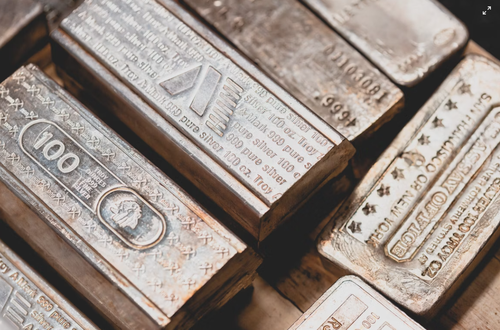
Featured Image - Source: Unsplash















