x




Gold and silver prices rose at midday but pulled back from earlier highs as safe-haven demand increased amid a shaky U.S. stock market and anticipation of key economic data, including FOMC minutes and the upcoming jobs report. A stronger U.S. dollar limited the metals’ early gains, while investor anxiety grew over delayed economic data releases and uncertainty about the Federal Reserve’s ability to continue easing. Concerns about stretched tech valuations and a broader stock market sell-off added further support for precious metals.
Market sentiment was pressured by warnings from Goldman Sachs President John Waldron, who suggested stock indexes could see deeper declines as investors await major tech earnings. Volatility has spiked, with the VIX surpassing 24, while crude oil eased to around 59.50 a barrel and the 10-year Treasury yield held near 4.13%. Technically, gold and silver futures remain in bullish territory, with both markets eyeing key resistance levels near their record highs as traders monitor whether safe-haven momentum will continue. Source
Gold and silver rebounded sharply last week, supported by expectations that U.S. government reopening, ongoing deficits and potential rate cuts could weaken the dollar and bolster gold demand. Analysts at Heraeus highlighted the diverging views within the Federal Reserve, noting that soft inflation readings and weak labor data increase the likelihood of a December rate cut. Gold is holding above 4000 after last week’s surge toward 4200, with investors remaining attentive to fiscal and monetary conditions that could continue to pressure the dollar.
Silver also staged a strong recovery, outperforming gold with a 6 percent weekly gain and tightening the gold-to-silver ratio as rising prices lifted major producers’ performance. Companies like First Majestic Silver and Aya Gold & Silver reported record quarterly output and revenue, boosted by both stronger prices and operational expansions. Longer-term support for silver remains tied to robust photovoltaic demand, with global solar capacity additions expected to stabilize but still drive renewables to nearly half of global electricity generation by 2035. Source
Italy is weighing a one-off tax option that would allow households to declare previously undocumented gold holdings at a reduced rate of 12.5 percent, far below the 26 percent tax currently applied when proof of purchase is missing. The proposal aims to bring privately held bullion, jewelry and collectible coins into the formal market by June 2026, increasing liquidity and improving tax collection. With an estimated 4500 to 5000 metric tons of private gold worth around 500 billion euros, even a small share of participation could deliver meaningful revenue, and preliminary estimates suggest more than 2 billion euros could be raised.
The measure would let participants declare their gold at market value, pay the tax in one or three instalments, and receive a higher fiscal cost basis for future sales, all under strict oversight by intermediaries and anti–money-laundering controls. Supporters argue that easing what many view as an overly punitive regime would help shift informal transactions into official channels, reduce avoidance and encourage legal circulation of inherited gold across generations. The amendment still requires parliamentary approval and government review before it can take effect. Source
Silver is on track for a fifth consecutive annual supply deficit of 95 million ounces, a shortfall that remains large enough to support prices near record highs despite softer industrial demand. Industrial consumption is expected to fall 4 percent this year to 665 million ounces as global uncertainty, tariffs and rapid thrifting reduce usage, including a 5 percent decline in photovoltaic demand due to lower silver loadings per module. Jewelry and silverware demand are also projected to fall, while bar and coin demand is set to drop to a seven-year low, driven by continued retail liquidations in the United States even as India and Europe show strength.
The deficit persists largely because investment demand has surged, with ETF inflows rising by 187 million ounces amid concerns about stagflation, debt sustainability, geopolitical risks and the stability of the dollar. Supply chain disruptions have widened the imbalance, with silver piling up in New York as refiners hit capacity and buyback premiums drop, while London faces tightness driven by Indian demand and strong ETF buying. Analysts expect ongoing deficits for years, noting that global consumption would need to fall sharply to restore balance, and they see prices potentially climbing to 60 an ounce by 2026. Source
Gold is caught between weakening expectations for a December rate cut, which are weighing on prices, and rising concerns about the U.S. economy and the Federal Reserve’s independence, which are supporting safe-haven demand. Dilin Wu of Pepperstone noted that gold saw a rally followed by a sharp retreat as mixed signals from Fed officials, the government reopening and profit-taking tempered bullish momentum. Markets now look to upcoming nonfarm payrolls for short-term direction, though data gaps from the lengthy government shutdown add uncertainty. After breaking above 4000, 4100 and 4200 last week before reversing, gold ended near 4085, with key support at 4050 and 4000 and resistance at last week’s 4245 peak.
Wu emphasized that gold’s correlation with the dollar, yields and equities is unusually low, leaving price action driven largely by flows and increasing volatility. Expectations for a December rate cut have dropped from about 90 percent a month ago to below 50 percent, as hawkish Fed commentary and lingering inflation concerns reshape the outlook. Supply disruptions in economic data, renewed doubts about Fed independence and political uncertainty have further boosted safe-haven demand. In the near term, Wu expects gold to trade between 4000 and 4250, with upcoming delayed economic releases and FOMC minutes likely to influence the next move. Gold traded around 4063.73 on Monday afternoon. Source
China’s gold market remained unusually strong in October as prices set repeated records, wholesale demand rose against typical seasonal trends and gold ETFs saw major inflows. After a surge early in the month driven by geopolitical risks and equity weakness, prices cooled but still delivered substantial year-to-date gains. Withdrawals from the Shanghai Gold Exchange reached 124 tonnes, supported by strong early-month investment demand, even as jewelers stayed cautious about restocking due to heightened price volatility. ETF inflows totalled 32 billion yuan, pushing holdings to 227 tonnes, although interest dipped late in the month when geopolitical tensions eased and expectations for further Fed easing softened.
Momentum carried into early November, with renewed ETF inflows, elevated futures trading and strong price gains, helped by rising geopolitical risks and weaker local equities. China’s central bank continued expanding its reserves for a twelfth consecutive month, while imports also stayed above trend, signalling broad-based demand strength amid record prices. Looking ahead, the recent increase in value-added tax on gold jewelry may weigh on retail consumption, but the impact could be limited as consumers appear less sensitive to higher prices after three consecutive years of gains. Gold bars, ETFs and accumulation plans remain exempt from the VAT change and could attract additional buying. Source
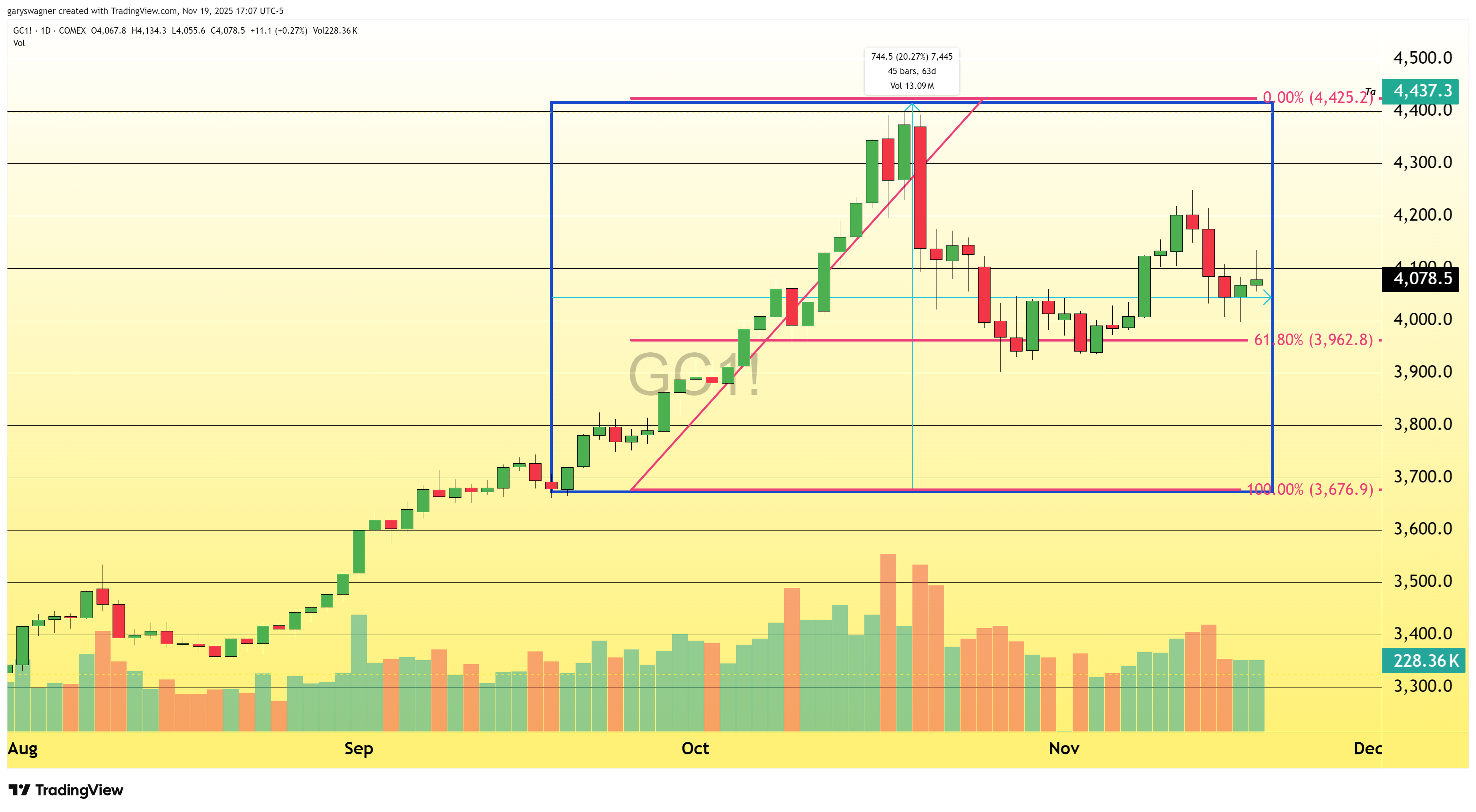
Image Source: Kitco News
Gold inched higher despite a sharp rally in the U.S. dollar, with futures briefly climbing above 4075 even as the dollar index regained the 100 level. Prices fluctuated throughout the session, overcoming early weakness triggered by the latest Federal Reserve meeting minutes. Traders focused on mixed signals from policymakers, with gold finding support as uncertainty grew around the central bank’s next steps. Volatility increased as the metal traded between 4055.60 and 4134.30 before settling modestly higher, highlighting its resilience against strong currency headwinds.
The Fed remains split on whether a December rate cut is appropriate, with Chair Jerome Powell emphasizing that no decision is guaranteed. Market expectations for a cut have fallen sharply to about 33.6 percent amid persistent inflation concerns and disruptions to key economic data caused by the government shutdown, including the absence of the October employment report. Rising unemployment benefit claims added to the murkiness, leaving the data-dependent Fed with limited visibility and boosting the appeal of gold as an anchor during policy uncertainty. Source
Global central banks have been accumulating close to 1,000 tonnes of gold annually for three years, and although this year may see slightly softer demand, purchases could still reach up to 950 tonnes. SocGen warns that even a small reallocation of just 1 percent of global reserves into gold could trigger a surge in physical demand that the largely paper-driven market is not built to handle. China remains the dominant force, with estimated buying potentially reaching 250 tonnes this year, far exceeding its reported reserve increases. Much of the official-sector activity remains opaque, with roughly two thirds of third-quarter purchases unreported, forcing analysts to rely on indirect measures like U.K. trade data to gauge buying trends.
The bank notes that shifts in economic and geopolitical conditions are encouraging central banks to diversify away from the U.S. dollar and into gold, reinforcing higher price floors after each market breakout. SocGen’s tracking of U.K. exports shows reduced seasonal shipments to China, suggesting that official purchases are understated and that physical flows remain strong despite lower reported reserves. Analysts believe that if central banks continue reallocating reserves at the current pace, physical tightness could intensify, increasing the risk of a short squeeze similar to those seen in the silver and platinum markets. Source
Stocks slipped below key technical levels as expectations for near-term Fed rate cuts faded, leaving investors more cautious amid limited economic data and persistent trade-driven inflation risks. Growing worries about stress in the private credit market, along with signs that enthusiasm for AI-driven growth may be cooling, have added to the sense that a broader downturn could be forming. Against this backdrop, investors are once again asking whether gold can offer protection if markets slide sharply.
Gold has traditionally been viewed as a safe haven, but its recent decline alongside equities, crypto and major indices shows that it is not immune to broader risk-off waves, especially when a stronger dollar pressures commodity prices. In true panic phases, forced selling and liquidity needs often push nearly all assets lower, including gold, leaving only the dollar and certain short positions as consistent beneficiaries. While gold may serve as a longer-term store of value, during the initial stages of a sharp market shock it often moves down with everything else before eventually stabilising. Source
A G20-commissioned report presented to President Cyril Ramaphosa proposes that the IMF sell part of its vast gold reserves to help fund debt relief for African nations burdened with unsustainable obligations. The report highlights that more than 3.4 billion people live in countries spending more on debt service than on education or healthcare, and that public debt in developing economies has surpassed 31 trillion dollars in 2024. With gold trading above 4,100 dollars per ounce while the IMF still records its holdings at 50 dollars per ounce, the Africa Expert Panel argues that selling a portion of this underutilised asset could finance a major refinancing plan without additional cost to member states.
Trevor Manuel, chair of the panel, is pushing for a transparent mechanism to convert part of the IMF’s tens of millions of ounces of gold into support for distressed economies, a view Ramaphosa welcomed as the G20 prepares to meet in Johannesburg. The report also recommends creating a Borrowers' Club to share best practices among lenders, reviewing global lending frameworks, and pressing credit rating agencies to disclose how they evaluate risk amid concerns of unfair treatment toward African countries. These proposals form part of South Africa’s agenda as it leads the G20 in efforts to promote global financial stability and equitable development. Source
Platinum prices reached their highest levels in nearly 15 years during the third quarter, supported by tight market conditions that are expected to continue through 2026. The World Platinum Investment Council (WPIC) forecasts a slight market surplus of 20,000 ounces in 2026, following a projected deficit of 692,000 ounces this year. Global trade uncertainty, supply chain disruptions, and the movement of metal into the U.S. to avoid potential tariffs have contributed to market tightness, while strong investment demand and elevated ETF holdings have also supported prices. Even as trade tensions ease and outflows from exchange-traded platinum stocks occur, fundamental supply constraints and robust demand suggest that the market will remain tight without a significant surplus.
Mine production this year is forecast to fall 5 percent to 5,510 koz, while recycling supply is growing, driven by higher platinum prices and increased flows of scrap material, particularly in China. Total supply in 2026 is expected to rise 4 percent to 7,404 koz, primarily due to stronger recycling, while mine production remains constrained. Investment demand, currently buoyed by favorable fundamentals and platinum’s discount to gold, is projected to decline by 52 percent next year as tariff-related uncertainty diminishes. Industrial and automotive demand are expected to moderate, while jewellery demand rises to its highest level since 2018, reflecting a continued overall robust demand environment that keeps the platinum market structurally tight despite a balanced outlook. Source
The Federal Open Market Committee noted ongoing weakness in the labor market, with job gains slowing and the unemployment rate edging higher, while economic activity continued to expand at a moderate pace. Inflation was described as somewhat elevated, prompting concerns that lower interest rates could further fuel price pressures. Members held sharply differing views on the appropriate policy response for the December meeting, with some favoring a rate cut to address employment risks and others advocating a hold to ensure inflation moves closer to the 2 percent target. The minutes highlighted the diversity of opinion regarding how restrictive current monetary policy is, reflecting uncertainty about the balance between supporting jobs and containing inflation.
Most FOMC participants agreed that monetary policy should remain flexible and data-driven, rather than following a preset path, with decisions contingent on incoming economic data and evolving risks. Some members considered further rate reductions appropriate over time to move toward a neutral stance, though many were cautious about immediate action in December. The market reaction was muted, with spot gold declining modestly but remaining well above its session low, reflecting the mixed signals from the Fed about the near-term policy trajectory and the ongoing tension between employment concerns and inflation pressures. Source
Investors are increasingly re-evaluating the traditional 60/40 portfolio model as macroeconomic conditions shift, with gold emerging as a core allocation for structural resilience rather than a tactical hedge. The historic formula, which relied on low inflation, stable growth, and negative correlations between stocks and bonds, is no longer performing as expected. Gold has demonstrated a near-zero correlation with equities and has rallied strongly, making it an attractive hedge against fiscal risk, geopolitical uncertainty, and sovereign stress. Institutional and retail investors are responding with significant ETF inflows, reflecting a strategic adjustment toward assets that exist outside government or central bank liabilities.
This shift is particularly pronounced in Europe, where average portfolio allocations to gold now equal those in developed-market sovereign debt, signaling its mainstream acceptance. Analysts suggest a new 60/20/20 framework—equities, fixed income, and real assets including gold—may replace the old 60/40 approach, emphasizing orthogonal diversification over opposing asset behavior. European trends indicate that U.S. investors may follow suit, using exchange-traded products for transparency, scalability, and cost efficiency. The growing role of gold as a foundational pillar in portfolios marks a broader rethinking of risk management and portfolio construction in an era of fiscal largesse and structural deficits. Source
Disclaimer: These articles are provided for informational purposes only. They are not offered or intended to be used as legal, tax, investment, financial, or any other advice.
Featured Image - Source: Unsplash















