x



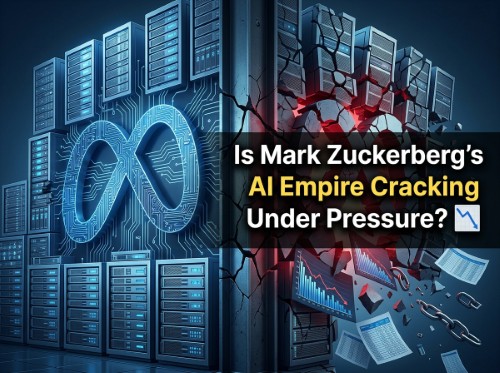
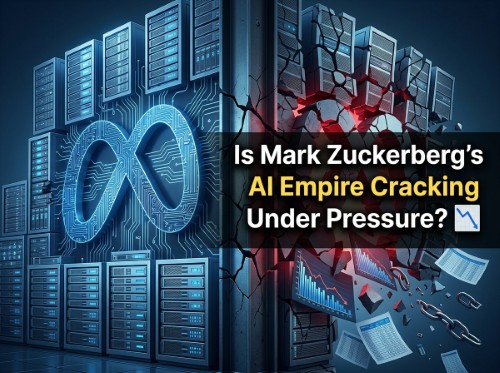
On paper, Meta appears to be an unstoppable financial juggernaut. With second-quarter revenues touching £46 billion ($60 billion), an operating margin of 30%, and a cash pile hovering around £69 billion ($90 billion), standard financial metrics suggest a company at the absolute peak of its powers. Yet, behind these headline figures, a very different story is unfolding on Wall Street.
While the broader stock market has reached repeated all-time highs driven by enthusiasm for artificial intelligence, Meta’s shares have struggled to keep pace. Investors are looking past the current profit statements and uncovering deep structural risks: massive off-balance-sheet liabilities, high-profile talent departures, and a chaotic internal reorganisation that has severely disrupted the company’s engineering culture.
The most concerning revelation on Meta’s books involves how Mark Zuckerberg is financing his unprecedented AI infrastructure expansion. Meta’s auditor, Ernst & Young, recently singled out one of the company's data centre financing vehicles as a "critical audit matter"—a formal warning flag that accounting methods require intense scrutiny.
Buried deep within Meta’s disclosures is a stark disparity:
To fund mega-projects such as the Hyperion data campus in Louisiana—a facility spanning thousands of acres requiring three dedicated gas-fired power plants generating 3 gigawatts—Meta has turned to complex financial alchemy. The campus is housed within a separate entity called Beijet Investor LLC, 80% owned by funds managed by Blue Owl Capital and 20% by Meta. The entity raised £21 billion ($27 billion) through bonds anchored by PIMCO.
Although Meta builds, operates, and guarantees the underlying property value for 16 years, keeping the debt in a joint venture allows Meta to leave these liabilities off its primary balance sheet. Coupled with a £27 billion ($35 billion) commitment to GPU-cloud provider CoreWeave and £265 billion ($347 billion) in non-cancelable energy and infrastructure leases, Meta is shifting from high-margin software economics into heavy, capital-intensive infrastructure underwriting.
Compounding this risk is server depreciation accounting. Meta extended the useful life assumption of its AI servers from four to five years, instantly saving £2.2 billion ($2.9 billion) in reported annual depreciation expenses. By contrast, competitors such as Amazon shortened their server life estimates. Industry analysts warn that frontier AI training hardware wears out or becomes obsolete within one to three years, suggesting hyperscalers may be significantly understating hardware depreciation. Crucially, unlike Microsoft, Amazon, or Google, Meta possesses no public cloud business to monetise excess compute capacity if its internal AI products fail to deliver proportional returns.
Meta’s internal strategy to dominate AI has been plagued by corporate friction and miscalculated restructuring. After experiencing frustration over internal benchmarks for its Llama 4 models, Meta attempted to buy its way to the front of the race.
Last year, the company spent roughly £11 billion ($14.3 billion) for a 49% stake in Scale AI and appointed its 28-year-old co-founder, Alexander Wang, as Chief AI Officer to helm the new Meta Super Intelligence Labs. The move immediately created severe internal friction:
To train these internal AI tools, Meta mandated keylogging and mouse-movement tracking software on US employee devices. Concurrently, up to 30% of software engineers were forcibly reassigned from core infrastructure, security, and product development into manual data labelling and reinforcement learning tasks.
Despite cutting 8,000 employees (roughly 10% of global headcount) during a period of record profits, internal productivity metrics plunged. Leaked data revealed that while raw code submissions surged by 220%, actual features reaching end-users grew by just 36%, while technical and security incidents spiked by 40%. Facing employee unrest and broken tooling, Meta was forced to abandon Project OT and cancel scheduled secondary layoff rounds.
The turbulent restructuring has triggered a historic brain drain across Meta’s research division. Highly compensated experts and key figures brought in to showcase Meta’s AI supremacy have departed in rapid succession:
In total, over 200 senior AI engineers and researchers have left Meta for OpenAI, Anthropic, Google, or new ventures in recent months. Despite Meta offering emergency retention packages ranging from £300,000 to over £750,000 ($400,000 to $1,000,000+) vesting over three years, attrition rates across core AI teams have reached nearly 19%.
Why can no one inside Meta halt these risky capital expenditures or organisational missteps? The answer lies in Meta's dual-class share structure.
Meta’s Class A shares carry one vote per share, whereas Class B shares carry ten votes per share. Mark Zuckerberg holds nearly 90% of all Class B stock. Consequently, while his economic stake in the company sits at approximately 13%, he holds over 60% of total voting power.
At recent annual general meetings, over 82% of independent Class A shareholders voted in favour of proposals to dismantle the dual-class structure and institute stronger oversight on AI spending and data center environmental impacts. However, because Zuckerberg controls the absolute majority of votes, every single shareholder resolution was defeated.
This total concentration of authority echoes Meta's previous pivot toward the Metaverse, where cumulative operating losses in its Reality Labs division have surpassed £60 billion ($80 billion), culminating in shuttered game studios and the mothballing of its flagship Horizon Worlds platform. Without an independent board capable of overruling the Chief Executive, staff and investors who disagree with the strategic direction have only one practical option left: cut their ties and leave.
Whether Meta's colossal off-balance-sheet AI spending proves to be visionary foresight or an expensive miscalculation, one fact remains clear: Mark Zuckerberg is betting the entire future of the company on a vision where he alone holds full command.
Finance Bureau - Meta Is FALLING Apart And Zuckerberg Is TERRIFIED
"Meta’s hidden $420 billion in off-the-books commitments is raising major red flags, even as its official financials still look strong. Explosive AI spending, high-level exits, and risky financial engineering are all fueling anxiety about where Meta is headed next.
This video reveals how Meta’s AI overhaul has triggered internal chaos, mass departures, and accounting warnings, plus why these problems could affect your investments, retirement, and the wider market."
~ TIMESTAMPS ~
0:00 – Meta’s Auditor Raises a Red Flag
0:31 – How Zuckerberg's AI Reorganisation Backfired
2:35 – Inside Meta's $14.3 Billion AI Org Shift
4:41 – The Secret "Project OT" Layoff Plan
7:20 – Top AI Talent Walks Out the Door
10:53 – The $80 Billion Metaverse Failure Revisited
12:58 – How Meta Hides $420 Billion Off the Balance Sheet
15:27 – Mark Zuckerberg's Absolute Control of Meta
17:34 – Unstoppable Vision or Complete Delusion?
Source: 👉 https://www.youtube.com/watch?v=kjidbXaUjBM
Disclaimer: This article is provided for informational purposes only, mistakes may be made, and it's not offered or intended to be used as legal, tax, investment, financial, or any other advice.