x




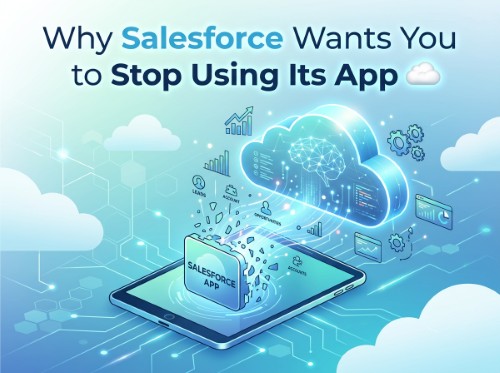
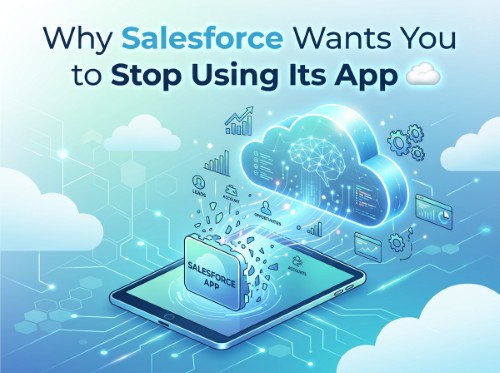
For nearly three decades, Salesforce built its empire on a single, unmistakable foundation: the enterprise user interface. Millions of account managers, sales representatives, and executives start their working day by navigating through custom dashboards, opportunity records, and pipeline views inside its browser tab.
That era may be coming to a rapid close. In a ground-breaking expansion of their strategic alliance, Salesforce and Anthropic have unveiled Claudeforce—a deep integration that pushes the full power of Salesforce directly inside Anthropic's Claude.
The message from Salesforce leadership is surprisingly candid: you may never need to open the traditional Salesforce application again.
At the centrepiece of this announcement is a brand-new plugin for Anthropic's Claude CoWork environment, titled Salesforce in Claude. The tool launches with 37 pre-built sales skills engineered to handle high-friction daily workflows—ranging from deal health reviews and pipeline analyses to comprehensive meeting preparation.
Rather than logging into a portal and performing dozens of manual searches, knowledge workers can now query, update, and act upon live CRM data using natural language prompts within Claude.
This capability builds upon Salesforce's Headless 360 initiative released earlier this year. While Headless 360 exposed Salesforce's underlying logic via Model Context Protocol (MCP) servers, setting it up required technical knowledge that proved daunting for non-technical staff. The new CoWork plugin eliminates this friction completely. An administrator connects the plugin once centrally, inheriting all native enterprise security, user permissions, and governance rules automatically.
One of the most compelling aspects of the integration is how it redefines the concept of software interfaces. As Salesforce Chief Executive Marc Benioff observed, "The UI is the AI."
During product demonstrations, Salesforce executives showcased how sellers can ask Claude to construct entire customised dashboards on the fly using live CRM data. Want a daily briefing highlighting stagnant deals and recent executive changes at key accounts? Claude synthesises the internal data alongside web signals instantly. Want that pipeline view styled like a neon 1980s command centre? Claude writes the underlying HTML code in seconds.
This capability to "vibe code" internal tools signals a profound shift in productivity: employees no longer have to conform to rigid, vendor-designed software layouts. Instead, enterprise data adapts seamlessly to the immediate visual preferences of the user.
A partnership that encourages users to bypass a vendor's primary interface inevitably prompts a crucial strategic question: if sellers live inside Claude, does Salesforce become redundant?
Salesforce leadership strongly rejects this premise. The true value of an enterprise platform has never resided in its visual buttons or navigation menus. Instead, it lies in decades of accumulated data, metadata, workflow rules, and business logic. By exposing these backend engines to conversational AI models, Salesforce believes overall platform usage will actually surge.
Evaluating a morning pipeline manually often demands thousands of discrete clicks and tedious synthesis across multiple records. Delegating that operational overhead to Claude transforms a 30-minute ordeal into a 30-second automated summary.
The transition from human-driven UI navigation to AI-driven API calls fundamentally disrupts legacy enterprise software economics. For decades, Chief Information Officers (CIOs) managed software spending through predictable, seat-based licenses. Shifting towards consumption-based pricing models introduces both financial opportunities and operational complexities that enterprise IT teams must carefully navigate.
1. From Predictable Capex/Opex to Variable Token Bills
Traditionally, provisioning 500 sales licenses carried a fixed annual price tag. In contrast, pricing tied to API usage and token consumption means enterprise software costs scale directly with employee engagement. While this ensures organisations only pay for actual value generated, it transfers the risk of usage spikes and "cloud bill shock" directly into operational software budgets.
2. The Complexity of Dual-Vendor Billing
Under the Claudeforce framework, enterprises manage two distinct cost streams: headless API consumption tiering with Salesforce, and inference token billing with Anthropic. This split-invoice model requires procurement teams to renegotiate vendor management strategies, establishing clear usage caps and cross-vendor spend tracking to prevent unexpected budget overruns.
3. Usage Guardrails and Metering Governance
To maintain financial control, IT departments must establish granular metering policies. Just as cloud infrastructure required the rise of FinOps, the rise of agentic software requires "AIOps" for budget management—monitoring which departments are running resource-intensive queries and ensuring automated workflows deliver a measurable return on investment relative to their token cost.
It is also important to distinguish this partnership from Agentforce, Salesforce's autonomous agent framework.
While Agentforce is primarily built to handle fully autonomous, customer-facing tasks—such as automated customer service portals—the new Claude integration acts as an internal co-pilot for knowledge workers. It is designed to assist human reps with day-to-day administrative tasks, removing workflow friction so sellers can focus on direct client relationships.
The deepening relationship between Salesforce and Anthropic points toward a future where conversational intelligence becomes the primary front door for enterprise software. While generative AI adoption has seen rapid growth, many organisations have struggled to translate pilots into bottom-line productivity gains due to deployment friction.
By eliminating complex manual setups and embedding intelligence directly into existing workspace platforms, Salesforce and Anthropic are offering a streamlined path toward tangible ROI.
The company that taught the business world how to navigate web-based CRMs is now pioneering the post-application workspace. The enterprise software of tomorrow may not be defined by the screens we click on, but by the conversations we have with our data.
Disclaimer: This article is provided for informational purposes only, mistakes may be made, and it's not offered or intended to be used as legal, tax, investment, financial, or any other advice.