x




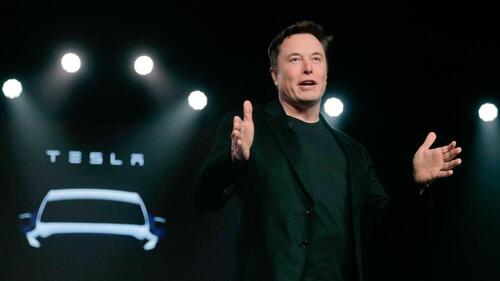
Elon Musk's plan to build a giant factory for electric cars near Berlin is duping German competitors. But it is good for Germany.
For a long time, the German automaker smiled at Tesla and his boss Elon Musk, who is now planning a giant factory near Berlin. What could this upstart - a dazzling figure who always shows traits of megalomania - do to a successful industry? So they continued to produce their gasoline and diesel engines, were delighted with the huge profits and saw no reason to change course and set the course for electromobility. If someday the story about the big change in the auto industry will be written, the missed years will be an important chapter in it.
At least since the diesel scandal and the increasingly stringent EU CO₂ requirements that are necessary to achieve the climate targets, no one has laughed anymore. Germany is now hectically catching up on what has previously been missed. Electric cars and plug-in hybrids are coming onto the market in quick succession. VW even completely reverses and builds its future heavily on the battery cars. No one can say today whether this strategy will work. The only thing that is clear is that it costs billions.
Elon Musk did two things with Tesla: First, he showed that it is possible to build electric cars that work without a hundred years of experience. Musk also realized that it is not enough to just build the cars, but that the charging infrastructure has to be supplied. While drivers of other e-cars have to plan their long journeys with difficulty, where they can charge their car on the go and then still have to hope that the planned charging station is free and working, Tesla owners are smiling at their super-chargers.
Electromobility made sexy
The second thing Musk did is perhaps the even bigger feat: he got electromobility out of the corner of the eco pioneers and made it sexy. It is considered sexy for people with money (because Tesla's are expensive) to drive a Tesla. This has little to do with the quality of the cars, because it is by no means outstanding, but lags far behind the standard of premium vehicles from other manufacturers. How long the cool image will last is therefore also uncertain. Because Tesla has not yet made any money with its cars. And Tesla is a niche manufacturer in terms of quantities. Despite everything Ballyhoo that Musk knows how to stage like no other, it is by no means certain whether the pioneer from California will survive in the long run when the wave of electric cars from established European manufacturers or the newcomer from China floods the market.
Nevertheless, Musk's announcement to build his first so-called gigafabrik in Europe near Berlin, in which not only cars but also the batteries are to be produced, comes at a disadvantageous time for the German competition, indeed it is like humiliation. Because while huge savings plans and job cuts are causing unrest among the German manufacturers, but they are necessary to be able to manage the huge investments in the future, Musk is coming around the corner with a new factory; and politicians in the region are already dreaming of thousands of new jobs.
It is particularly piquant that this factory, of all places, is to be built near Berlin's new airport, a shameful testimony to German engineering. Who knows if Tesla's Gigafactory will not be finished faster than the airport?
The planned Tesla factory is nevertheless good news for Germany as a car location, not only because of the old economic principle that competition stimulates business. Because electric mobility is no longer about who builds the best or most beautiful cars. The decisive battle is fought over the battery cells. Those who are ahead in the development of the next generation of cells will be among the winners. Tesla, which works with Panasonic in cell production, had a head start here. How big it is and whether it is still there is an open question because no manufacturer reveals its cards.
The German car manufacturers shied away from building up their own cell production because of the immense costs and the great advantage of the Asian manufacturers and thus gave up the most important factor in the value chain of electric cars. In retrospect, that was a key mistake. It is less about jobs, because cell factories are highly automated. It would have been about controlling the innovation process yourself. In the meantime, new partnerships have been established with Asian manufacturers, including with planned plants in Germany. If Tesla is now added, there could be fruitful competition in this country