x




Tesla greift nach Subventionen
Tesla is considered a brave trendsetter. The company could now obtain government aid through a consortium to promote battery cell production.
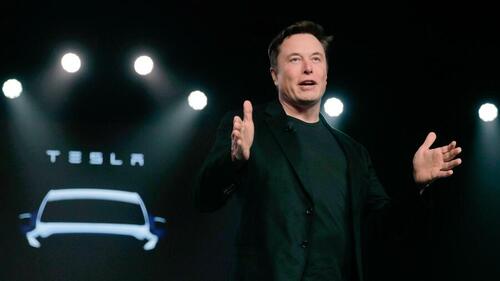
Berlin The US electric car pioneer Tesla has applied for federal subsidies for battery cell production and research in Germany. The Handelsblatt learned this from government circles.
The responsible Federal Ministry of Economics said on request that one could not name companies that had applied for the appropriate funds. In general, subsidies could also be granted to non-European companies.
Tesla left an inquiry from the Handelsblatt unanswered. Tesla's market value jumped over $ 100 billion at the end of last week. The company is therefore more valuable on the stock exchange than the Volkswagen Group.
Tesla boss Elon Musk had surprisingly announced at the end of 2019 that he wanted to set up a “Giga Factory” in the Brandenburg town of Grünheide, in which cars and battery cells are to be manufactured.
The Ministry of Economic Affairs is working flat out to kick off a second major European battery cell manufacturing project. According to the ministry, 14 EU member states are participating in the project, including Poland and the Czech Republic in addition to Germany. "More than 55 companies" are involved in the project.
On Monday, the participants want to prepare the notification of the project to the EU Commission at a meeting in the Ministry of Economic Affairs. The Commission approved the aid framework for the first battery cell manufacturing project in early December 2019.
"We want competitive, innovative and environmentally friendly battery cells, made in Europe". To do this, we are pooling the innovative strength and potential of our companies, ”Minister of Economics Peter Altmaier told Handelsblatt.
The fact that Elon Musk is celebrated as a visionary who is way ahead of the sluggish German car manufacturers was most recently demonstrated in Berlin at the beginning of November 2019 when he used the “Golden Steering Wheel” from “Bild am Sonntag” and “Auto-Bild” for the model 3 of his company. There he noted the Brandenburg project casually, and shortly afterwards Germany got into a rapture.
However, the unconventional manager uses very conventional means if he can land money, as the example of Brandenburg shows. In general, non-European companies could also receive help within the framework of so-called IPCEI projects, according to the Ministry of Economy. IPCEI stands for "Important Projects of Common European Interest".
The EU Commission had already approved the first such project for battery cell production in December 2019. The EU states participating in IPCEI projects may only grant aid upon approval.
The consortium for the first IPCEI battery project consists of 17 companies. Participants include BMW, BASF, the French car company PSA with its German subsidiary Opel, and the battery specialists Varta and Saft. Saft belongs to the French energy company Total.
The Federal Ministry of Economics announced the second project, which is coordinated by the federal government, at the end of November 2019 for pre-notification to the EU Commission. German companies also play leading roles in this project with the working title "EuBatIn" (European Battery Innovation).
More than 55 companies from 14 EU countries are on board
The Federal Ministry of Economics wants to finalize the second major project on Monday and Tuesday of this week. For this purpose, the head of department Peter Altmaier (CDU) invited the representatives of 14 EU member states, including Germany, France, Italy, Sweden and Poland, to a workshop in which, according to the ministry, representatives of “more than 55 companies " take part. According to Handelsblatt information, Tesla is also applying for funding.
The EU Commission only approves aid for IPCEI projects if companies from at least two EU countries participate. According to the ministry, non-European companies must meet the same requirements for innovation and research in Europe as European companies.
"In the event of participation, non-European companies must also integrate into the IPCEI and work together with other companies and institutions," says the Federal Ministry of Economics. They are obliged to "contribute to substantial added value for society".
It is not yet clear whether and to what extent Tesla will be one of the beneficiaries of the funding. Should the US company benefit from the support, it would be remarkable. US President Donald Trump had threatened Europe's auto industry with import duties of 25 percent last week during his Davos appearance. German suppliers such as Daimler, BMW and VW would be severely affected.
Federal aid for a US manufacturer could be met with skepticism in this context. The federal government is determined to pave the way for Tesla.
Minister Altmaier has been pushing battery cell production forward for months. "Our common goal is to maintain and expand added value and jobs in Germany and Europe," he told the Handelsblatt. He had declared the establishment of battery cell production to be his primary goals at the beginning of his term in office.
Initially, however, he had little understanding in industry. The automotive and chemical industries seemed to have resigned themselves to the fact that battery cell production takes place almost exclusively in Asia. In the meantime the wind has changed. The interest of the companies has increased significantly.
Altmaier initially announced that it would support the development of battery cell production with up to one billion euros in government aid. In the meantime, however, this framework should be exceeded significantly. According to the Ministry of Economic Affairs, the federal government will probably pay up to 1.5 billion euros for both IPCEI battery projects due to the increased interest of the economy.
Until Friday, the Federal Ministry of Finance knew nothing of Altmaier's plans to increase the funding framework. Altmaier has not yet received a request, the finance department said.
Altmaier points to the success of the funding in microelectronics
For Altmaier, IPCEI funding is important far beyond battery cell production. According to the ministry, the ministry has invested 355 million euros in the IPCEI “microelectronics” in 2019. The project was approved by the EU Commission in December 2018 and is the first joint project between EU Member States that was approved under the new IPCEI framework.
As part of the IPCEI in microelectronics, the Ministry of Economic Affairs supports 18 German companies in developing microelectronic components and building chip factories with future-oriented jobs. By 2022, the funding initiative aims to support the development of new microelectronic products nationwide with a total of up to one billion euros by the end of their first commercial use.
In Baden-Württemberg, Bavaria, NRW, Saxony and Thuringia, the funding in 2019 already left clear traces at 18 locations. These include the newly established Bosch chip factory in Dresden, the Osram semiconductor factory in Regensburg and the Zeiss optics halls in Oberkochen.
Clear successes can already be seen in the first year of funding: state-of-the-art production facilities have been set up at various locations in eastern and western German states. Several hundred jobs have been created, ”said Altmaier. In this way, the Federal Government "ensures our technological sovereignty and competitiveness in key future fields with clear industrial policy initiatives".