x




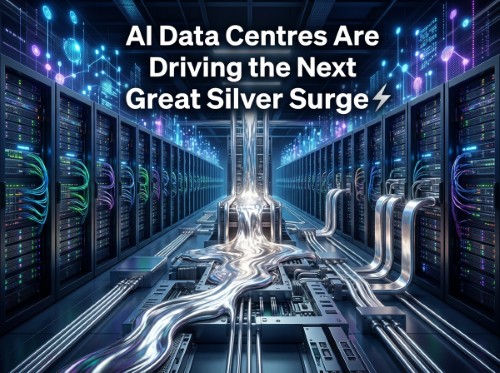
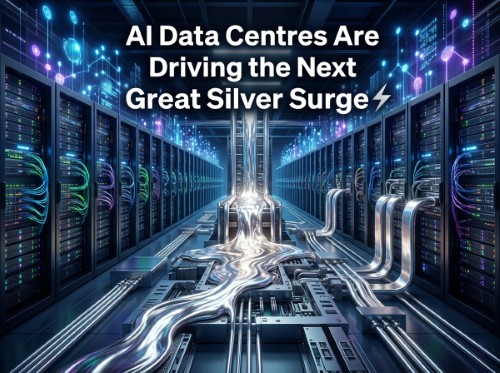
When financial media discuss silver prices, the conversation almost always revolves around macroeconomics: central bank interest rates, inflation hedges, and fluctuations in the US dollar. While monetary policy certainly influences short-term price swings, a far more fundamental physical transformation is taking place quietly beneath the surface.
Artificial intelligence infrastructure is fast becoming a major driver of industrial silver consumption. Alongside solar photovoltaics and electric vehicles, high-performance computing facilities now form a crucial third pillar of industrial demand. This emerging requirement arrives at a critical juncture for a market that has experienced six consecutive years of structural supply deficits.
At its core, a modern artificial intelligence data centre is an immense, uninterrupted electrical load. Facilities often require anywhere from 50 to more than 500 megawatts of continuous power. Managing these vast electrical currents creates two distinct engineering challenges: minimising power loss and managing extreme heat.
This is precisely where silver becomes indispensable:
While the physical quantity of silver used in a single component may appear modest, the sheer scale of global facility construction transforms these micro-requirements into significant macro-level demand.
According to data from the Silver Institute's World Silver Survey, industrial applications account for roughly half of all annual global silver demand. Unlike investment coins or jewellery, industrial silver is typically consumed in manufacturing and rarely recycled back into the market in large volumes.
This industrial demand lands on a physical market that is already deeply constrained:
Because silver is primarily mined as a secondary byproduct of lead, zinc, copper, and gold extraction, miners cannot simply increase silver production in direct response to higher prices. Supply remains structurally inelastic.
The trajectory of silver demand from computing is backed by unprecedented capital expenditure. Recent financial analyses highlight the astonishing capital flowing into digital infrastructure:
Unlike speculative market cycles, this infrastructure expansion is actively funded, contracted under multi-year agreements, and already visible in utility-scale energy grids worldwide.
Seasoned precious metals investors often point to the solar industry as a cautionary tale regarding "thrifting"—the process where manufacturers engineer ways to use less silver per unit to cut costs. Solar panel manufacturers have indeed successfully reduced the amount of silver paste required per panel over the past decade.
However, the engineering dynamics in AI data centres differ fundamentally from solar photovoltaics:
Recognising the essential role silver plays in advanced manufacturing, computing, and defence, the U.S. Department of the Interior formally added silver to its official List of Critical Minerals.
This designation does not generate immediate physical demand on its own, but it alters the regulatory and geopolitical environment. It acknowledges that silver is no longer merely a financial asset or decorative metal, but a vital strategic commodity. This status opens the door for streamlined domestic processing approvals, strategic stockpiling initiatives, and heightened supply-chain monitoring by government entities.
What makes silver unique among precious metals is its dual identity. Gold is primarily a monetary asset, with industrial usage representing only a tiny fraction of its total demand. Silver, by contrast, sits squarely at the intersection of monetary wealth preservation and essential technological manufacturing.
These two demand engines operate synergistically:
When investment demand surges at the exact moment industrial fabricators are competing for limited physical supplies, the underlying market dynamics tighten significantly. For forward-thinking investors, silver's connection to the artificial intelligence boom offers a durable, physical-market thesis that extends far beyond daily financial headlines.
Disclaimer: This article is provided for informational purposes only, mistakes may be made, and it's not offered or intended to be used as legal, tax, investment, financial, or any other advice.