x




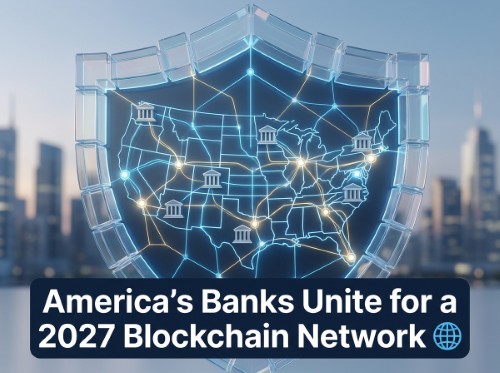
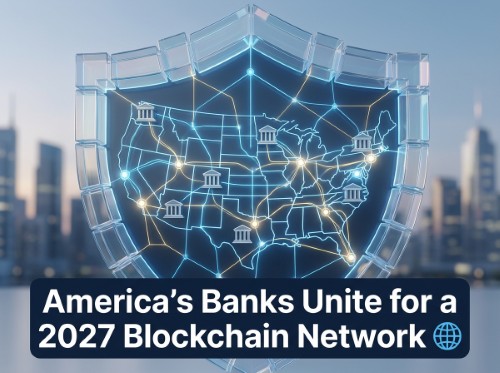
The world of traditional finance is standing on the brink of its most significant infrastructure upgrade in decades. Across the United States, banking institutions are shifting away from slow, legacy payment rails in favour of instant, programmable, and interoperable ledger systems. At the forefront of this movement is the newly formed BankChain Alliance, a coalition of 39 US state banking associations planning to launch a nationwide, industry-owned blockchain network targeted for 2027.
Representing thousands of financial institutions, the alliance aims to democratise access to onchain banking technology. Rather than leaving blockchain innovation to Silicon Valley fintechs or global megabanks, BankChain is building a cooperative framework where banks of all sizes can take an equity stake in their own shared digital infrastructure.
The BankChain Alliance was created to provide a unified, secure foundation for regulated financial institutions to issue digital assets and execute real-time transactions. The network is designed to support a comprehensive suite of modern financial tools, including:
To avoid creating an isolated ecosystem, the alliance has emphasised that its architecture will be fully interoperable with other major public and private blockchains. The group is currently evaluating potential technology partners to build out the underlying protocol.
For years, non-bank stablecoins have dominated onchain payments. However, standard stablecoins carry distinct drawbacks for regulated banks, primarily because they move liquidity off bank balance sheets and into third-party reserve funds.
Tokenised deposits solve this issue. Because a tokenised deposit represents a direct claim on an individual commercial bank, it retains traditional deposit status and regulatory protections.
By transitioning customer balances onto a shared blockchain ledger, banks can offer clients the best of both worlds: 24/7 programmatic transfers alongside the institutional security, regulatory oversight, and deposit protection of the commercial banking system.
BankChain is not operating in a vacuum. Its announcement highlights a broader trend that has accelerated rapidly across every tier of the banking sector:
1. Wall Street Megabanks
Major payment consortiums, such as The Clearing House—backed by giants including JPMorgan Chase, Bank of America, Citi, BNY, and Wells Fargo—have advanced their own onchain money initiatives. These networks focus on settling tokenised deposits between multi-billion-dollar institutions while linking modern blockchain activity directly into legacy clearing systems.
2. Regional Lenders
Mid-sized institutions have rallied around networks like Cari, established by Huntington, First Horizon, M&T Bank, KeyBank, and Old National. Having launched a functional minimum viable product, Cari has rapidly expanded its footprint, proving that regional banks can successfully collaborate on shared ledger solutions.
3. Community Banks
Smaller institutions are ensuring they are not left behind. Through initiatives like the DTX Consortium, spearheaded by the Independent Bankers Association of Texas (IBAT), dozens of community banks are testing tokenised-deposit pilots to maintain competitive parity with larger national rivals.
4. Cross-Industry Stablecoin Standards
Beyond bank-only models, broader industry consortiums are emerging. Projects like Open Standard’s dollar-backed stablecoin, Open USD, have rallied over 140 payment, banking, and technology companies around fee-free minting models that share reserve earnings directly with participating institutions.
While the vision for a nationwide, bank-owned blockchain is compelling, several critical milestones remain before the 2027 rollout.
The establishment of the BankChain Alliance signals a decisive turning point. Onchain banking is no longer an experimental niche reserved for crypto-native firms or isolated pilot programmes; it is rapidly becoming the core architecture of commercial banking. As 2027 approaches, the integration of tokenised deposits and automated settlement will fundamentally re-shape how money moves across the global economy.
Disclaimer: This article is provided for informational purposes only, mistakes may be made, and it's not offered or intended to be used as legal, tax, investment, financial, or any other advice.