x




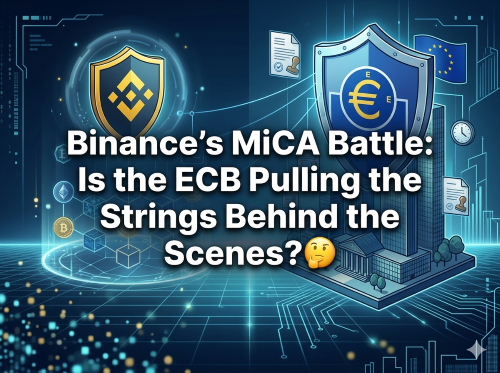
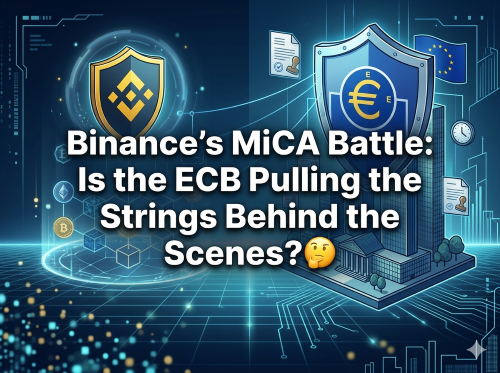
The looming implementation of the European Union’s Markets in Crypto-Assets Regulation (MiCA) was supposed to bring harmonised rules and regulatory clarity to the digital asset space. Instead, as the 1 July deadline approaches, it has triggered a high-stakes geopolitical drama.
At the centre of the storm is Binance, the world’s largest cryptocurrency exchange, whose application for a MiCA licence in Greece has hit a major roadblock. Recent reports have ignited an intense debate across the financial and legal sectors: Is the European Central Bank (ECB) using informal influence to lock major crypto players out of the European market?
In January, Binance formally applied for a Crypto-Asset Service Provider (CASP) licence with Greece’s national regulator, the Hellenic Capital Market Commission (HCMC). According to statements from Binance, the HCMC had completed its review and deemed the application compliant with MiCA’s strict requirements. The application was then passed up to the European Securities and Markets Authority (ESMA) for a high-level review, with expectations of imminent approval.
However, the narrative took a sharp turn when reports surfaced indicating that the Greek regulator was instead preparing to reject Binance's application.
The plot thickened further when media outlets reported that ECB President Christine Lagarde had personally intervened, allegedly signalling to Greek Prime Minister Kyriakos Mitsotakis that Binance was "not welcome" in Europe. While the ECB and national regulators have declined to comment officially, the timing of these leaks—less than a fortnight before the end of the MiCA transitional period—has raised serious questions about institutional overreach.
On paper, the MiCA framework is clear: the authority to grant or deny CASP licences rests solely with individual EU member states and their National Competent Authorities (NCAs), such as Greece’s HCMC. The ECB does not possess formal veto power or an official role in evaluating cryptocurrency exchanges.
Yet, legal experts point out that MiCA contains a significant loophole regarding institutional communication. While the ECB lacks direct decision-making power for exchange licences, nothing in the text of the regulation legally bars it from communicating with, advising, or sharing systemic concerns with national regulators.
Legal analysts note that while the ECB's formal authority under MiCA is strictly ring-fenced to the regulation of stablecoin issuers, the central bank is entirely free to offer its opinion to national authorities on any pending application. This means informal political pressure can effectively bypass the official, rules-based licensing process.
Why would the ECB take such a keen, albeit informal, interest in a cryptocurrency exchange licence? The answer lies in the geopolitical and macroeconomic stakes surrounding stablecoins.
The ECB has long been vocal about its distrust of privately issued stablecoins. Central bankers view them as a threat to monetary sovereignty and financial stability, preferring instead to champion tokenized financial infrastructure backed by central bank money, such as a Digital Euro. Furthermore, European officials have expressed concerns that the meteoric rise of dollar-backed stablecoins could inadvertently reinforce the dominance of the US dollar within European borders.
This is where Binance becomes a prime target. Binance is not just a trading platform; it is the undisputed global hub for stablecoin liquidity. Data shows that the exchange holds tens of billions of dollars in stablecoin reserves, controlling roughly 65% of the total stablecoin market share across all centralized exchanges.
For an institution like the ECB, which is deeply anxious about private stablecoins undermining traditional fiat currency, allowing the world's dominant stablecoin gateway to establish a permanent, passportable foothold in the EU via Greece is a highly sensitive issue.
The fallout from Binance’s Greek application leaves the exchange in a precarious position as the MiCA transitional window slams shut. Industry insiders suggest that France could serve as an alternative gateway into the European market for Binance, though no formal application has been filed there yet.
For the wider crypto industry, this battle reveals a sobering truth: achieving technical compliance with MiCA's written rules may not be enough. If top-tier EU institutions view a firm as a systemic threat to traditional monetary policy, informal diplomatic pressure can still sway national regulators.
As the EU transitions into the official MiCA era, the line between transparent regulatory compliance and behind-the-scenes political maneuvering looks set to remain incredibly thin.
For more detailed information and further insights into this developing story, you can read the original report on Cointelegraph:
👉 Binance’s MiCA fight raises questions over ECB influence
Disclaimer: This article is provided for informational purposes only, mistakes may be made, and it's not offered or intended to be used as legal, tax, investment, financial, or any other advice.