x




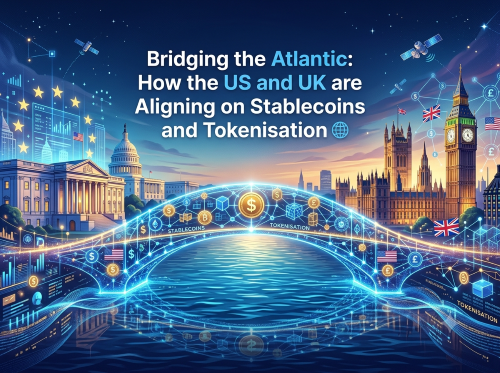
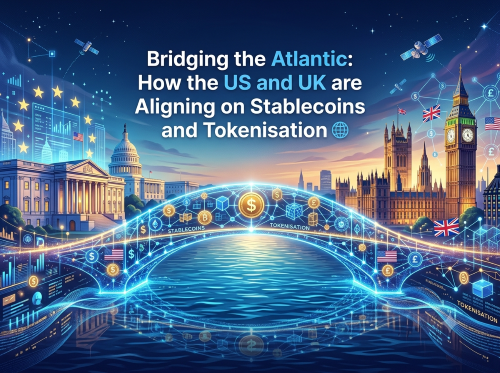
The financial landscape is undergoing a quiet but profound shift. For years, the promise of blockchain technology in mainstream finance has been held back by a fragmented patchwork of global regulations. However, a major milestone has just been reached in transatlantic cooperation.
The United States and the United Kingdom have officially unveiled a joint roadmap aimed at aligning their regulatory frameworks for stablecoins, tokenised assets, and digital money. This coordinated effort between two of the world's most powerful financial hubs—London and New York—could pave the way for blockchain-based finance to flow seamlessly across the Atlantic.
The new initiative stems from the Transatlantic Taskforce for Markets of the Future, a bilateral group established during US President Donald Trump’s state visit to the UK in September 2025. Created by UK Chancellor Rachel Reeves and US Treasury Secretary Scott Bessent, the taskforce was charged with finding ways to modernise capital markets and reduce friction between the two jurisdictions.
The taskforce has published 10 key joint recommendations. While five of these proposals address traditional capital markets, the remaining five focus directly on digital assets.
It is important to note that these recommendations do not introduce immediately binding laws. Instead, they establish a unified strategic direction, allowing regulators in both countries to complete their respective domestic legislative processes while working toward the same ultimate goals.
At the heart of the digital asset recommendations is a push for regulators—including the Bank of England, the Financial Conduct Authority (FCA), the Securities and Exchange Commission (SEC), and the Commodity Futures Trading Commission (CFTC)—to find common ground on several crucial fronts:
Additionally, both governments are working on a joint statement concerning stablecoins. They have agreed on a core principle: payment stablecoins must be backed on a strict one-to-one basis by high-quality, liquid assets. This closely mirrors the requirements of the US GENIUS Act, the federal stablecoin law signed into law last year.
The recommendations also urge both countries to advocate for a "technology-neutral" review of crypto exposures by the Basel Committee, ensuring banks are not unfairly penalised for holding digital assets compared to traditional ones.
This transatlantic alignment comes at a crucial time. Both nations are currently racing to finalise their own domestic digital asset regimes, partly to keep pace with the European Union.
The EU’s Markets in Crypto-Assets (MiCA) regulation has been fully operational since the end of 2024 and is already slated for updates. In contrast, the US is working toward a 2027 effective date for the GENIUS Act, while the UK’s comprehensive cryptoasset regime is scheduled to take effect in October 2027.
While the new taskforce recommendations represent a massive leap forward, they stop short of "mutual recognition." A stablecoin licenced in the UK will still need to clear US regulatory hurdles to operate there, and vice versa. However, by aligning the underlying rules, the compliance burden for businesses operating in both regions will be significantly minimised.
The crypto and fintech sectors have warmly welcomed the announcement. Coinbase’s head of policy for Europe, Katie Harries, described the recommendations as a critical moment for transatlantic cooperation, noting that it offers a unique opportunity to reimagine global capital markets through tokenisation.
The move also aligns with the UK government’s broader vision. Lucy Rigby, the Economic Secretary to the Treasury, has previously highlighted the potential for digital assets to bring about a complete transformation of financial markets. She noted that tokenisation and digital assets bring immense efficiencies, speeding up transactions, freeing up capital, and reducing friction for businesses.
By actively building out its FCA-run stablecoin sandbox and consulting on unified payment frameworks, the UK is positioning itself alongside the US to lead the next generation of global finance.
While there is still plenty of legislative work to be done before these frameworks are fully active, this joint roadmap signals that the future of global finance is digital, tokenised, and collaborative.
For more detailed information on this development, you can read the original coverage on Decrypt:
👉 US, UK Outline Recommendations to Align Stablecoin and Tokenization Rules
Disclaimer: This article is provided for informational purposes only, mistakes may be made, and it's not offered or intended to be used as legal, tax, investment, financial, or any other advice.