x




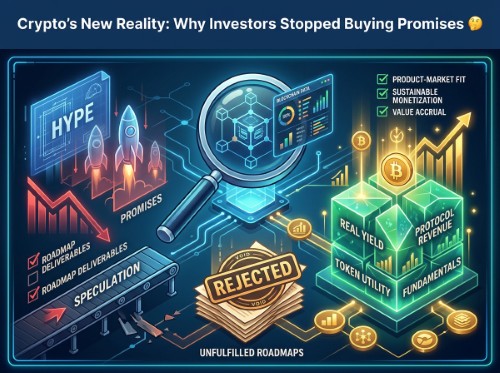
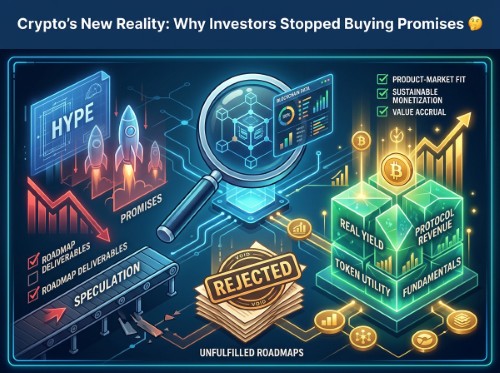
The cryptocurrency market has entered a pivotal new era. For years, the digital asset ecosystem was driven largely by grandiose promises, ambitious whitepapers, and speculative roadmaps. A compelling narrative and a sleek landing page were often enough to attract millions of pounds in seed funding and propel token valuations to astronomical heights.
However, market dynamics have fundamentally shifted. Today’s crypto investors have grown weary of vaporware and empty assertions. The speculative fever that once sustained projects with zero products or revenue has given way to a disciplined focus on tangible performance, protocol revenue, and proven economic utility.
To understand where the market is today, it is essential to reflect on the speculative cycles of the past. During the Initial Coin Offering (ICO) boom of 2017 and the early altcoin surges of 2021, billions of dollars flowed into tokens backed by little more than lofty ambitions. Project founders promised decentralised supercomputers, revolutionary supply chain trackers, and next-generation social networks, yet very few delivered functional products.
Over time, the aftermath of unfulfilled roadmaps, protocol collapses, and abandoned initiatives left market participants cautious. Retail and institutional investors alike suffered significant losses on tokens that lacked structural tokenomics or sustainable demand. As the market matured, the collective sentiment evolved from uncritical enthusiasm to deep-seated scepticism.
The defining characteristic of the current crypto landscape is the transition towards traditional financial analysis. Investors are increasingly evaluating digital assets through the lens of concrete metrics rather than vague promises of future adoption.
Several key indicators now dictate market sentiment and capital allocation:
The institutionalisation of the cryptocurrency market has accelerated this flight to quality. With the approval of spot Bitcoin and Ethereum exchange-traded funds (ETFs) in major financial hubs, institutional managers have brought rigorous due diligence standards to the digital asset space.
Institutional investors operate under strict fiduciary responsibilities. They do not allocate capital based on hype or community sentiment on social media. Instead, they require audited financial reports, clear governance frameworks, robust security protocols, and sustainable revenue models. This institutional presence has created a stark divergence in the market: capital is concentrating into assets with established track records and clear economic foundations, while purely speculative altcoins struggle to maintain liquidity.
This market maturation presents both challenges and opportunities for founders and investors across the blockchain industry.
For Project Founders
The era of raising capital on an idea alone has effectively drawn to a close. Teams building in the Web3 space must prioritise product-market fit, user retention, and sustainable monetisation from day one. Token design must explicitly answer how value flows back to token holders as network usage expands.
For Crypto Investors
Investing in digital assets now requires thorough fundamental research. Rather than chasing trending narratives or speculative moonshots, successful market participants are focusing on protocol metrics, analysing cash flows, inspecting token distribution schedules, and evaluating competitive moats within specific sectors such as decentralised finance, real-world asset tokenisation, and infrastructure.
The decline of promise-based valuation is not a sign of a dying market, but rather a hallmark of a maturing asset class. Just as the dot-com crash eventually weeded out unsustainable internet startups and paved the way for tech giants, crypto’s shift towards hard numbers is establishing a far healthier, more resilient financial ecosystem. Projects that deliver real utility and sustainable value will thrive, while those relying on mere promises will inevitably be left behind.
Coin Bureau - Crypto Investors Stopped Buying PROMISES
"ICOs used to be powered by hype, now, only tokens with real, provable revenue get serious attention. We break down the shift from promises to performance, covering the end of the ICO era, DeFi’s real products, the rise of tokenized assets, and why fee dashboards matter more than any roadmap.
See how today’s winners, stablecoins, on-chain yield projects, and leader perp DEXs are all built on hard numbers, not empty stories. Real profit is taking over the narrative. Find out what this means for your crypto portfolio and where the next big opportunities may hide."
~ TIMESTAMPS ~
0:00 – How Token Valuations Have Changed Since 2017
0:56 – The 2017 ICO Boom and Regulatory Crackdown
2:48 – The Rise of DeFi and Liquidity Mining in 2020
5:09 – The 2022 Yield Crashing Events
6:58 – Stablecoin Business Models and Tokenisation
9:14 – Purely On-Chain Revenue Models and Fee Switches
11:02 – What Traditional Finance Cares About in Modern Crypto
👉 https://www.youtube.com/watch?v=ymC44d3Godo
Disclaimer: This article is provided for informational purposes only, mistakes may be made, and it's not offered or intended to be used as legal, tax, investment, financial, or any other advice.