x




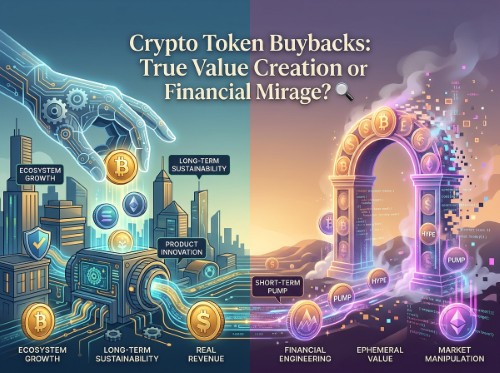
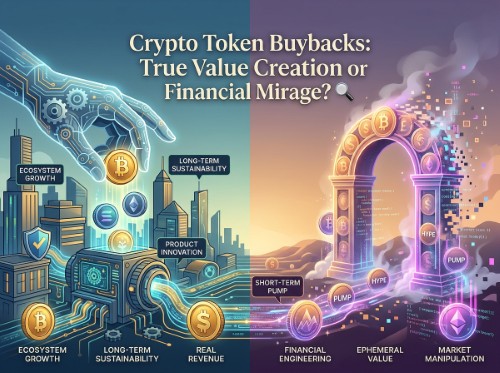
In 2026, decentralised finance (DeFi) is increasingly taking a leaf out of traditional corporate finance's playbook. One of the clearest indicators of this institutional evolution is the explosive surge in token buybacks.
Across the crypto landscape, protocols are redirecting hundreds of millions of dollars in surplus revenues into purchasing their own native tokens from the open market. Spent capital on buyback programmes has escalated from a modest fraction in previous years to hundreds of millions in 2026, with major platforms like Hyperliquid, Pump.fun, and Spark leading the charge.
While proponents view this trend as a crucial step towards sustainable tokenomics and real yield, critics caution that buybacks may simply act as an expensive form of financial engineering. Does repurchasing protocol tokens generate genuine, long-term economic value, or is it merely masking underlying flaws in product-market fit?
For years, crypto projects struggled to establish a direct, transparent connection between protocol usage and token valuation. Many early tokenomic models relied heavily on governance utility or speculative hype, which often left investors questioning what fundamental value sat beneath a token.
Token buybacks attempt to resolve this dilemma by replicating corporate share repurchases. When a protocol generates surplus revenue from trading fees, borrowing interest, or transaction costs, it allocates those funds to buy its own tokens on the open market.
Once acquired, the project typically pursues one of two strategies:
This dynamic offers a clear, easily understandable narrative for retail and institutional investors alike. Telling a community that a project has bought and burned millions of tokens is far more compelling and straightforward than explaining subtle governance adjustments or complex fee-switch mechanisms.
The rapid adoption of buyback mechanisms across major crypto ecosystems stems from several distinct advantages:
1. Directly Tethering Value to Protocol Adoption
Buybacks establish a continuous bid in the open market. As transaction volume on a protocol increases, surplus revenues rise, leading to larger buyback orders. This creates a direct correlation between platform adoption and token market dynamics, offering token holders exposure to the operational success of the underlying software.
2. Tax Efficiency for Holders
In many jurisdictions, direct revenue distributions (such as dividend-style yield payments) trigger immediate income tax liabilities for token holders. Buybacks, by contrast, concentrate value within the token itself via capital appreciation or reduced circulating supply. This allows holders to manage their tax exposure far more effectively.
3. Flexible Capital Management
Protocols that store repurchased tokens in their treasury rather than burning them gain structural flexibility. Instead of disbursing funds unconditionally, the protocol can reallocate those assets strategically to incentivise developers, reward long-term stakers, or navigate prolonged market downturns.
Despite their growing popularity, token buybacks carry substantial trade-offs that investors must not overlook. Every sovereign dollar spent repurchasing a token on the open market is a dollar that cannot be allocated elsewhere.
The Opportunity Cost of Growth
In the fast-moving digital asset sector, early-stage protocols are functionally high-growth software start-ups. For a developing platform, surplus capital may be far better spent on:
If a project commits 50% to 90% of its revenue to buybacks while its core product requires further development, it risks sacrificing long-term market share for short-term price support. As experienced founders frequently note, the central question for any protocol balance sheet should always be: What is the highest-value use of the next dollar of surplus?
Buybacks Do Not Guarantee Price Appreciation
Financial metrics demonstrate that aggressive token buybacks do not automatically translate into rising market valuations. Several high-profile projects have burned massive quantities of native tokens only to see prices languish significantly below previous historical highs.
Broad market conditions, macro sentiment, user retention, and broader liquidity flows exert far more influence over a token's price than buyback pressure alone. Relying on buybacks to prop up a declining asset is rarely a effective strategy over extended time horizons.
As tokenomics designs converge on traditional corporate models, regulatory scrutiny is inevitably intensifying. When a project advertises that revenue will be systematically used to support token prices, regulators take notice.
Market Mechanisms vs Legal Rights
Crucially, holding a crypto token with a buyback mechanism is not identical to owning common stock in a corporation. Shareholders possess legally enforceable rights, including voting privileges, rights to residual assets in liquidation, and regulatory protections against corporate misconduct.
Token holders, by contrast, rely almost entirely on market mechanisms and programmatic smart contracts. In most instances, there is no legally binding contract guaranteeing that a DAO or founding team must continue buyback programmes if business priorities change.
The Risk of Security Classification
Regulatory frameworks worldwide—such as emerging digital asset legislation in the United States and Europe—focus closely on how token value is derived:
If a project packages its token to resemble a dividend-paying stock, regulatory bodies may classify it as an unregistered security. This distinction places projects operating buyback schemes on a sensitive legal tightrope.
Token buybacks represent a natural step in the financial maturation of the cryptocurrency industry. They provide a tangible method for profitable, cash-flowing protocols to share success with their communities without resorting to unsustainable inflationary token emissions.
However, buybacks are a tool of capital allocation, not a replacement for a viable business model. A buyback scheme cannot transform an unprofitable or underutilised protocol into a sustainable business.
For investors evaluating projects implementing buybacks, the ultimate test remains simple: If the protocol stopped buying back its own token tomorrow, would there still be a compelling reason to hold it?
If the answer relies solely on the ongoing buyback pressure, the token's value may be little more than an artificial illusion. But if the underlying protocol boasts organic user growth, rising volume, robust security, and a clear technological edge, then a well-managed buyback programme serves as a welcome enhancement to a strong economic foundation.
Disclaimer: This article is provided for informational purposes only, mistakes may be made, and it's not offered or intended to be used as legal, tax, investment, financial, or any other advice.