x




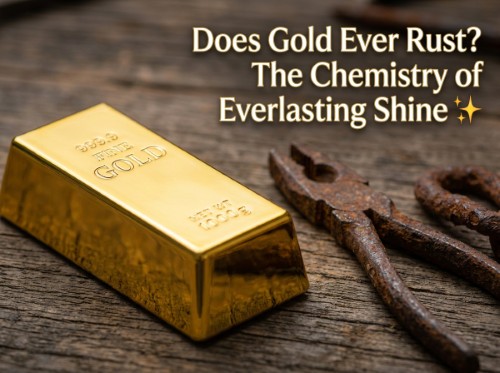
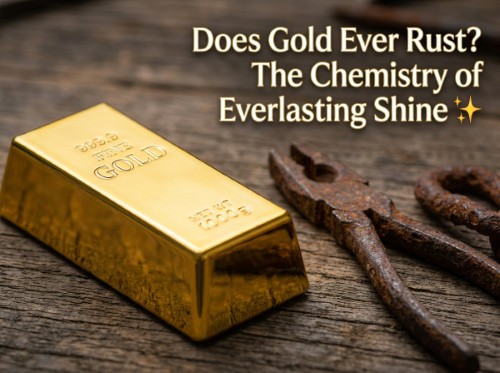
Gold has captivated humanity for thousands of years. From ancient Egyptian death masks to modern bullion coins stored in subterranean vaults, gold retains its radiant lustre across centuries. While other metals corrode, crumble, or turn green when exposed to the elements, gold appears immune to time itself.
This remarkable permanence raises a fundamental question for investors, jewellery lovers, and curious minds alike: does gold rust?
To understand why gold behaves so differently from other metals, we need to explore basic chemistry, the difference between pure gold and gold alloys, and why even high-purity bullion can occasionally surprise you.
To answer whether gold can rust, we must first define what rust actually is.
In strict scientific terms, rust is iron oxide—a reddish-brown compound formed exclusively when iron (or iron alloys like steel) reacts with oxygen and water. Because gold contains no iron atoms, it is chemically impossible for gold to rust in any circumstance. Full stop.
However, when people ask if gold can rust, they are usually asking a broader question: Does real gold corrode, tarnish, or break down over time?
For pure gold, the practical answer is no. Pure gold is one of the least reactive metals known to science, standing as close to chemically inert as a metal can get. Gold coins and bars pulled from centuries-old shipwrecks or ancient burial mounds emerge looking almost as bright as the day they were minted.
Gold’s extraordinary resistance to environmental wear comes down to atomic structure and its position on the periodic table.
In ordinary life, there is virtually nothing in air, freshwater, or saltwater that can react with pure gold. Dissolving gold requires extremely aggressive laboratory chemicals, such as aqua regia (a potent blend of nitric acid and hydrochloric acid) or specialised industrial cyanide solutions. Outside of a specialised chemistry laboratory, pure gold sits completely unaffected by its environment.
If pure gold never corrodes, why do some gold rings, necklaces, or items turn dark, leave marks on the skin, or change colour?
The explanation lies in purity. Almost no everyday jewellery is made from 24-carat (pure) gold. Pure gold is naturally soft, malleable, and easily bent or scratched. To make it durable enough for everyday wear, jewellers mix gold with base metals like copper, silver, nickel, or zinc to create an alloy.
While the gold within the alloy remains immune to reaction, the other metals mixed into the piece are not.
Common Triggers for Discolouration
Even investors holding high-purity gold coins or bars—such as 999 (99.9%) or 9999 (99.99%) fine gold—occasionally spot small reddish or pinkish dots forming on the surface. Known in the industry as 'copper spots', these marks can cause unnecessary panic for new buyers.
How can a 99.9% pure gold coin develop spots?
Even at 99.99% purity, tiny trace amounts of other elements remain in the metal—primarily copper. During the minting process, intense pressure is applied to strike the coin, which can force microscopic copper particles towards the surface. Over months or years, that trace copper slowly oxidises upon contacting air, leaving a small red mark.
It is important to remember that copper spots are purely cosmetic. They do not mean your gold is counterfeit, nor do they diminish the weight, gold content, or market value of the bullion. Bullion experts generally advise against trying to clean pure gold at home, as abrasive cleaning can cause surface scratches that harm collector value far more than a natural copper spot.
How easily a piece of gold tarnishes depends directly on its carat rating, which measures gold purity out of 24 parts:
Gold’s refusal to rust or corrode is precisely why it has served as the foundation of wealth, trade, and artistry throughout human history. Gold can be buried, submerged, melted down, and reminted repeatedly across millennia without losing a single atom of its intrinsic purity.
While lower-carat jewellery or historical coins may experience surface discolouration due to their alloyed metals, the gold itself remains unchanged beneath—impervious, eternal, and shining forever.
Disclaimer: This article is provided for informational purposes only, mistakes may be made, and it's not offered or intended to be used as legal, tax, investment, financial, or any other advice.