x




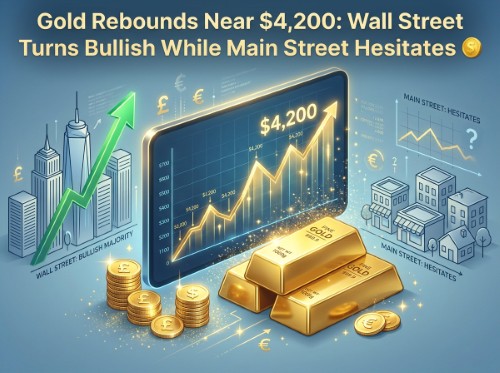
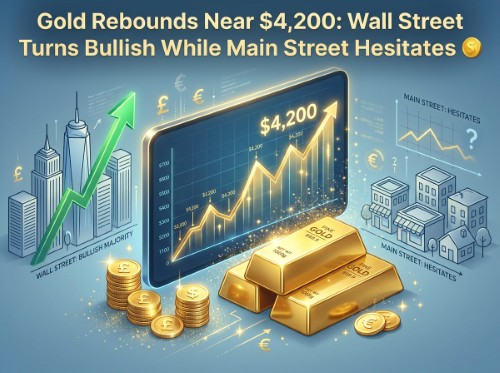
Gold has concluded another roller-coaster week on an upward trajectory, weathering early pressure from rising Treasury yields, a resilient U.S. dollar, and persistent inflation concerns. A late-week rebound—fuelled by softening yields, retreating oil prices, and strong dip-buying near the psychological $4,100 per ounce threshold—saw the precious metal finish the week strongly, hovering just beneath the pivotal $4,200 resistance level.
However, as the precious metals market prepares for a pivotal week dominated by critical inflation data, a fascinating divergence has emerged between professional market analysts and retail investors. While Wall Street has re-established a bullish majority, Main Street remains notably cautious.
The yellow metal kicked off the week trading at $4,142.40 per ounce, initially drawing support from ongoing geopolitical tensions surrounding the U.S.-Iran conflict, elevated energy markets, and steady central bank bullion purchases, particularly from China.
The upward momentum stalled swiftly as the U.S. dollar and Treasury yields strengthened. Selling pressure intensified midweek following the release of the September Federal Open Market Committee (FOMC) meeting minutes, which revealed that most policymakers anticipate another interest rate increase before the year concludes. Spot gold plumbed its weekly low at $4,066.31 per ounce on Wednesday before robust buying support emerged near the bottom of its recent trading range.
A strong 30-year Treasury auction on Thursday helped yields retreat from morning highs, allowing gold to recover ground. The most significant catalyst arrived on Friday, driven by a softer U.S. dollar, easing bond yields, and falling oil prices following reports of productive diplomatic talks between the U.S. and Iran. Sentiment was further bolstered when preliminary University of Michigan consumer sentiment figures dropped to 46.3 alongside rising inflation expectations, reinforcing gold's traditional appeal as an inflation hedge. Spot gold ultimately peaked at $4,207.48 per ounce before closing out the week near $4,194.64.
According to the latest Kitco News Weekly Gold Survey, professional sentiment has shifted back into positive territory. Out of 14 participating market analysts, 50% (seven experts) expect gold prices to gain ground in the week ahead. Only two analysts (14%) predicted a decline, while the remaining 36% adopted a neutral or sideways stance.
Many seasoned strategists point to technical oversold conditions and the growing probability that the Federal Reserve may pause further rate hikes at its upcoming October meeting. Market analysts note that while elevated Treasury yields and a strong Greenback continue to cap runaway appreciation, fundamental drivers remain supportive, leaving ample room for short-term upside movement.
Furthermore, industry experts have highlighted the growing dominance of algorithmic trading in shaping daily price swings. With automated systems digesting every single news headline and macroeconomic data point in milliseconds, short-term volatility remains intense, even as the broader market structure holds firm within a defined range.
In stark contrast to professional sentiment, Main Street retail investors have failed to reclaim a decisive bullish bias. Out of the 206 votes cast in Kitco’s online retail poll, only 45% (93 participants) anticipate higher gold prices next week. Meanwhile, 37% (77 participants) predicted a downward correction, and 18% expected sideways consolidation.
This hesitation among retail traders underscores ongoing uncertainty regarding the broader macroeconomic picture. Investors are closely monitoring whether current inflationary pressures are transitory or structural, how central bank monetary policy will evolve, and what impact upcoming domestic and international political events will have on safe-haven demand.
Attention now shifts squarely to the macroeconomic calendar. The upcoming week will bring the release of September’s Consumer Price Index (CPI) and Producer Price Index (PPI) reports, which are expected to dictate the Federal Reserve's next policy moves. Markets will also parse through regional manufacturing surveys, retail sales data, and an upcoming speech by Federal Reserve Chair Kevin Warsh at an international monetary event in Bangkok.
Beyond domestic economic indicators, analysts are keeping a watchful eye on geopolitical developments, global energy markets, and an upcoming wave of international elections. While geopolitical de-escalation could temporarily ease safe-haven demand, persistent debt concerns and shifting currency valuations ensure that gold will remain a central focus for portfolio diversification.
For investors and traders alike, navigating the current market environment requires patience and vigilance. Whether gold can decisively breach the $4,200 resistance level will depend heavily on how inflation metrics unfold and how aggressively automated trading algorithms react to upcoming central bank communications.
Disclaimer: This article is provided for informational purposes only, mistakes may be made, and it's not offered or intended to be used as legal, tax, investment, financial, or any other advice.