x




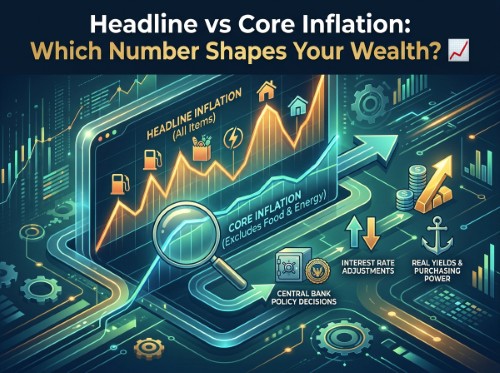
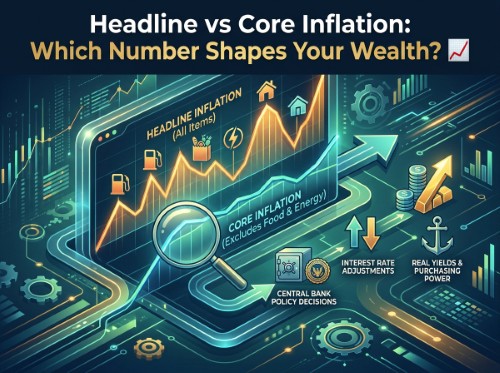
Every month, financial news channels splash new economic figures across the screen. You will frequently hear reporters announce that headline inflation has dropped, only to state in the very next breath that core inflation remains stubbornly elevated. To the average observer, these two terms sound like interchangeable jargon. In reality, they represent two completely different perspectives on the economy.
More importantly, central banks do not treat these numbers equally. Whilst headline inflation dictates what you pay at the supermarket checkout or the petrol station, core inflation is the metric that drives interest rate decisions. Understanding why this gap exists—and how central banks react to it—is essential for anyone seeking to protect their hard-earned wealth and purchasing power.
Headline inflation is the most comprehensive measure of price changes across an economy. When government agencies like the Bureau of Labour Statistics publish consumer price figures, the headline rate is the headline-grabbing top-line number. It calculates the average price shift across every major category of household spending, including:
The primary characteristic of headline inflation is its sensitivity to sudden external shocks. Food and energy prices fluctuate dramatically due to weather disruptions, geopolitical conflicts, or unexpected supply chain bottlenecks.
Because it captures every day-to-day expense, headline inflation directly reflects the erosion of your paycheck’s purchasing power. For instance, when headline consumer price inflation runs at 3.4% year-over-year while nominal wages grow at only 3.2%, household purchasing power shrinks in real terms.
Core inflation takes the standard basket of goods and services and strips out food and energy costs. First conceptualised by economist Robert J. Gordon in 1975, core inflation was designed to eliminate volatile commodity noise and expose the underlying, structural trend of price movements.
The logic behind excluding food and energy is straightforward: central banks cannot control oil cartel decisions, crop yields, or sudden geopolitical trade disruptions using interest rate adjustments. By filtering out these temporary swings, core inflation provides policymakers with a clearer picture of long-term economic momentum.
The divergence between these two figures can be substantial. When headline inflation sits significantly above core inflation, it indicates that price pressures are largely being driven by volatile commodities rather than systemic economic overheating. Conversely, a narrow gap suggests that broader structural inflation has taken root across general goods and services.
Adding another layer of complexity to financial coverage is the choice of measurement index. While headlines often focus on the Consumer Price Index (CPI), major institutions like the US Federal Reserve set policy based on Personal Consumption Expenditures (PCE), published by the Bureau of Economic Analysis.
PCE differs from CPI in several vital ways:
Crucially, while the official long-term target for price stability is framed around headline PCE, central bankers lean heavily on core PCE when making real-time interest rate decisions.
The preference for core inflation over headline metrics has profound consequences for investors, particularly those holding precious metals like gold and silver. The critical bridge connecting central bank policy to asset prices is the concept of real yields.
Real yields represent the actual return on an investment after accounting for inflation (Nominal Interest Rate minus Inflation Expectations). When real yields fall or turn negative, cash savings and short-term bonds lose purchasing power, dramatically lowering the opportunity cost of holding non-yielding assets like physical gold.
Consider what happens during a energy spike:
In this environment, holding unbacked paper currency or low-yielding debt guarantees a loss in real purchasing power. Gold, priced in fiat currency, historically shines during these windows because it acts as an anchor against systemic currency debasement. Central bank decisions hinged on core data can unwittingly create the exact negative real yield conditions that favour physical sound money.
Headline inflation reveals what is happening to your daily cost of living today. Core inflation reveals what central bankers are watching to determine where interest rates will go tomorrow.
When central bank policy is calibrated to a core metric that excludes your largest weekly expenses—food and energy—monetary policy can quickly become disconnected from everyday reality. Recognising this dynamic enables savers to look past surface-level economic headlines and take proactive steps to protect their wealth over the long term.
Disclaimer: This article is provided for informational purposes only, mistakes may be made, and it's not offered or intended to be used as legal, tax, investment, financial, or any other advice.