x




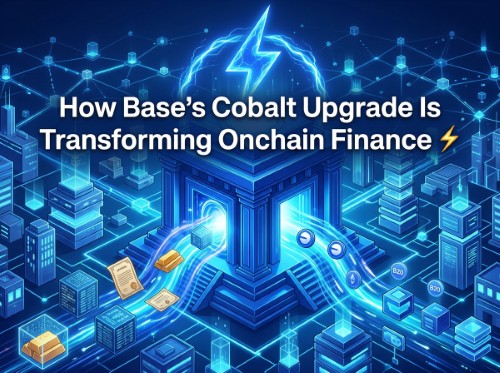
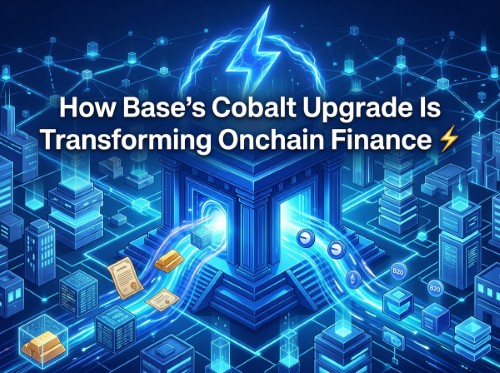
The line between traditional capital markets and decentralised finance is blurring faster than ever. In a landmark step towards institutional-grade infrastructure, Base—the Ethereum Layer-2 network developed by Coinbase—has officially activated its third major network upgrade: Cobalt.
Engineered specifically to support tokenised real-world assets (RWAs), Cobalt introduces flexible compliance controls for asset issuers alongside private, conditional transaction mechanisms for traders. Together, these tools represent a pivotal evolution in how financial instruments are issued, managed, and traded onchain.
At the core of the Cobalt upgrade is an expanded architecture for Base’s native token standard, known as B20. Launched earlier in the summer to streamline the creation of stablecoins and fungible assets, B20 now offers asset issuers granular, multi-layered regulatory controls without requiring them to construct custom smart contracts from scratch.
Multi-Tiered KYC and Eligibility Verification
Financial institutions navigating global markets face strict regulatory frameworks. Cobalt allows issuers to stack multiple compliance checks onto a single tokenised asset. For instance, before a transaction can settle, an issuer can enforce simultaneous checks ensuring that both sender and recipient:
By embedding these rule sets directly into the token layer, compliance shifts from an expensive, post-trade administrative process to an automated, pre-trade protocol standard.
Automated Corporate Actions
Managing equity onchain requires handling routine corporate events such as stock splits. Historically, reflecting a stock split on a blockchain meant minting additional tokens or burning existing ones, creating potential tax and accounting complexities.
Cobalt solves this by allowing asset issuers to schedule display adjustments across wallets and applications. The total displayed balance automatically recalibrates to reflect split ratios without altering the underlying raw token supply or initiating mint and burn operations.
Authorised Transfers and Transparent Auditing
To meet legal requirements regarding asset recovery, court orders, or lost keys, Cobalt enables issuers to assign administrative permissions for forced token transfers. Authorised administrators can transfer tokens out of a wallet without requiring the holder’s private key signature, provided a mandatory public note is attached explaining the reason for the recovery.
Base has explicitly clarified that this feature is entirely opt-in for asset issuers. Base itself holds no administrative keys and cannot initiate or influence forced transfers on any asset.
Beyond issuer tooling, Cobalt introduces Validity Transactions, a mechanism designed to give algorithmic traders and institutional participants greater precision over order execution.
Conditional Execution
Traders can now submit transactions that remain dormant until specific onchain criteria are fulfilled. For example, a trader can configure a token swap that activates only if an asset reaches a targeted price threshold before a designated block deadline.
Base’s sequencer evaluates these transaction conditions against the chain state block by block as each block is assembled. If the state matches the defined criteria within the permitted timeframe, the order executes automatically; if not, it expires safely without arbitrary execution risk.
Shielded Pre-Trade Intent
A persistent issue in public blockchains is front-running and MEV (Maximum Extractable Value) exploitation, where public pending transactions are intercepted by opportunistic actors. Under the Validity Transaction framework, conditional orders remain completely private while waiting in the queue, becoming visible only when included in a finalised block. This feature gives institutional desks the confidentiality they require when executing sensitive trading strategies.
The activation of Cobalt follows a clear strategic realignment for Base. Earlier in the year, Base creator Jesse Pollak noted that while the network initially prioritised creator, content, and messaging applications, global finance represents the truest long-term destination for public blockchains.
Since refocusing on trading, payments, prediction markets, and perpetual contracts, Base has seen rapid institutional adoption. A key milestone came in late August when Coinbase launched tokenised US equities on Base using the B20 standard—allowing users to hold digital representations of top global public companies including Apple, Nvidia, Meta, and Alphabet.
With Cobalt now live, the infrastructure can seamlessly handle the strict compliance, corporate actions, and complex settlement logic required by traditional equities and fund structures.
Cobalt is merely one milestone in Base’s ambitious engineering roadmap. Over the coming months, the network plans to deploy several performance and user-experience enhancements:
By bringing institutional governance tools together with developer-friendly transaction privacy, the Cobalt upgrade positions Base as a primary settlement layer for the next generation of tokenised financial markets.
Disclaimer: This article is provided for informational purposes only, mistakes may be made, and it's not offered or intended to be used as legal, tax, investment, financial, or any other advice.