x




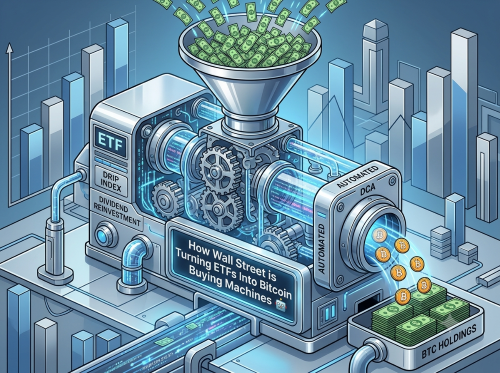
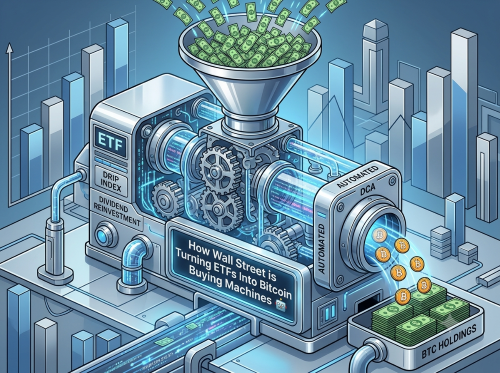
A fascinating transformation is taking place right beneath the surface of the cryptocurrency market. While retail investors are navigating a wave of market anxiety and selling their positions, the world’s largest asset managers are quietly laying the pipework for permanent, automated Bitcoin buying infrastructure.
According to a detailed breakdown by Coin Bureau, Wall Street has officially pivoted. They have stopped simply trying to sell you Bitcoin; instead, they are now creating tailored financial products designed to fit every type of investor archetype on the planet.
To understand why this is happening, it is helpful to look at the climate in which these institutional giants are building. Bitcoin has experienced a brutal period of risk-off capitulation, sitting significantly lower than its previous all-time highs. Fear and greed metrics have plumbed the depths of extreme fear, and spot Bitcoin ETFs have seen billions of dollars bleed out over consecutive weeks.
Yet, against this cold, capitulating market backdrop, traditional finance powerhouse Franklin Templeton dropped a regulatory filing that changes the game entirely.
Franklin Templeton has taken a 100-year-old investing strategy—the Dividend Reinvestment Plan, or DRIP—and pointed it directly at the digital asset space. Traditionally, a DRIP automatically funnels the dividend cash paid out by blue-chip stocks right back into buying more shares of those exact same companies. It is a slow, boring, but incredibly powerful compounding machine.
Franklin Templeton's twist is pure genius in its boredom. They have filed for two funds, including the Franklin US Equity Bitcoin DRIP Index ETF. These funds hold an ordinary basket of US dividend-paying stocks. However, instead of taking the dividend cash to buy more equity, the machine automatically diverts that money to buy Bitcoin exposure behind the scenes.
The strategy behind this is deliberate:
The sheer brilliance of this approach is that it completely strips out human friction. There is no crypto exchange to sign up for, no terrifying "buy" button to click during market panics, and no cryptographic seed phrases to lose. Investors simply buy familiar dividend stocks, and Bitcoin accumulation happens entirely as an automated byproduct.
Franklin Templeton isn't the only giant moving pieces across the board. Just days before their filing, BlackRock launched the iShares Bitcoin Premium Income ETF (ticker: Beta).
While Franklin Templeton is targeting automated accumulation, BlackRock is targeting income. This particular fund holds spot Bitcoin and then rents out the future upside of that asset by selling covered call options on roughly 25% to 35% of its holdings. In return, the fund generates a massive annualised yield that is paid out to investors as monthly income, all while retaining a large portion of Bitcoin's upward price movements.
What we are witnessing is the segmentation of a new asset class. Wall Street has built an accumulation tool for the long-term investor who wants to dollar-cost average without thinking, and a yield tool for the income-focused investor.
How did the floodgates open so quickly? The catalyst was a quiet, highly technical regulatory change. The US Securities and Exchange Commission approved generic listing standards for crypto exchange-traded products.
Previously, every single new cryptocurrency fund required a bespoke rule change filing—a gruelling administrative gauntlet that could take up to 240 days. With the new generic standards, qualifying products can simply slot into a vastly accelerated 75-day review clock. This single administrative switch turned a one-off regulatory battle into an efficient assembly line for Wall Street product developers.
The structural shift here matters because traditional "drip" products create price-insensitive, recurring demand. Dividends are paid out on a fixed calendar schedule regardless of market sentiment, scary headlines, or daily price fluctuations. The machine simply buys, converting a predictable sliver of assets into Bitcoin on autopilot.
When you scale this concept across the broader financial landscape, the numbers become staggering. Total US retirement assets sit in the tens of trillions of dollars, with a huge portion parked in equity-focused IRAs and 401ks. If institutional providers successfully normalise even a modest 1% to 2% structural allocation to Bitcoin as a portfolio diversifier across these retirement pools, it creates a permanent demand channel that completely dwarfs the current spot market.
While the potential for massive structural adoption is clear, a healthy dose of scepticism is warranted. There is an uncomfortable question beneath all this shiny new financial engineering: Is this genuine adoption infrastructure, or is it just a beautifully dressed fee factory?
Critics point to a few glaring issues:
However, the counter-argument to the froth theory is compelling: these products are being engineered and filed during a deep market drawdown, not while prices are pressed up against all-time highs. This suggests they are being built as accumulation vehicles for a quiet market phase rather than tools to exploit immediate retail hype.
Ultimately, both interpretations are looking at the exact same data. On one hand, the marginal buyer of cryptocurrency is fundamentally changing shape—shifting away from reactive hot money and toward price-insensitive, automated institutional flows wired into the bedrock of global capital. On the other hand, traditional financial firms are doing what they have always done: manufacturing a wrapper for every conceivable wallet to extract fees. Whether this pipeline brings historic adoption or clever capital extraction is the definitive story that will shape the next decade of digital finance.
Coin Bureau - Wall Street is Turning ETFs Into BTC Buying Machines
"Wall Street’s latest ETFs silently buy Bitcoin for you using your dividend payouts, skipping exchanges and wallets. Franklin Templeton and BlackRock now offer tools that let anyone accumulate BTC passively, even as retail investors are dumping crypto at the lows.
Watch to see exactly how these ETF machines work, why Wall Street is doing this while fear dominates the market, and the real risks retail investors might miss. Decide if this new wave of Bitcoin wrappers is a smart move—or just more hidden fees."
~ TIMESTAMPS ~
0:00 - The $1.8 Trillion Bitcoin Machine
2:18 - Franklin Templeton’s "Grandfather" Bitcoin Strategy
4:41 - BlackRock’s Massive 25% Yield Bitcoin ETF
7:14 - The Smart Money is Buying While Retail Panics
9:11 - Trillions in Retirement Funds Entering BTC?
11:07 - Warning: Is This a Massive Top Signal?
13:12 - Real Adoption or Just a Wall Street Fee Factory?
15:02 - The Deciding Factor for Bitcoin’s Next Decade
Source 👉 https://www.youtube.com/watch?v=jlWgyiF9Rn8
Disclaimer: This article is provided for informational purposes only, mistakes may be made, and it's not offered or intended to be used as legal, tax, investment, financial, or any other advice.