x




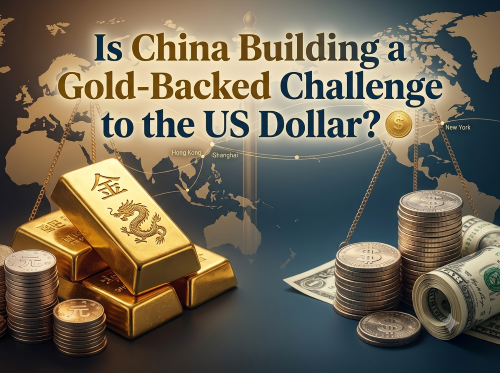
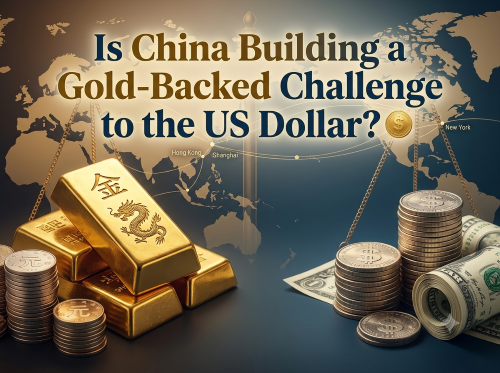
For eight decades, the United States dollar has stood unchallenged at the very core of the global financial architecture. Ever since the aftermath of the Second World War, the mechanics of international trade have remained remarkably consistent: commodities, shipping, and cross-border transactions are priced in dollars, and nations holding surplus capital park those funds in US Treasury bonds. This arrangement granted Washington an unprecedented advantage, allowing it to borrow at minimal cost whilst supplying the ultimate reserve currency for global commerce.
However, a fundamental shift is underway. On 7 July 2026, Hong Kong launched the trial operation of a central gold clearing and settlement system, driven by the state-owned Hong Kong Precious Metals Central Clearing Company. Coupled with the 'Delivery Connect' infrastructure linking Hong Kong directly to the Shanghai Gold Exchange, this mechanism permits physical gold to move and settle seamlessly across both jurisdictions. Supported by eleven major financial institutions—including international giants such as HSBC, Standard Chartered, UBS, Citi, and JP Morgan—this development marks a pivotal transition towards an alternative financial framework anchored in tangible assets.
The groundwork for this transition was accelerated by global geopolitical events in 2022. When Western authorities froze approximately $300 billion in Russian central bank foreign exchange reserves following the escalation of the conflict in Ukraine, central banks worldwide took note. The event demonstrated that dollar-denominated assets held within Western clearing systems carry counterparty and political risk.
In contrast, physical gold stored in domestic vaults represents an unencumberable asset. It cannot be frozen via administrative sanctions, nor can its purchasing power be diluted through foreign monetary policy. Consequently, sovereign institutions have increasingly prioritised physical bullion over paper debt to guarantee financial sovereignty.
Beijing's strategy relies on two main components: securing physical reserves and expanding the infrastructure required for non-dollar international settlement.
1. Consistent Sovereign Accumulation
The People's Bank of China has recorded 20 consecutive months of official gold purchases, elevating its declared holdings above 2,300 tonnes (75.44 million troy ounces). Central banks globally have followed suit; according to European Central Bank data, gold has overtaken US Treasuries as the largest single component of central bank reserves, accounting for roughly 27% of global reserves compared to 22% for US government debt. Total central bank bullion reserves now exceed 36,000 tonnes—levels not observed since the Bretton Woods era.
2. Expanding Non-Dollar Trade Infrastructure
Vault infrastructure in Hong Kong is projected to expand tenfold from 200 tonnes to roughly 2,000 tonnes over the coming three to four years. Concurrently, authorities more than doubled the yuan liquidity quota for participating banks from 200 billion to 500 billion yuan. Outside Asia, institutions such as Standard Bank in Africa have been appointed as clearing banks for the yuan, enabling direct local currency settlement across 19 African nations without requiring double conversion through the US dollar.
This combination creates a framework where gold serves as neutral, unfreezable collateral, whilst the yuan acts as the medium of exchange for bilateral trade in energy, metals, and manufactured goods.
Despite these strategic advances, replacing the dollar remains a complex, long-term challenge rather than an overnight collapse. The greenback still accounts for approximately 56% to 57% of allocated foreign exchange reserves and handles roughly half of all global trade settlements, compared to the yuan's 2% to 3% share. Furthermore, foreign holdings of US Treasuries remain near record levels at $9.49 trillion.
Gold itself introduces operational challenges as a primary reserve asset:
Analysts refer to this emerging multi-currency environment as 'Bretton Woods 3'—a system dividing the global economy into a dollar-centric zone on one side, and a commodity and gold-backed zone on the other.
While infrastructure developments in East Asia may appear remote, a gradual reduction in global demand for US dollar reserves carries direct economic consequences globally:
The establishment of gold-clearing networks in Hong Kong and Shanghai represents a significant step toward an alternative global financial system. While the dollar's vast scale and liquidity ensure it remains central to international finance for the foreseeable future, the groundwork for a multi-polar monetary framework is now operational.
Finance Bureau - China Just Launched the Dollar's Replacement (It's Backed by Gold)
"China has launched a gold-backed banking system to rival the US dollar—no longer just a theory but a working reality. Major global banks and huge vaults in Hong Kong now connect directly to China’s gold market, building a trade system outside US control.
If the world shifts to gold and the yuan, your dollars, savings, and investments could lose buying power as US dominance is tested for the first time in decades. Find out how this new system could ripple through everything from your mortgage to your 401(k)."
~ TIMESTAMPS ~
00:00 China Just Launched a Rival to the Dollar
02:55 The Gold System Already Backed by Global Banks
05:25 Why China Is Hoarding Gold at Record Speed
06:50 Gold Just Overtook US Treasuries
08:15 China’s Plan to Push the Yuan Worldwide
10:15 Why the Dollar Is Not Finished Yet
11:20 How This Could Hit Your Savings and Loans
Source 👉 https://www.youtube.com/watch?v=FiTOv3PCkRQ
Disclaimer: This article is provided for informational purposes only, mistakes may be made, and it's not offered or intended to be used as legal, tax, investment, financial, or any other advice.