x




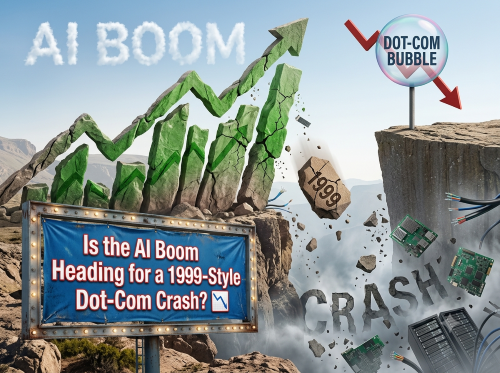
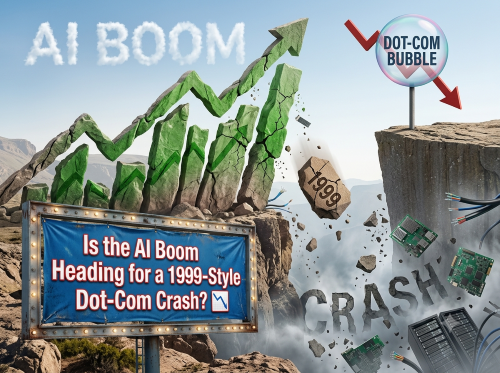
The artificial intelligence revolution has dominated global financial markets for years, driving tech valuations to unprecedented heights. However, recent movements amongst major industry players suggest that the market cycle may be reaching a critical turning point. High-profile stock listings, massive tech sell-offs, and circular financing arrangements have drawn striking parallels to the dot-com bubble of the late 1990s.
Understanding what is driving this market volatility requires a closer look at the financial mechanisms behind the current AI infrastructure expansion, the concentration of market risk, and the subtle fractures beginning to show across the sector.
In recent financial activity, three of the world’s most valuable private technology entities—SpaceX, Anthropic, and OpenAI—made strategic moves towards public markets in quick succession. SpaceX led the charge by listing on the public exchange, pricing at $135 per share and raising approximately $85.7 billion. This eclipsed the previous world record held by Saudi Aramco, making it the largest initial public offering in history. Demand was immense, with total orders exceeding $350 billion.
Shortly after listing, SpaceX stock surged to an intraday peak of $225 per share, temporarily pushing the company's market capitalisation to a staggering $2.7 trillion. However, within a fortnight, the stock surrendered roughly a third of its peak value, erasing over $900 billion in market value. The catalyst for this sudden sentiment shift was the company's prompt turn towards debt markets to fund ongoing AI infrastructure expenditure right after completing its record-breaking cash raise.
This rapid transition—cashing out at peak market enthusiasm only to immediately seek additional debt—mirrors classic late-cycle behaviour. Seeing this post-IPO volatility unfold, other tech giants have paused their public listing plans. OpenAI, for instance, has reconsidered its timeline, pushing prospective public offering plans further out while maintaining high valuation expectations.
The central driver of current market anxiety is not the validity of AI technology itself, but rather how its expansion is being financed. Reports from international financial institutions, including the Bank for International Settlements (BIS), highlight a complex web of circular arrangements echoing the telecom crash of the late 1990s.
During the dot-com boom, major telecommunications equipment vendors provided loans to startups, who then used those funds to purchase hardware from the same vendors. The vendors booked these transactions as revenue, creating an artificial loop of soaring growth that vanished the moment the startups ran out of capital.
Today, a very similar structure is at play:
A clear example of this interdependence involves large cloud infrastructure providers taking on immense debt loads to supply compute power to AI labs that are still operating with substantial quarterly losses. If a key laboratory fails to meet its long-term financial commitments, the revenue streams of major hardware and cloud providers risk drying up simultaneously.
Beyond round-trip financing, the overall stock market has become exceptionally concentrated. The top ten largest companies in the S&P 500 now represent approximately 40% of the entire index's weight—nearly double the historical average maintained over previous decades. Furthermore, these ten companies account for almost half of the index's total volatility.
Valuation metrics also signal elevated risk. Long-term valuation indicators such as the Shiller Cape Ratio have approached historically extreme levels only seen during major financial peaks, such as the 2000 dot-com peak and the 1929 market crash. While mega-cap tech giants today generate significant cash flows and hold core profitable businesses—unlike the speculative shell companies of 1999—the massive capital expenditure required for AI infrastructure is increasingly outrunning earnings and free cash flow.
Economists and market analysts point to two potential trajectories for how this overcapacity will resolve:
Scenario 1: Rolling Sub-Bubble Deflation
In this outcome, the market experiences a controlled, gradual repricing across different layers of the tech sector over several years. First, hardware and semiconductor valuations cool down, followed by cloud infrastructure providers, and eventually the application software layer. Capital rotates between sub-sectors rather than fleeing the market entirely, absorbing systemic shocks through localised volatility.
Scenario 2: Systemic Contagion
In a darker scenario, the tight financial loop linking hardware suppliers, cloud providers, and unprofitable AI startups fractures unexpectedly. A default or sharp spending cut by a major AI lab could cascade through private credit markets, trigger collateral shortfalls, and force liquidations across broader financial markets, spilling over into sovereign debt markets.
While artificial intelligence continues to offer real productivity transformations for the global economy, history demonstrates that even the most revolutionary technologies can experience severe market corrections when capital expenditure detaches from economic reality.
Finance Bureau - The Rise and Fall of the AI Bubble
"Tech giants cashed in on record-breaking AI IPOs, only to see billions wiped away almost overnight. This video reveals the dangerous parallels to the dot-com bubble, and explains why the same kind of fragile financial tricks are everywhere in today's AI market.
Discover the hidden connections between companies, the debt-driven spending spree, and why mainstream "diversification" isn't as safe as it looks right now."
~ TIMESTAMPS ~
00:00 THE AI EXIT HAS ALREADY BEGUN
02:05 SPACEX’S $2.7 TRILLION WARNING
04:10 AI STOCKS ARE REPEATING 1999
06:35 THE FIRST CRACKS IN THE BUBBLE
08:10 THE CIRCULAR MONEY LOOP EXPOSED
11:15 WHY THIS MAY NOT END IN ONE CRASH
13:10 THE TRIGGER FOR A SYSTEMWIDE COLLAPSE
Source 👉 https://www.youtube.com/watch?v=BLguhZH2YHo
Disclaimer: This article is provided for informational purposes only, mistakes may be made, and it's not offered or intended to be used as legal, tax, investment, financial, or any other advice.