x




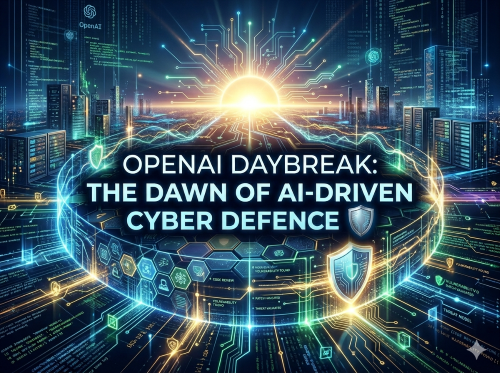
The digital landscape is undergoing a seismic shift as artificial intelligence transitions from a creative tool to a critical shield. In a major move to fortify the global software infrastructure, OpenAI has officially unveiled Daybreak, an ambitious cybersecurity initiative designed to weaponise AI in favour of defenders.
As cyber threats become more sophisticated, the race between attackers and defenders has reached a fever pitch. With Daybreak, OpenAI is betting that its advanced models can tip the scales, helping organisations identify vulnerabilities and patch them before hackers can exploit the cracks.
Daybreak is more than just a software update; it is a specialised cybersecurity framework that leverages OpenAI’s most advanced large language models alongside Codex, the company’s agentic system specifically tuned for programming and code analysis.
The primary mission of Daybreak is to accelerate the lifecycle of cyber defence. Historically, finding a software bug, verifying its risk, and deploying a fix could take weeks or even months. OpenAI aims to shrink this window to near real-time by using AI to automate the heavy lifting of security research.
According to OpenAI CEO Sam Altman, AI is rapidly reaching a level of proficiency where it can outperform traditional methods of software auditing. Daybreak introduces several core capabilities that aim to revolutionise how security teams operate:
The launch of Daybreak arrives at a delicate moment for the tech industry. Just last month, the release of Anthropic’s Claude Mythos demonstrated the terrifying potential of AI in the hands of researchers. Mozilla recently used Mythos to uncover 271 previously unknown vulnerabilities in the Firefox browser, highlighting just how capable these models have become.
OpenAI acknowledges that the same intelligence used to defend a system can, in theory, be used to attack it. To combat this, Daybreak is built with a "defensive-first" philosophy. The initiative pairs its powerful capabilities with strict safeguards, accountability measures, and verification protocols to ensure the technology is used to build, not destroy.
OpenAI is not alone in its pursuit of the cybersecurity market. Tech giants like Google and rivals like Anthropic are increasingly positioning their AI models as essential tools for the modern CISO (Chief Information Security Officer).
While traditional security software relies on predefined rules and signatures, AI models can "reason" through code. This allows them to catch "zero-day" vulnerabilities—flaws that have never been seen before—giving defenders a proactive advantage rather than a reactive one.
OpenAI has signalled that Daybreak is just the beginning. The company plans to collaborate closely with government agencies and industry leaders to ensure that as AI models become more capable, they are deployed responsibly. By working with partners before releasing even more powerful cyber-capable models, OpenAI hopes to create a "resilient by design" software culture.
As the name suggests, Daybreak represents a new beginning for digital safety. By using AI to illuminate risks earlier and act faster, the goal is to move toward a future where software is inherently more secure and the cost of a cyberattack becomes prohibitively high for bad actors.
For more information and detailed insights on this development, read this report on Decrypt:
👉 OpenAI Launches Daybreak as AI Firms Expand Into Cybersecurity
Disclaimer: This article is provided for informational purposes only, mistakes may be made, and it's not offered or intended to be used as legal, tax, investment, financial, or any other advice.