x




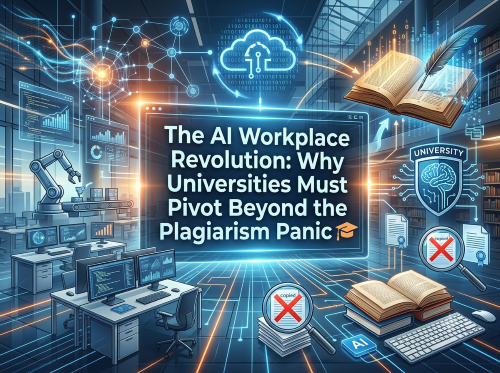
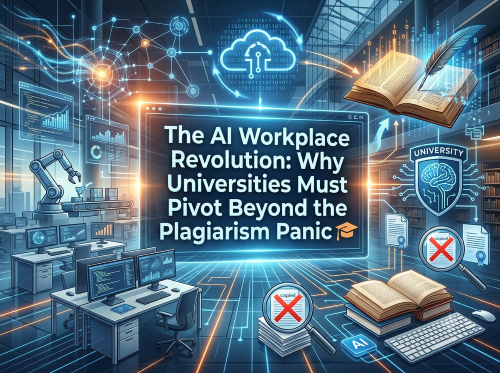
The breakneck speed of artificial intelligence adoption has caught the global workforce by storm. Since the public debut of generative tools like ChatGPT, industries ranging from finance and healthcare to agriculture and the creative arts have rapidly integrated automation into their daily operations. Yet, while the modern workplace evolves at a frantic pace, higher education institutions appear stuck in a defensive crouch.
A recent study published in Frontiers in Education by Dr Kelechi Ekuma, a researcher at the University of Manchester’s Global Development Institute, issues a stark warning: universities are failing to prepare graduates for an AI-shaped professional landscape. By focusing primarily on policing academic integrity, institutions are missing the bigger picture—and risking the future employability of their students.
When generative AI burst into the mainstream, the immediate reaction from many universities was panic over plagiarism. Assessment frameworks were upended overnight, leading to a heavy reliance on AI detection tools and updated academic misconduct policies.
Dr Ekuma argues that this reactive stance is fundamentally flawed. Treating AI purely as a threat to academic integrity ignores the reality that these tools are becoming standard operating software in the professional world. Automation is no longer confined to repetitive tech tasks; it is actively reconfiguring public administration, welfare targeting, legal research, and healthcare diagnostics.
Instead of asking how to ban or detect AI, the study suggests that higher education must ask a much more critical question: what skills will students need to thrive alongside AI when they graduate?
The solution lies in a structural shift towards "critical AI literacy". This does not mean every degree program needs to transform into a computer science course. Rather, it means existing curricula must re-evaluate how automation reconfigures their specific fields.
Critical AI literacy involves teaching students to:
This integration needs to be additive in scope but transformative in practice. A law student, for example, needs to know not just the law, but how to verify the automated outputs of legal research tools. A medical student must understand how to interpret diagnostic AI without blindly deferring to it.
As AI systems become highly proficient at data processing, pattern recognition, and routine drafting, the premium on uniquely human capabilities will skyrocket. The study highlights that the most resilient graduates will be those who possess skills that automation struggles to replicate.
Higher education must double down on fostering high-level cognitive and emotional skills. Critical thinking, complex ethical judgment, advanced communication, and a deep understanding of nuanced social contexts are precisely the areas where human professionals hold an advantage. The goal of future degrees should be to cultivate professionals who do not compete with AI, but rather orchestrate it using superior human judgment.
The warning from the University of Manchester reflects a growing global recognition that AI training cannot wait. Various sectors are already moving to plug the skills gap. For instance, the US Department of Labor has previously launched specialised apprenticeship portals to expand training across education and manufacturing. In the creative sector, philanthropic initiatives have poured millions into training tens of thousands of artists on AI tools to help them navigate the changing entertainment landscape. Even legal institutions, such as the Mississippi College School of Law, have taken the step of mandating AI coursework for first-year students to ensure they can confidently verify automated legal outputs.
If universities do not fundamentally rethink teaching, assessment, and career preparation, they risk rendering their degrees obsolete. AI is no longer a futuristic technology entering higher education; it is the definitive condition reshaping the professional environment. To truly serve their students, universities must stop playing catch-up with detection software and start building the AI-literate workforce of tomorrow.
To read the original report and gain more insights into this research, view the full article on Decrypt:
👉 AI Is Changing the Workplace and Universities Aren’t Keeping Up, Study Warns
Disclaimer: This article is provided for informational purposes only, mistakes may be made, and it's not offered or intended to be used as legal, tax, investment, financial, or any other advice.