x




In the rapidly evolving landscape of artificial intelligence, a common consensus has emerged among forward-thinking enterprises: not every organisation needs to, or indeed should, build a proprietary frontier large language model (LLM) from scratch. The true competitive advantage lies not in the foundational model itself, but in the 'harness' that wraps around it. This harness is the crucial infrastructure that customises a general model for specific, high-value business tasks.
However, perfecting this layer has historically been a significant bottleneck. Up until now, tuning an AI agent's harness has been an arduous, manual process relying heavily on human intuition and ad-hoc debugging.
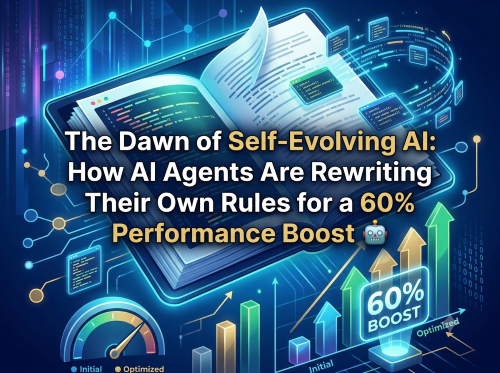
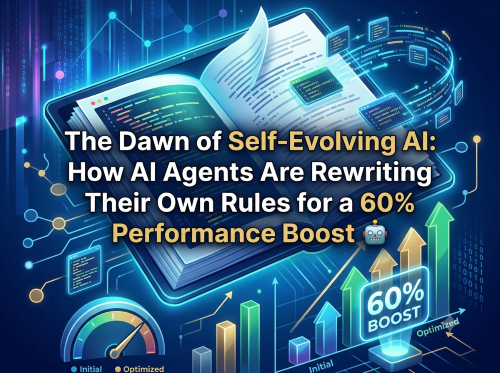
To shatter this bottleneck, pioneering researchers at the Shanghai Artificial Intelligence Laboratory have introduced Self-Harness. This ground-breaking framework allows LLM-based agents to systematically analyse their own performance data and rewrite their own operating rules. The result? A staggering relative performance increase of up to 60 per cent, entirely driven by automated self-evolution.
To appreciate the significance of Self-Harness, it is vital to understand what an AI agent harness actually does. An LLM on its own is simply a text predictor. An AI agent, however, is an active system capable of executing workflows. The harness is the surrounding architecture that empowers the model to interact effectively with its environment. It comprises essential components such as:
When an AI agent fails, the fault rarely lies entirely within the core LLM. More often, the breakdown occurs within the harness. For instance, an agent might repeatedly retry a broken command without verifying the output, or it might get trapped in an endless logic loop.
Fixing these issues has traditionally required skilled software engineers to manually parse through execution logs, spot the anomalies, and tweak the code or prompts. This manual paradigm is deeply flawed. It lacks a systematic feedback loop and relies too heavily on intuition. In an era where frontier models are updated every few months, relying on manual human intervention to continuously re-optimise these harnesses is both economically unsustainable and technically unfeasible.
The Self-Harness framework completely replaces human guesswork with empirical, data-driven evolution. It achieves this by establishing a continuous, three-stage iterative loop that transforms execution history into robust, optimised code.
1. Weakness Mining
The agent is assigned a suite of standard operational tasks using its current harness. As it executes these tasks, it generates comprehensive execution traces. The system automatically filters out the failed attempts, categorises them, and systematically uncovers model-specific failure patterns.
2. Harness Proposal
Once a specific failure mechanism is identified, the agent adopts a 'proposer' role. It generates a diverse selection of minimal, targeted modifications to the harness. Because these edits are explicitly tied to documented failures, the system avoids making overly broad alterations that could disrupt other functioning processes.
3. Proposal Validation
Before any new rule is permanently adopted, it must pass a strict quality control phase. The candidate harness modifications are run through rigorous regression testing on a separate set of tasks. A modification is only accepted and merged into the next generation of the harness if it demonstrably improves success rates without causing any performance degradation elsewhere.
The researchers rigorously tested the Self-Harness framework using various prominent language models—including MiniMax M2.5, Qwen3.5-35B-A3B, and GLM-5—on Terminal-Bench-2.0, a benchmark designed to evaluate tool-based execution and error recovery.
The results were remarkable. Across the board, the self-evolving harnesses achieved relative performance leaps ranging from 33% to 60%. What makes Self-Harness uniquely powerful for commercial applications is its ability to generate highly specific runtime policies tailored to the unique eccentricities of each individual model:
While the prospect of an AI agent that fixes its own flaws is highly compelling, enterprise decision-makers must consider the operational costs. Moving from manual engineering to automated trial-and-error inherently shifts the resource burden.
Self-Harness demands substantial computational overhead. Running continuous proposal generations, parallel testing environments, and rigorous regression checks means a significant surge in API token consumption, increased infrastructure costs, and higher optimisation latency.
Furthermore, the entire framework hinges on the absolute precision of the evaluation pipeline. For Self-Harness to succeed, it requires deterministic, strict verifiers to accurately judge success and failure. Without an unassailable ground truth, the system risks validating and promoting flawed logic.
Because of this, the framework is ideally suited for environments where outcomes are clear-cut and failure carries minimal risk—such as software engineering, DevOps data pipelines, and internal workflow automation. Conversely, fields with subjective, delayed, or high-stakes outcomes—such as legal analysis, safety-critical infrastructure, or medical diagnostics—are explicitly unsuited for fully automated harness evolution.
The rise of self-improving frameworks does not signal the displacement of human engineers. Instead, it elevates their role within the technological stack.
The engineering profession is shifting up an abstraction layer. Rather than spending hours manually patching individual system prompts, analysing log files, or adjusting tool call boundaries, corporate engineers will focus on building the immaculate evaluation systems and guardrails that make autonomous AI evolution possible.
In this new paradigm, the software engineer transitions from being a mere prompt tweaker to a sophisticated feedback architect, designing the environments in which autonomous agents safely and continuously perfect themselves.
To read the full research paper and delve deeper into the technical mechanics of this framework, visit the original announcement on VentureBeat:
Disclaimer: This article is provided for informational purposes only, mistakes may be made, and it's not offered or intended to be used as legal, tax, investment, financial, or any other advice.