x




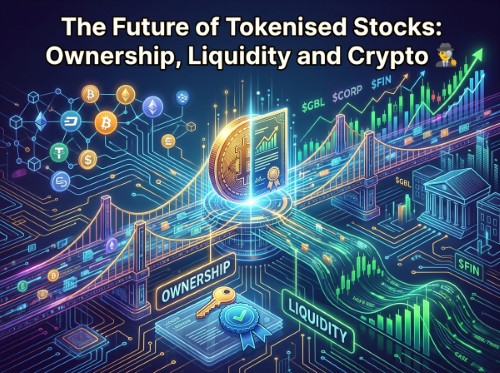
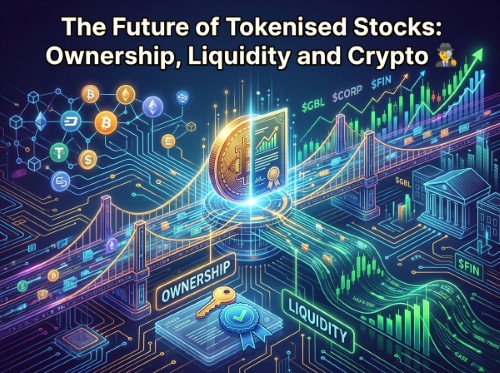
The intersection of traditional finance and the digital asset ecosystem is entering a fascinating new phase. As macroeconomic pressures shift and regulatory frameworks slowly evolve, tokenised stocks are emerging as a bridge between conventional equity markets and crypto-native platforms. However, navigating this emerging landscape requires a clear understanding of what these digital tokens actually represent, how investor rights are protected, and what the evolving regulatory stance means for modern portfolios.
For crypto-native investors looking beyond Bitcoin, Ethereum, and decentralised finance (DeFi) assets, tokenised US equities offer an enticing prospect: gaining exposure to traditional companies and sectors without leaving the digital asset environment. Yet, a fundamental distinction must be made early on: a token that merely tracks a share price is not automatically a genuine share.
The true value and diversification potential of tokenised equities rest entirely on whether holders receive authentic legal rights, whether the underlying assets reside within regulated custody arrangements, and whether the markets can maintain reliable liquidity when positions need to be unwound.
Recent regulatory developments have brought these ownership questions into sharp focus. Rather than operating in a regulatory vacuum, the industry is seeing tentative steps toward formal integration, prompting investors to look closely at the fine print behind every tokenised product.
The market backdrop has shifted dramatically over recent years. With central banks navigating higher interest rates—such as US Treasury yields moving above 5%—investors face competitive alternatives to risk assets. This environment sharpens the comparisons between equities, cryptocurrencies, and government debt, prompting market participants to re-evaluate their portfolio strategies.
Concurrently, the crypto industry is maturing beyond its original outsider stance. While Bitcoin initially emerged in the wake of the 2008 financial crisis as a challenge to incumbent financial systems, modern crypto infrastructure is increasingly viewed as a viable gateway into traditional markets.
Regulatory milestones continue to shape this transition. Although broader legislative efforts, such as the Digital Asset Market Clarity Act, have faced procedural hurdles, regulatory authorities are introducing targeted measures. For instance, the US Securities and Exchange Commission (SEC) issued a five-year, temporary, and conditional Innovation Exemption for certain Tokenized Securities Venues. Regulators have framed this measure as a bridge toward long-term rule-making rather than an immediate, permanent redesign of traditional market structures.
Many digital asset portfolios suffer from heavy concentration risks, remaining tethered to Bitcoin and Ethereum. Even when investors hold multiple distinct tokens, their portfolios can remain exposed to overlapping crypto-market drivers. Tokenised stocks present a potential solution by introducing exposure to traditional corporate earnings and broader global sectors.
Nevertheless, access to another asset class does not automatically guarantee a balanced portfolio. Tokenised equities can still respond sharply to broad risk-off movements across global financial markets. Therefore, the most useful metric for investors is the actual exposure the product delivers—including its enforceable legal claim and predictable market behaviour—rather than the mere fact that it trades on a blockchain network.
Under frameworks like the SEC’s Innovation Exemption, the ownership question is explicitly addressed: tokenised shares traded within these approved frameworks must afford holders the exact same rights as equivalent traditional shares. Furthermore, venues are typically required to provide issuers with notice and an opportunity to object before listing tokenised shares created by unaffiliated third parties.
The SEC’s Innovation Exemption grants qualifying Tokenized Securities Venues temporary relief from traditional exchange definitions, allowing them to facilitate limited trading of genuine National Market System stocks. This is typically achieved through permissioned automated market makers and dedicated liquidity pools.
Similarly, select liquidity providers receive temporary and conditional relief from standard dealer-registration requirements. This structure establishes a controlled, bounded environment where regulators and market participants can closely observe how tokenised equities operate in practice. However, this temporary pilot does not establish universal rules for every crypto platform, nor does it guarantee that on-chain trading will automatically yield deep, friction-free markets.
While blockchain-based settlement and programmable infrastructure offer theoretical efficiencies—potentially reducing friction in issuing, transferring, and trading financial assets—these benefits remain a promise rather than a guaranteed outcome. Tokenisation does not eliminate underlying market risks, nor does it replace the vital need for robust corporate disclosures, sound governance, and strict market safeguards.
Custody presents another critical parallel test. Tokenised equities aim to connect on-chain trading with regulated financial infrastructure, but investors must rigorously examine how assets are held. Understanding the mechanics of the custody model during periods of market disruption or insolvency is paramount. Robust execution controls and secure custody arrangements remain the bedrock of safe financial participation.
Tokenised stocks hold the potential to make portfolio diversification far more accessible to crypto-native investors, fostering a deeper coexistence between digital assets and Wall Street. However, the investment case is only ever as strong as the legal rights attached to the token, the integrity of the underlying custody, and the reliability of liquidity when positions are unwound. Rather than signalling the displacement of traditional finance, current regulatory experiments mark an intriguing step toward integration, caution, and structured coexistence.
Disclaimer: This article is provided for informational purposes only, mistakes may be made, and it's not offered or intended to be used as legal, tax, investment, financial, or any other advice.