x




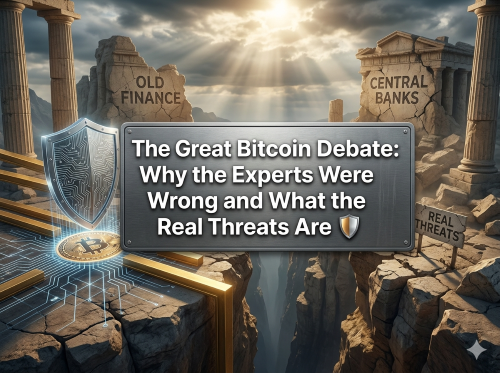
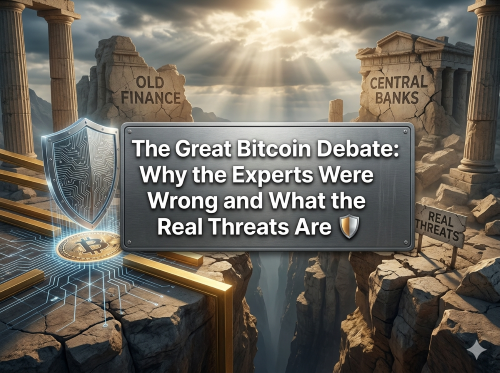
Bitcoin has been declared "dead" hundreds of times by some of the most influential minds in finance and economics. From Nobel Prize winners to billionaire investors, the prediction that Bitcoin is headed for zero has been a recurring theme for over fifteen years. Yet, despite these confident warnings, the digital asset has not only survived but thrived, reaching unprecedented highs and gaining institutional acceptance.
To understand why the critics have been consistently incorrect, one must look at the specific arguments they used and the frameworks they applied. More importantly, while the famous critics may have missed the mark, there are genuine, less-discussed risks that serious investors are now monitoring closely.
Many of the most prominent attacks on Bitcoin come from individuals who are undeniably experts in their own fields. However, their primary mistake has often been applying the wrong tools to measure a completely new type of asset.
Economists like Paul Krugman initially dismissed Bitcoin because it failed as a traditional medium of exchange for daily purchases. While it is true that Bitcoin is not ideal for buying a cup of coffee due to its volatility and processing speed, this view ignored its evolution into a "digital gold." Instead of a daily currency, Bitcoin became a global, decentralized store of value and a settlement layer for large-scale transfers—a category of asset that the traditional "currency expert" framework wasn't designed to evaluate.
Similarly, value investors like Warren Buffett and Charlie Munger famously labelled Bitcoin "worthless" because it does not produce cash flow like a productive company or a farm. While this logic is perfect for evaluating stocks, it fails when applied to monetary assets. Gold, for instance, has held value for millennia without producing dividends. Bitcoin carries a "monetary premium" similar to gold, which cannot be captured by traditional stock valuation models.
Critics such as Jamie Dimon and Nouriel Roubini have often characterised the entire crypto space as a "scam" or "fraud." While it is true that the industry has seen massive collapses—such as FTX and Celsius—these critics frequently conflate the dishonest behaviour of centralized companies with the Bitcoin protocol itself.
The Bitcoin network is a transparent system governed by code, not by individuals. Throughout every market crash and corporate failure, the Bitcoin protocol has remained operational, processing every transaction without a central authority. The distinction between the "crypto industry" and the "Bitcoin network" is vital for understanding why the core technology continues to grow despite external scandals.
If the traditional criticisms haven't killed Bitcoin, what could? Serious investors are moving past the "bubble" talk and focusing on three systemic challenges that could fundamentally alter Bitcoin's future.
1. Coordinated Government Regulation: While Bitcoin's technology is resistant to hacking, its accessibility is vulnerable to the law. Countries are increasingly implementing rules like the FATF "Travel Rule," which requires the identification of parties in crypto transactions. Recent legislative drafts in places like South Africa suggest a trend where governments could potentially force the surrender of private keys or impose heavy penalties for non-compliance, making it difficult for the average person to hold Bitcoin outside of government-monitored systems.
2. The Long-Term Security Budget: Every four years, the amount of new Bitcoin awarded to miners is cut in half. Currently, miners rely heavily on these block rewards. As the rewards continue to diminish in future cycles, the network will need transaction fees to rise significantly to provide enough incentive for miners to keep the network secure. If fee revenue doesn't grow to fill the gap, the security of the entire network could eventually weaken.
3. The Quantum Computing Challenge: Advances in quantum computing represent a technological hurdle for the cryptography Bitcoin uses. Recent research suggests that quantum computers could eventually reach a level where they can break elliptic curve signatures—the security feature that protects Bitcoin addresses. While proposals for "quantum-resistant" upgrades are being discussed, implementing them would require a massive, coordinated effort from the community that could prove politically and technically difficult.
The real debate for the next decade isn't about whether Bitcoin is a "bubble." Instead, it is a race between two competing forces: the rapid adoption of Bitcoin by institutions and even government entities (such as the U.S. Indo-Pacific Command running its own node) versus the tightening grip of global regulatory frameworks and emerging technological threats.
Bitcoin's survival for 15 years has proven its durability against traditional financial scepticism. Whether it can navigate the complex legal and technical landscape of the next 15 years is the question that truly matters for the future of finance.
Coin Bureau - Bitcoin's Enemies EXPOSED... They Never Saw This Threat
"For 15 years, experts and billionaires have predicted Bitcoin's collapse and they've ALL been wrong. Why? In this video, DC breaks down the major failed doomsday calls from Krugman, Buffett, Dimon, Roubini, Schiff, and more. You'll learn why their arguments missed the mark, what actually sustained Bitcoin, and why the REAL threats are just emerging now.
Discover the overlooked dangers, government crackdowns, miner security budget, and quantum computing that could actually put your crypto and financial freedom at risk. Watch now to hear what almost no one else in crypto will admit, and what it means for every Bitcoin holder."
~ TIMESTAMPS ~
0:00 – “Bitcoin Is Dead”? 15 Years of Wrong Predictions
1:34 – 477 Times Bitcoin Was Declared Dead (And Still Survived)
2:54 – Why Economists Misjudged Bitcoin’s Real Use Case
4:31 – Buffett vs Bitcoin: The “No Value” Argument Explained
6:21 – Scam or Ponzi? Breaking Down Bitcoin’s Biggest Criticism
8:57 – The Real Threats to Bitcoin: Regulation, Security, Quantum Risk
Source 👉 https://www.youtube.com/watch?v=BZfL6vxnFeU
Disclaimer: This article is provided for informational purposes only, mistakes may be made, and it's not offered or intended to be used as legal, tax, investment, financial, or any other advice.